
Lemon Battery
- Chemistry
Comments
Related to this simulation
Picked by meaning from games, worksheets, simulations, teacher tools and videos.
About this simulation
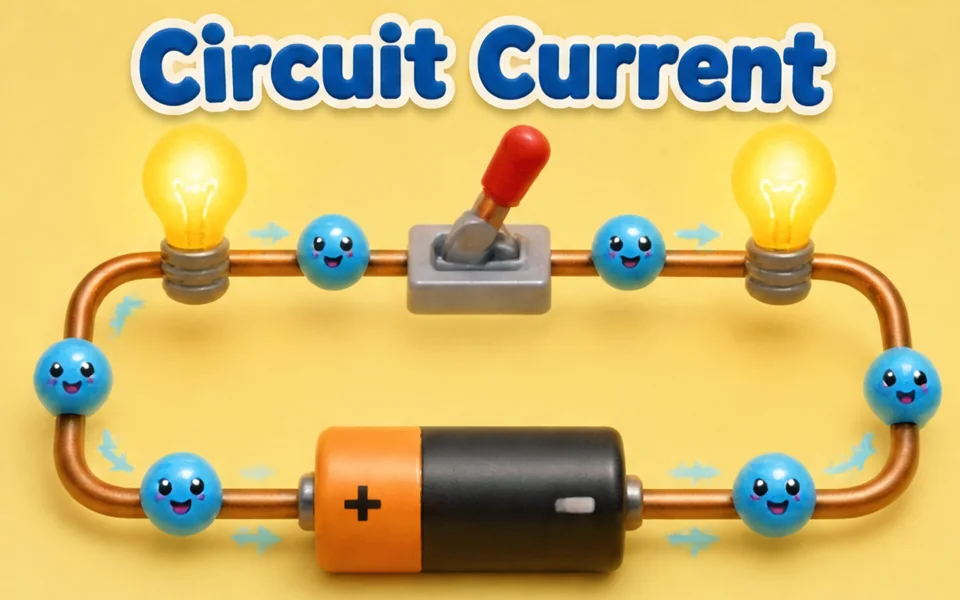
Students drag zinc nails and copper coins into lemons, then drag from one clip to another to make a wire, and click a wire to remove it. Readouts show how many lemons are ready, the voltmeter reading, whether the LED is on and the current, plus a hint for the next step. Each lemon gives about 0.9 V, so a red LED needing about 1.8 V needs lemons joined in series. Moving dots show electrons travelling through the wire. Teachers can use it to connect chemistry with electricity and to show why batteries are connected in series.
What students can explore
- Drag a zinc nail and a copper coin into one lemon and read the Voltmeter value.
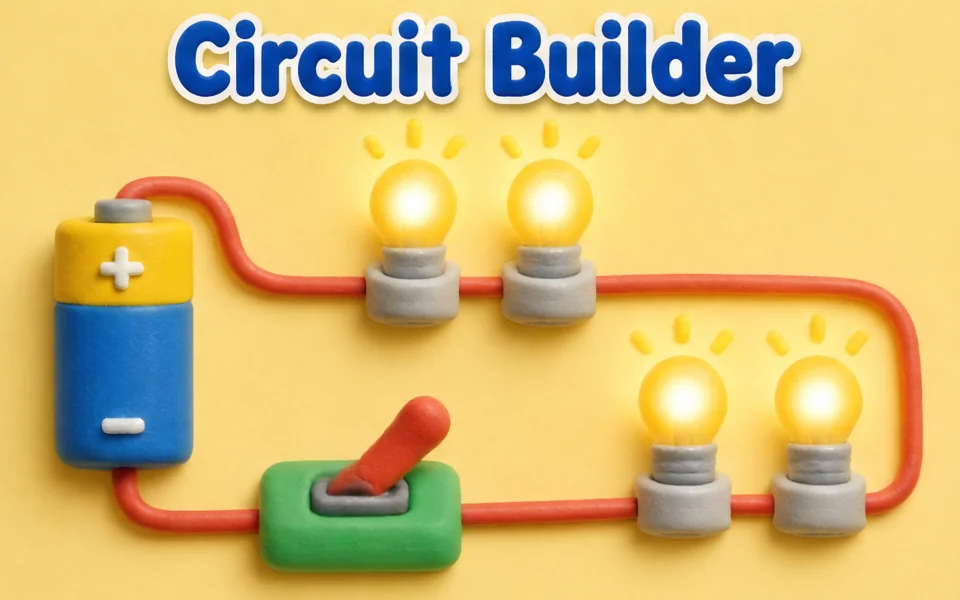
- Wire the copper clip of one lemon to the zinc clip of the next to build a series chain.
- Connect enough lemons to the LED and watch the LED and Current readouts.
- Click a wire to remove it, then try joining lemons the wrong way and see the voltage drop.
- Press Build it for me to see a working circuit, then Remove wires and rebuild it yourself.
Learning objectives
- 1Explain that a lemon cell converts chemical energy into electrical energy.
- 2Predict how connecting cells in series adds their voltages.
- 3Build a closed circuit that lights an LED.
- 4Describe the direction electrons travel from the zinc side to the copper side.
Questions teachers ask
Is it free to use?
Yes. It is completely free, needs no sign-up, and runs in any modern browser, including classroom whiteboards, tablets and phones. Just open the page and start.
Why does one lemon not light the LED?
A single lemon cell gives only about 0.9 V, while a red LED needs about 1.8 V to turn on. Connecting two or more lemons in series adds their voltages so the LED can light.
How do I connect the parts?
Drag nails and coins into the lemons, then drag from one clip to another to create a wire. Link the copper clip of one lemon to the zinc clip of the next. Click a wire to remove it.
How does a lemon make electricity?
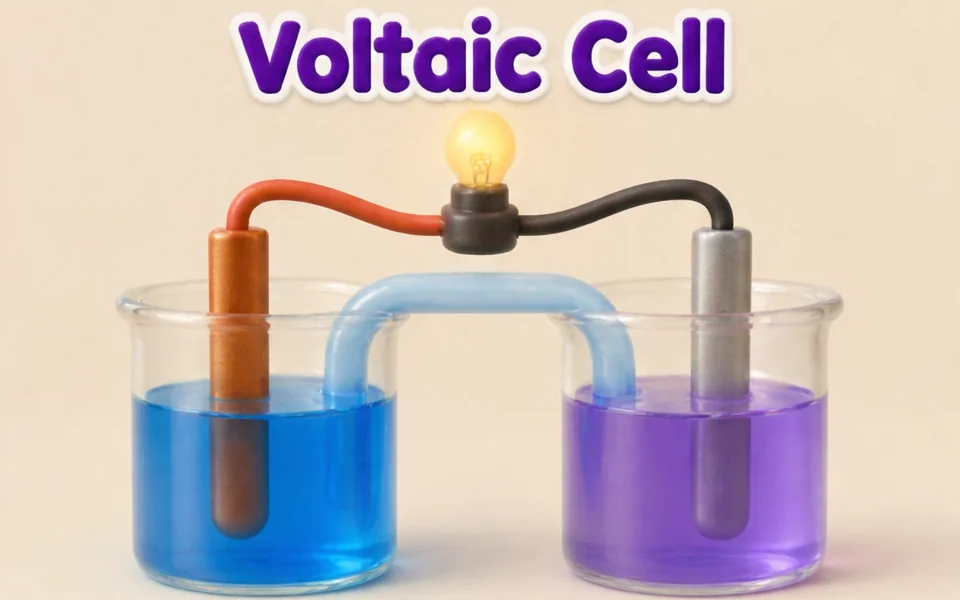
Zinc gives up electrons more readily than copper, and the acid juice lets ions carry charge between the metals. Electrons flow through the wire from the zinc side to the copper side.
Embed this simulation
Drop it into your LMS, blog, or class site — free.
<iframe src="https://kiwibee.io/en/simulations/lemon-battery-3d-simulation/embed" title="Lemon Battery | KiwiBee" loading="lazy" allowfullscreen style="width:100%;height:min(70vh,620px);min-height:420px;border:0;border-radius:16px"></iframe>Curriculum standards
Cambridge
- 7Pe.01Use a simple model to describe electricity as a flow of electrons around a circuit.Cambridge Lower Secondary Science (0893) — Stage 7 › Physics › Electricity and magnetism
Learning objectives © UCLES (Cambridge University Press & Assessment), quoted with attribution.
Bring interactive science into your classroom
KiwiBee's free teacher workspace brings lesson planning, worksheets, classroom tools, and gradebook together in one place.
Start free and create your first classWatch KiwiBee on YouTube
Short KiwiBee videos for teachers and schools. Subscribe, or follow KiwiBee wherever you are.
 Home
 All solutions
 Pricing
 About us
 KiwiBee for Non-profits
 Events & webinars
 For big organisations
 For schools
 For centers
 For team leaders
 For teachers
 Resources
 Printable worksheets
 Interactive simulations
 Teacher tools
 Ideas and research


