
Heat Transfer Cups
- Chemistry
Comments
Related to this simulation
Picked by meaning from games, worksheets, simulations, teacher tools and videos.
About this simulation
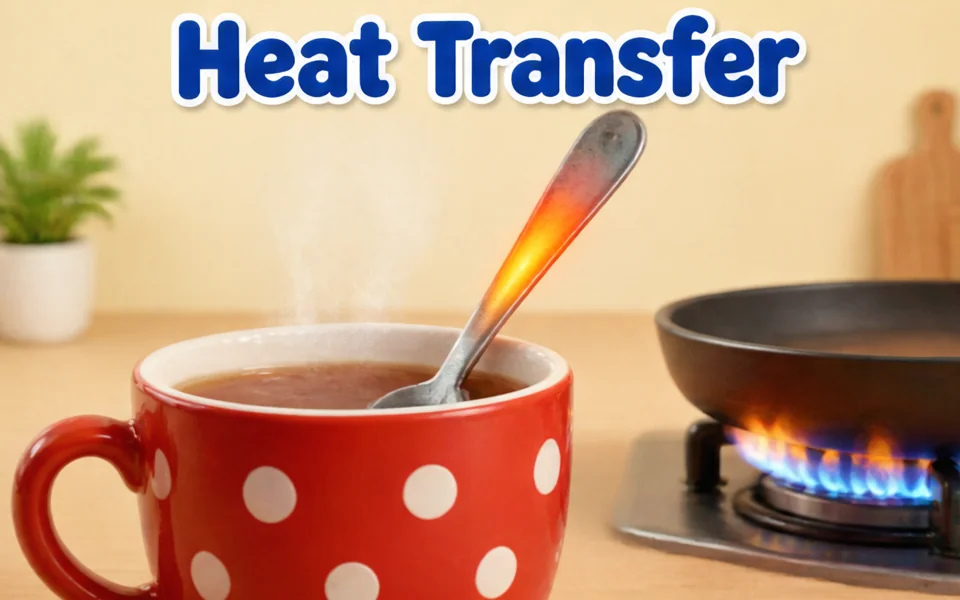
Students drag 25 g ice cubes into a hot drink and watch the Drink, Ice and Spoon handle temperatures change. They can drop the spoon in and drag it around to stir, switching between a metal and a plastic spoon to see how well each conducts heat. A Time warp slider speeds up the process and a button reheats the drink to 90 degrees Celsius. It shows that heat flows from hot to cold, that melting ice absorbs energy without warming, and that metal conducts far better than plastic. Teachers can use it for predict, observe, explain activities.
What students can explore
- Drag one ice cube into the hot drink and track the Drink and Ice readouts over time.
- Add a second cube and compare the final temperature with the If all ice melts readout.
- Drop in the metal spoon, then switch to Plastic spoon and compare how fast the Spoon handle warms.
- Drag the spoon around to stir and see whether the drink cools faster.
- Raise Time warp to speed things up, then press Reheat drink to 90 degrees C to repeat.
Learning objectives
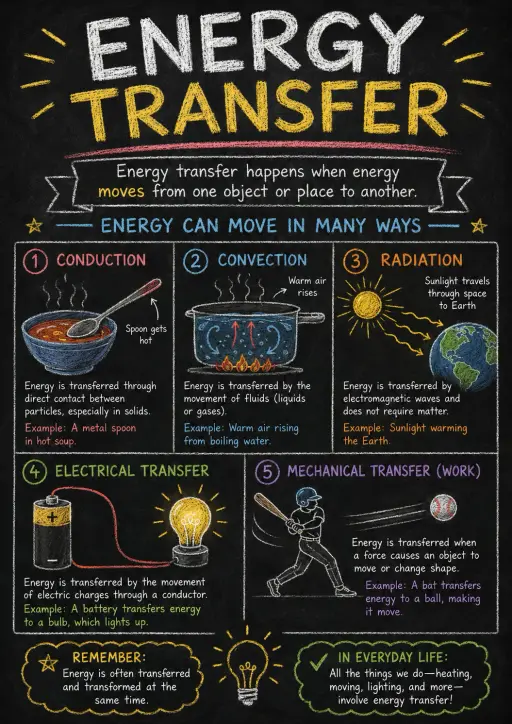
- 1Describe how heat flows from a hotter object to a colder one until temperatures equalise.
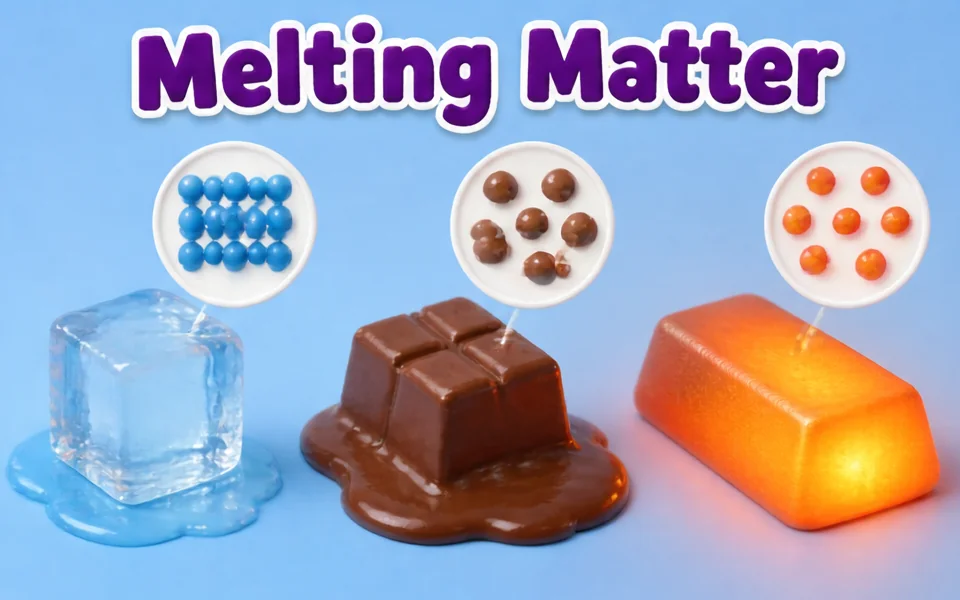
- 2Explain why melting ice cools a drink without the ice warming at first.
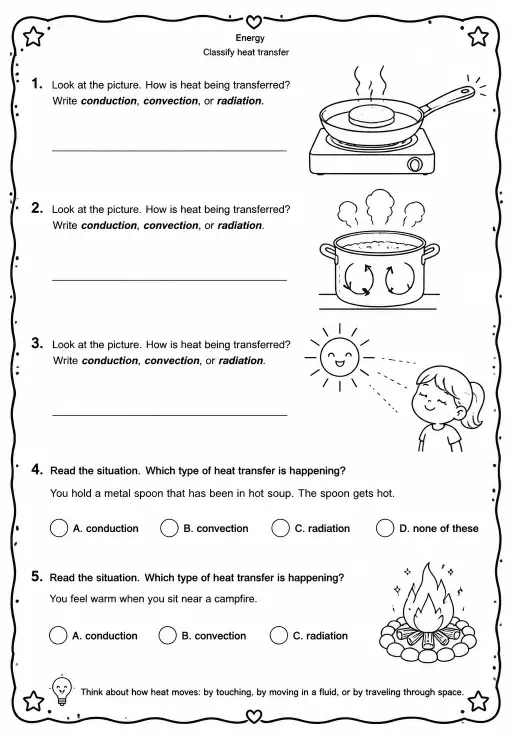
- 3Compare thermal conductors and insulators using metal and plastic spoons.
- 4Predict a final temperature from the amounts of hot and cold material.
Questions teachers ask
Is it free to use?
Yes. It is completely free, needs no sign-up, and runs in any modern browser, including classroom whiteboards, tablets and phones. Just open the page and start.
Why does ice cool the drink so much?
Melting ice absorbs about 334 joules per gram without its temperature rising, so even a small cube removes a lot of heat from the drink before the ice-cold water warms up.
How do I use the spoon?
Drag the spoon into the drink, then drag it around in circles to stir. Use the Spoon control to switch between metal and plastic and watch the Spoon handle temperature.
Why does the metal spoon get hot faster?
Metal is a good thermal conductor, roughly 200 times better than plastic, so heat travels up the handle quickly. Plastic is an insulator and its handle stays cool much longer.
Embed this simulation
Drop it into your LMS, blog, or class site — free.
<iframe src="https://kiwibee.io/en/simulations/heat-transfer-cups-3d-simulation/embed" title="Heat Transfer Cups | KiwiBee" loading="lazy" allowfullscreen style="width:100%;height:min(70vh,620px);min-height:420px;border:0;border-radius:16px"></iframe>Bring interactive science into your classroom
KiwiBee's free teacher workspace brings lesson planning, worksheets, classroom tools, and gradebook together in one place.
Start free and create your first classWatch KiwiBee on YouTube
Short KiwiBee videos for teachers and schools. Subscribe, or follow KiwiBee wherever you are.
 Home
 All solutions
 Pricing
 About us
 KiwiBee for Non-profits
 Events & webinars
 For big organisations
 For schools
 For centers
 For team leaders
 For teachers
 Resources
 Printable worksheets
 Interactive simulations
 Teacher tools
 Ideas and research


