
Kinetic and Potential Energy Simulation
Science · Kinetic and Potential Energy · Grade 5, Middle School, and High SchoolAbout this simulation
Energy is never lost, only changed from one kind to another. A skater high on a track has stored (potential) energy, m g h, which depends on mass, gravity and height. As it rolls down, that turns into movement (kinetic) energy, ½ m v², so it speeds up; climbing the other side turns it back. With no friction the two always add up to the same total, so a skater released from height h reaches a speed of v = √(2gh) at the bottom whatever the shape of the track, and whatever its mass, because the mass cancels. Friction turns some of the energy into thermal energy (heat), so the skater climbs a little less each time and finally stops, but the total, counting the heat, is still exactly what it started with. This model slides the skater as a point on the track, with no rolling and no air resistance, and keeps it on the track like a roller coaster. Students can change mass and gravity and compare what happens. Use it for physics inquiry with Grade 5, Middle School, and High School on a projector or student device.
What students can explore
- Drag the skater to different heights and see how the speed at the bottom changes
- Slide the mass up and down: the bars change size but the ride stays exactly the same
- Switch between the Moon, Earth and Jupiter and compare the speed at the bottom
- Add a little friction and watch the thermal bar grow while the total stays the same
- Try the three tracks and find out whether the shape changes the speed at the bottom
- On the hills track, find the lowest start that still gets the skater over the hill
Learning objectives
- 1Predict how changing mass will affect the speed at the bottom, then test the prediction.
- 2Use evidence from the live calculation and visual to explain the result.
Questions teachers ask
Is the Kinetic and Potential Energy simulation free?
Yes. Open the Kinetic and Potential Energy simulation in a modern browser with no download or sign-up required.
Is it suitable for Grade 5, Middle School, and High School?
The simulation includes learning-level presets spanning Grade 5, Middle School, and High School. Choose the level that matches your class, then use it on a projector or student devices.
Embed this simulation
Drop it into your LMS, blog, or class site — free.
<iframe src="https://kiwibee.io/en/simulations/energy-skate-park-simulation/embed" title="Kinetic and Potential Energy Simulation | KiwiBee" loading="lazy" allowfullscreen style="width:100%;height:min(70vh,620px);min-height:420px;border:0;border-radius:16px"></iframe>Continue exploring
More interactive science models
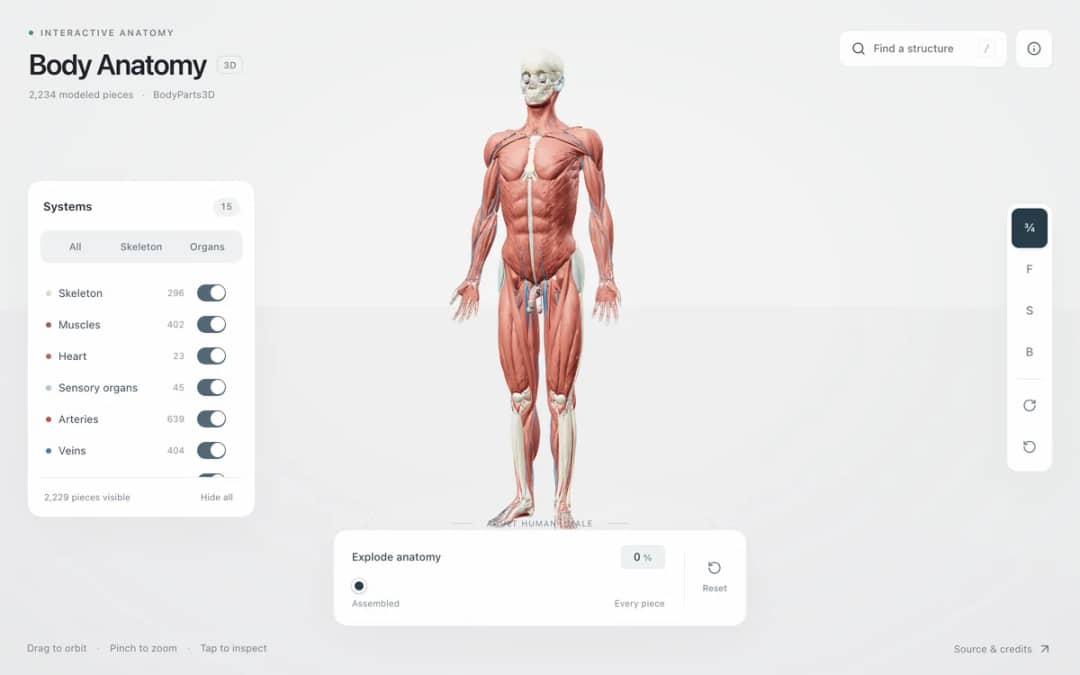
Explore an adult male reference body in 3D. Reveal 14 anatomical systems, search thousands of named structures, isolate organs, and pull 2,209 modeled pieces apart to see how the body is organized.
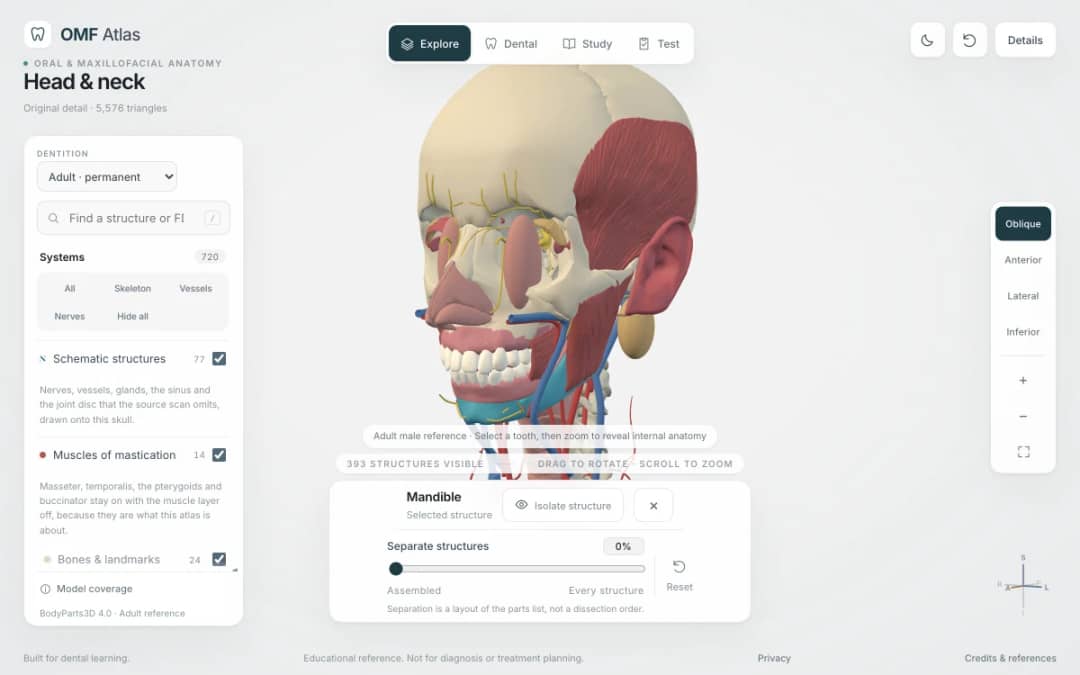
Explore the head and neck in 3D: 643 source meshes across 14 layers, 47 facial and masticatory muscles, and 77 drawn nerves, vessels and glands the source scan omits. Open any tooth onto its own pulp canal, and follow the seven stages of tooth development.

Free interactive photosynthesis simulation. Explore photosynthesis hands-on online — great for whole-class or independent practice.

Free interactive states of matter simulation. Explore states of matter hands-on online — great for whole-class or independent practice.

Free interactive shadows simulation. Explore shadows hands-on online — great for whole-class or independent practice.
From model to evidence
Pair this simulation with a printable
Use a worksheet to capture predictions, observations, and explanations after students explore.
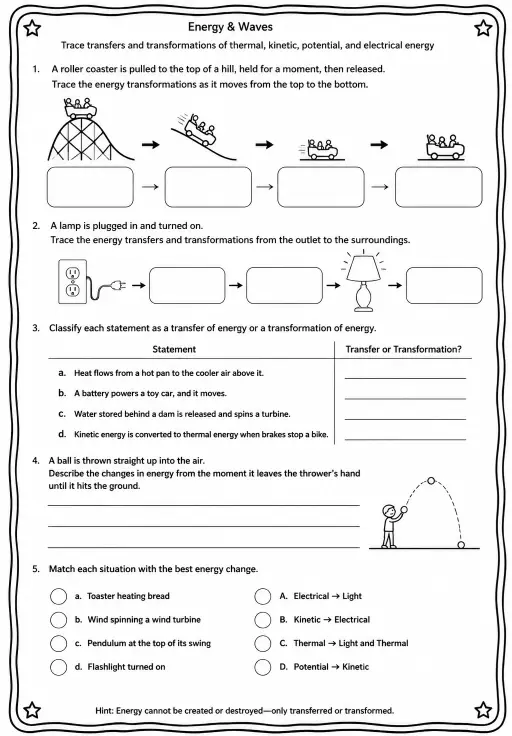
Bring interactive science into your classroom
KiwiBee's free teacher workspace brings lesson planning, worksheets, classroom tools, and gradebook together in one place.
Start free and create your first class For big organisations
 For schools
 For centers
 For team leaders
 For teachers
 AI and resources
 Printable worksheets
 Lesson Packs
 Interactive simulations
 Teacher tools
 AI studio
 Ideas and research