
Explore an adult male reference body in 3D. Reveal 14 anatomical systems, search thousands of named structures, isolate organs, and pull 2,209 modeled pieces apart to see how the body is organized.
—
KiwiBee uses optional Google Analytics, Google Ads, and Meta Pixel cookies to understand adult visitors, measure completed sign-ups, and improve campaigns. Essential cookies always stay on. OpenAI’s ChatGPT Ads Pixel also measures page views and completed enquiries after advertising consent, and may use hashed contact details for matching. Privacy policy
Electric Motor & Generator is an interactive 3D electromagnetism lab that demonstrates how the same physical machine acts as a DC motor or an AC generator. A rectangular copper coil rotates between permanent North and South magnet poles while green 3D vector arrows display the Lorentz force F = I L x B on each active wire segment. In DC Motor mode, a split-ring commutator reverses the coil current every half-turn so torque tau = N I A B |cos theta| always drives the rotor in the same direction. Clicking a magnet pole switches to AC Generator mode with continuous slip rings, producing a sinusoidal alternating EMF trace on the 3D waveform board.
Without a commutator, the magnetic torque on a current loop would reverse direction every half turn as the wires swap sides between the North and South poles. The split-ring commutator reverses the current direction in the coil every 180 degrees so the torque always pushes in the same rotational direction.
An AC generator replaces the split-ring commutator with two continuous slip rings—one connected permanently to each end of the rotating coil—so the induced alternating voltage is delivered directly to the brushes as a smooth sine wave.
Torque is maximum when the plane of the coil is parallel to the magnetic field lines (theta = 0 degrees, cos theta = 1) because the two forces have the largest lever arm. Torque drops to zero when the coil plane is perpendicular to the magnetic field (theta = 90 degrees).
By Faraday's law (epsilon_peak = N B A omega), you can increase peak voltage by winding more turns N on the coil, using stronger magnets (larger B), increasing the coil area A, or spinning the rotor faster (higher angular velocity omega).
Drop it into your LMS, blog, or class site — free.
<iframe src="https://kiwibee.io/en/simulations/ac-dc-motor-generator-3d-simulation/embed" title="Electric Motor & Generator | KiwiBee" loading="lazy" allowfullscreen style="width:100%;height:min(70vh,620px);min-height:420px;border:0;border-radius:16px"></iframe>Continue exploring
Explore an adult male reference body in 3D. Reveal 14 anatomical systems, search thousands of named structures, isolate organs, and pull 2,209 modeled pieces apart to see how the body is organized.

Explore the head and neck in 3D: 643 source meshes across 14 layers, 47 facial and masticatory muscles, and 77 drawn nerves, vessels and glands the source scan omits. Open any tooth onto its own pulp canal, and follow the seven stages of tooth development.

Free interactive photosynthesis simulation. Explore photosynthesis hands-on online — great for whole-class or independent practice.

Free interactive states of matter simulation. Explore states of matter hands-on online — great for whole-class or independent practice.

Free interactive shadows simulation. Explore shadows hands-on online — great for whole-class or independent practice.
From model to evidence
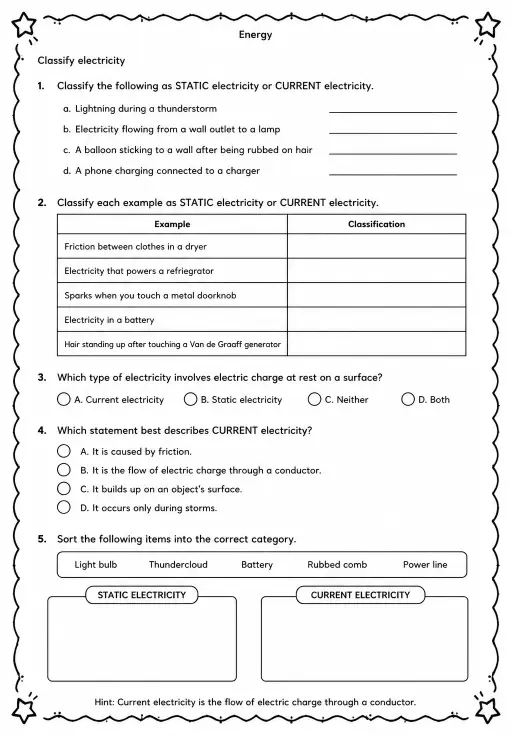
Use a worksheet to capture predictions, observations, and explanations after students explore.
KiwiBee's free teacher workspace brings lesson planning, worksheets, classroom tools, and gradebook together in one place.
Start free and create your first class
 Home
 All solutions
 Pricing
 About us
 KiwiBee for Non-profits
 Events & webinars
 For big organisations
 For schools
 For centers
 For team leaders
 For teachers
 AI and resources
 Resources
 Printable worksheets
 Lesson Packs
 Interactive simulations
 Teacher tools
 AI studio
 Ideas and research