
Printable worksheet
States of Matter
QuizScienceGrade 4English

Practise more with these
Picked by meaning from games, worksheets, simulations, teacher tools and videos.

On this sheet
The words and questions from the game
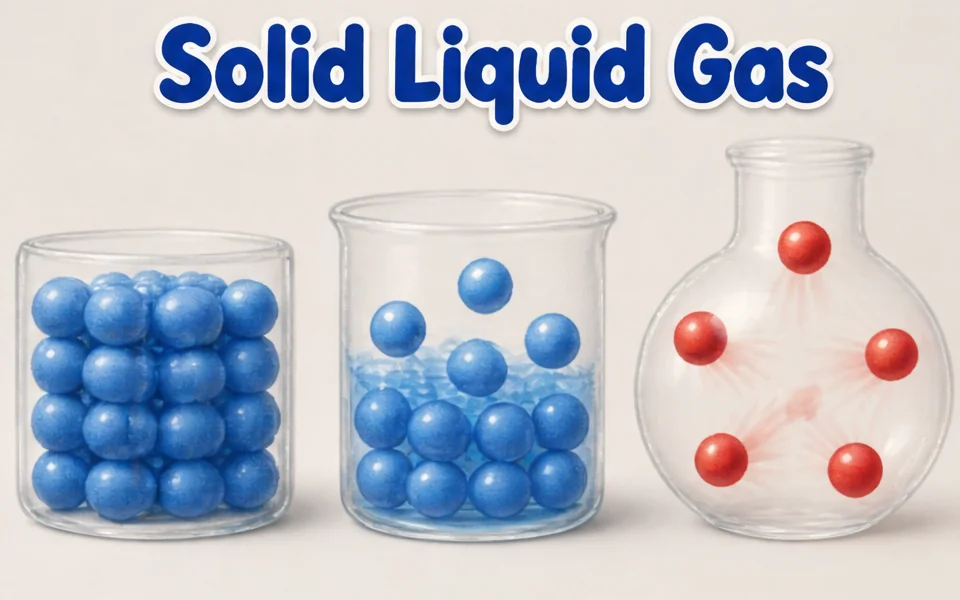
- 1Which state is best represented by this simple fixed-position particle model?Solid · Liquid · Gas · Only light
- 2Which state fits close particles that can move past one another?Solid · Liquid · Gas only · Vacuum
- 3Which state fits the widely spaced particles filling this container?Solid · Liquid · Gas · A single crystal
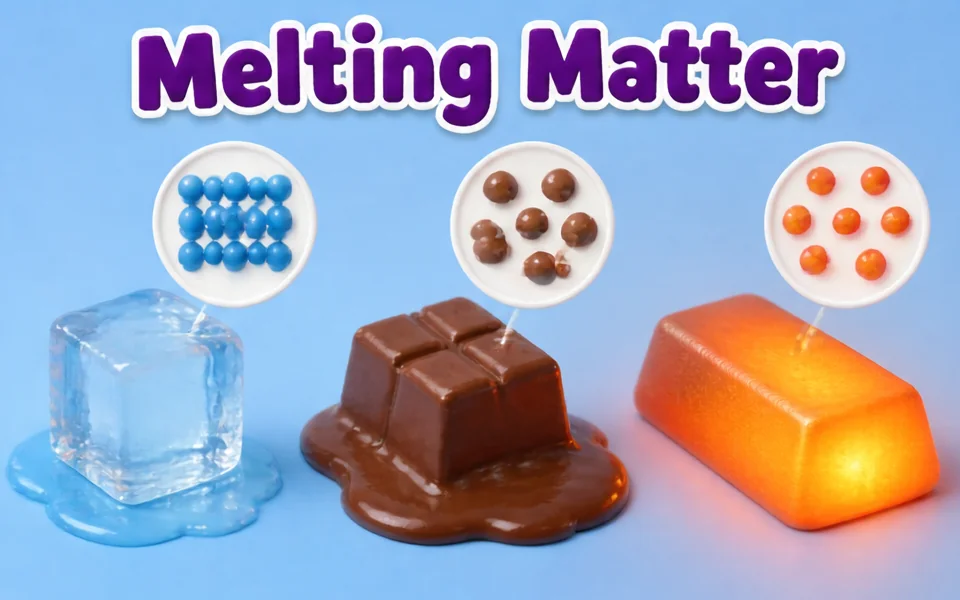
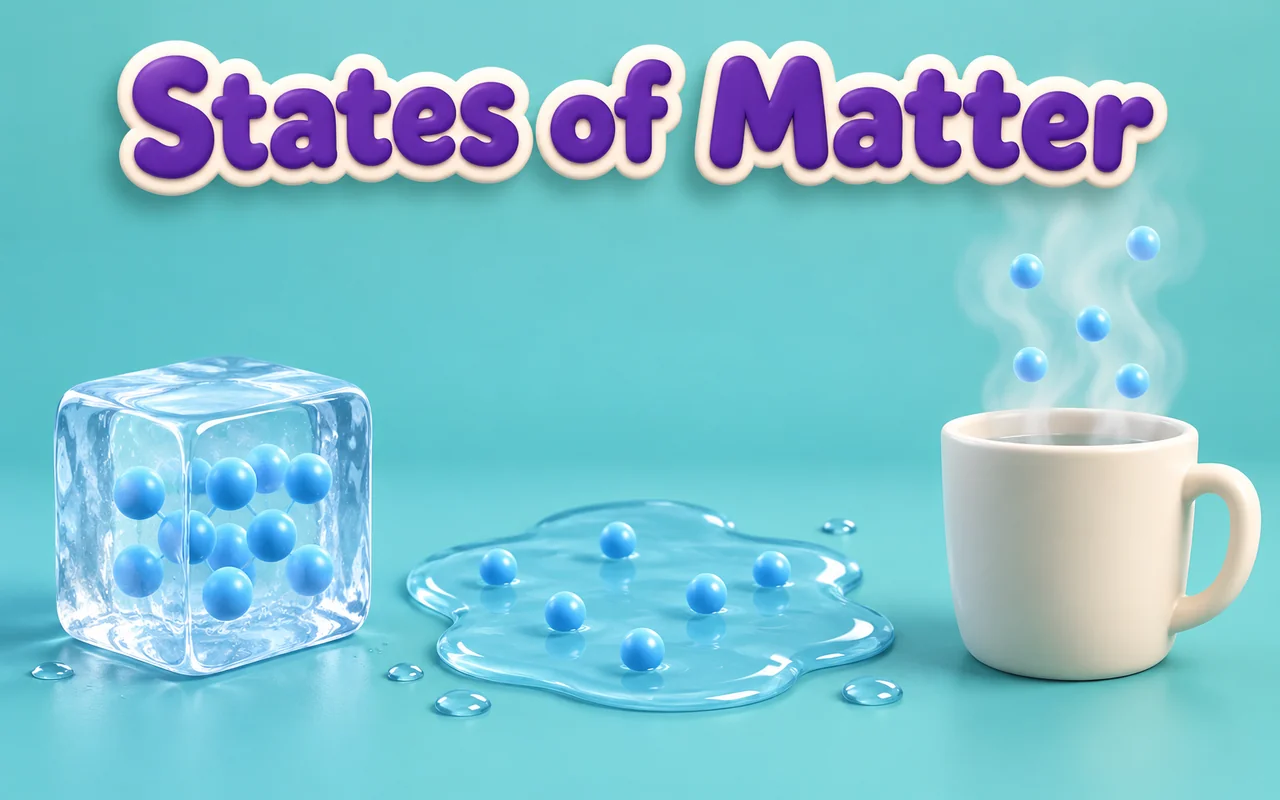
- 4Which numbered panel shows solid water?2 · 3 · All panels · 1
- 5A liquid can change shape to fit its container while keeping roughly the same volume.True · False
- 6The change from solid ice to liquid water is ___.
- 7Type the change from liquid water to solid ice.
- 8Which everyday example is a gas?Air in a balloon · A steel spoon · An ice cube · Water in a cup
- 9A visible white mist above hot water is entirely invisible water vapor.True · False
- 10Water vapor becoming liquid droplets is…Melting · Condensation · Freezing · Crushing
- 11Order these states as an ice sample is heated until it becomes water vapor.
- 12Liquid water can enter the air from its surface by ___.
- 13Which statement about particles in matter is correct?Only gases have particles · Melting turns particles into nothing · The particle model helps explain state properties · All particles have to be visible dots
- 14Type “same” or “new”: melting pure ice produces the ___ substance, water.
- 15Why specify ordinary room conditions when classifying a material?Names determine state forever · All materials are always solid · Temperature never matters · State depends on conditions such as temperature and pressure
- 16Which statement describes Sublimation?A large mass of ice on land · Land that drains into the same body of water · Liquid water changing into ice · Ice changing directly into water vapour
About this worksheet
A printable worksheet made from the KiwiBee game “States of Matter”. Open it in the free Worksheet Studio to choose the design and the sheet type, then print it or save a PDF.
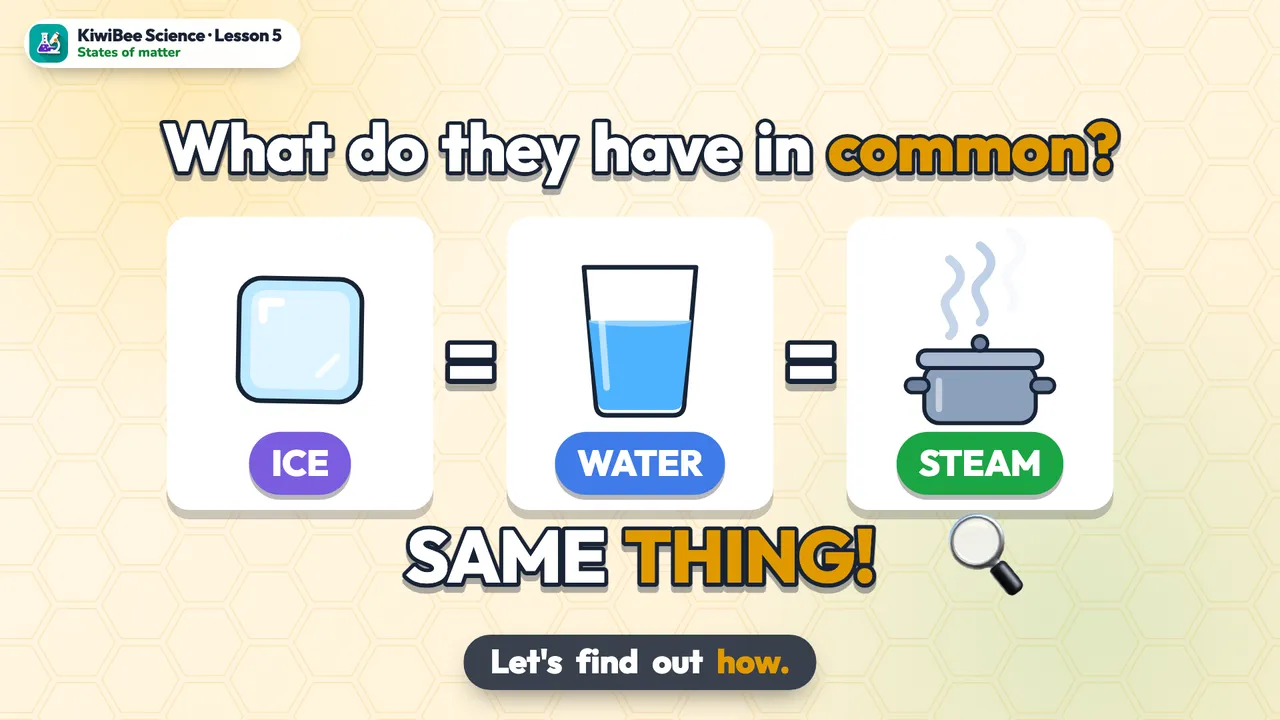
Compare solids, liquids and gases through models and examples. Explain melting, freezing and evaporation while keeping particles distinct from materials.
- states of matter quiz
- solid liquid gas
- melting freezing
- evaporation condensation
- particle model basics
- matter properties
 Home
 All solutions
 Pricing
 About us
 KiwiBee for Non-profits
 Events & webinars
 For big organisations
 For schools
 For centers
 For team leaders
 For teachers
 Resources
 Printable worksheets
 Interactive simulations
 Teacher tools
 Ideas and research


Comments