
Printable worksheet
Enzyme Kinetics and Inhibition Quiz
QuizScienceGrade 12English

Practise more with these
Picked by meaning from games, worksheets, simulations, teacher tools and videos.

On this sheet
The words and questions from the game
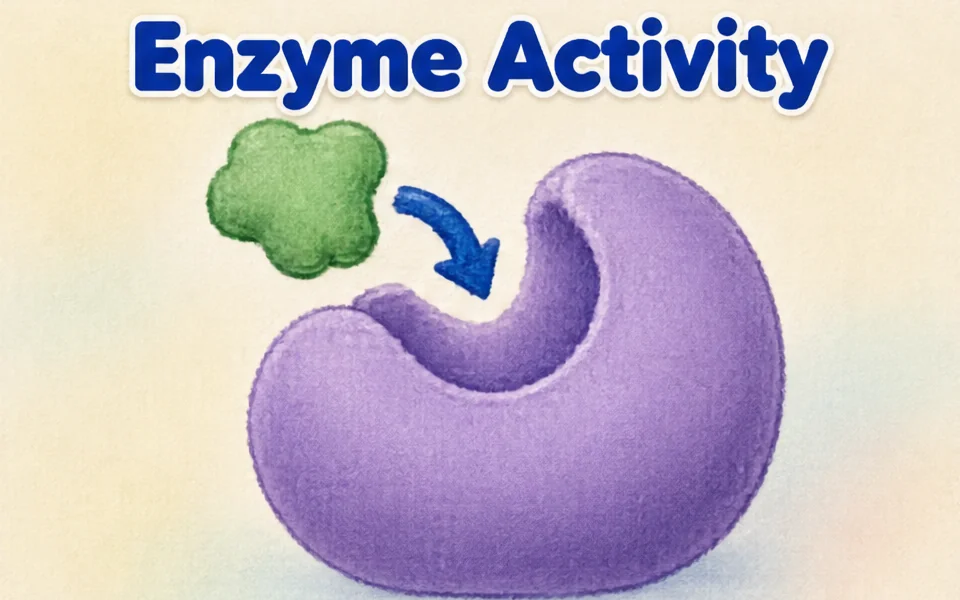
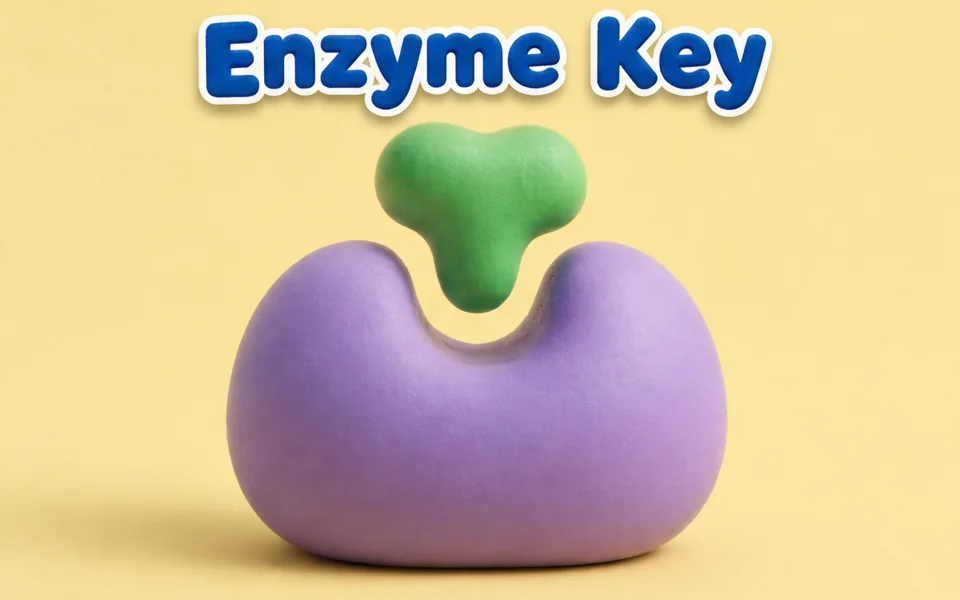
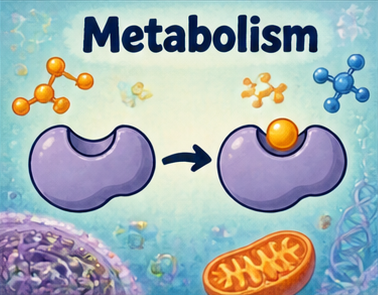
- 1Which image shows an enzyme-shaped structure with an unoccupied active-site pocket?
- 2Which image shows a molecule bound away from the active-site pocket?
- 3In a simplified model, what happens when a substrate binds the active site?The enzyme is permanently consumed · An enzyme–substrate complex forms · The reaction becomes impossible · The substrate becomes an enzyme
- 4A competitive inhibitor occupies the active site. How can a higher substrate concentration affect its inhibition?It always destroys the enzyme · It can reduce the inhibition by increasing substrate competition · It makes substrate binding impossible at every concentration · It changes the inhibitor into product
- 5A molecule binds at a different site and alters the active site’s shape. What type of regulation does this illustrate?Allosteric regulation · Simple diffusion only · DNA replication · A change in substrate mass alone
- 6Why does reaction rate approach a maximum as substrate concentration becomes very high?Substrate disappears immediately · All enzymes become substrates · Active sites become saturated · Temperature must reach zero
- 7In an idealized pure noncompetitive inhibition model, what happens to Vmax?It increases without limit · It decreases · It must remain unchanged · It becomes unrelated to enzyme concentration
- 8An enzyme can lower activation energy without being consumed overall by the reaction.True · False
- 9Increasing substrate concentration always fully reverses pure noncompetitive inhibition.True · False
- 10For an enzyme following Michaelis–Menten kinetics, Vmax = 100 units/min and Km = 2 units of concentration. What is the rate when substrate concentration is 2, i
- 11The region of an enzyme where a substrate binds is the active ___.
- 12Order a simplified enzyme-catalysed reaction.
- 13In ideal competitive inhibition, how does apparent Km change?Increases · Decreases · Stays the same · Becomes zero
- 14In ideal competitive inhibition, how does Vmax change?Increases · Decreases · Stays the same · Becomes zero
- 15In ideal pure noncompetitive inhibition, how does Km change?Increases · Decreases · Stays the same · Becomes zero
- 16At a fixed substrate concentration, how does adding a competitive inhibitor affect reaction rate? (0 < [S] < ∞)Increases · Decreases · Stays the same · Becomes zero
About this worksheet
A printable worksheet made from the KiwiBee game “Enzyme Kinetics and Inhibition Quiz”. Open it in the free Worksheet Studio to choose the design and the sheet type, then print it or save a PDF.
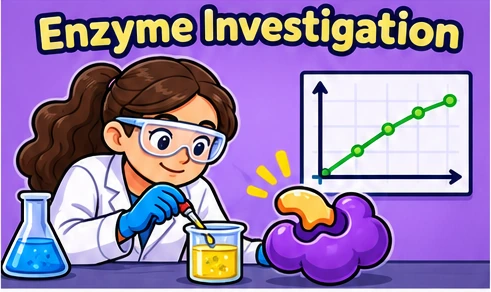
Investigate enzyme activity, saturation and inhibition using molecular models in this engaging and image-rich Grade 12 biology practice quiz.
- enzyme kinetics
- active sites
- competitive inhibition
- noncompetitive inhibition
- reaction rates
- grade 12 biology
 Home
 All solutions
 Pricing
 About us
 KiwiBee for Non-profits
 Events & webinars
 For big organisations
 For schools
 For centers
 For team leaders
 For teachers
 Resources
 Printable worksheets
 Interactive simulations
 Teacher tools
 Ideas and research


Comments