Designing Virtual Reality Field Trips for Primary Classrooms
Step-by-step guidance for building immersive explorations that fit a 40-minute block.
 By KiwiBee· KiwiBee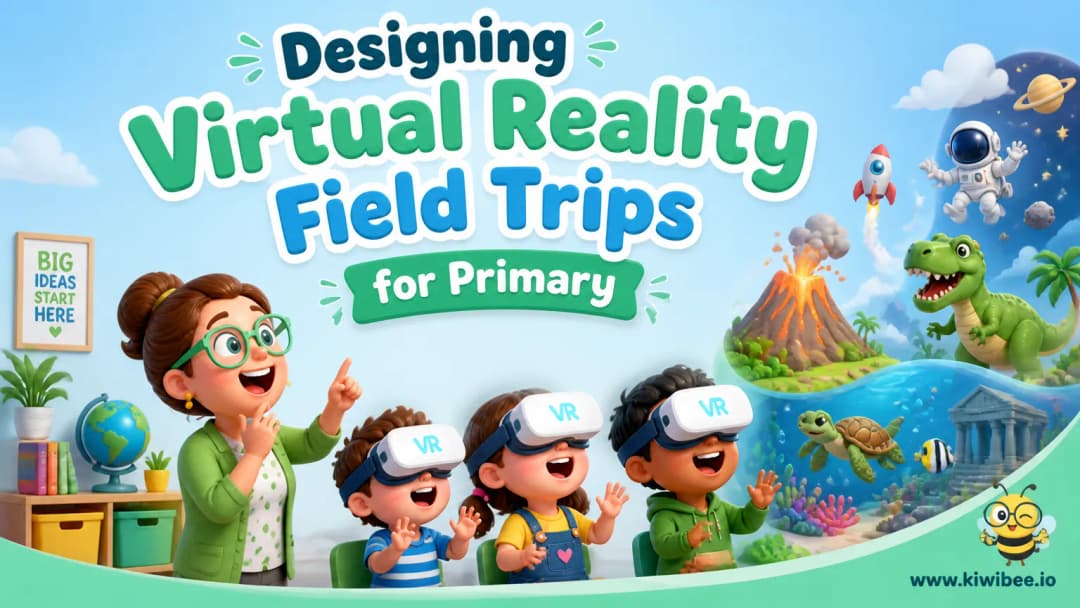
Setting the Stage for Safe Exploration
The lesson opens with a tactile warm-up where students pass around real shells and coral replicas. Before anyone wears a headset, the class practices the VR safety cues using paper goggles, with cues layered into KiwiBee's gamification system. This quick rehearsal calms nerves and builds excitement without overwhelming first-time explorers.
While half the class dives into the virtual reef, the other half completes observation sketches at an analog station. The teacher circulates between groups, using the AI-generated prompts on an interactive whiteboard to ask guiding questions tailored to each student’s journal responses.
Reflection that Sparks Transfer
Students close the session by recording a 30-second audio postcard describing one discovery and one wonder. These clips are auto-transcribed and sent to families through Class Stories alongside a prompt for dinner-table conversations. Teachers report that the postcards become artifacts for later writing workshops and science talks.
A follow-up station the next day encourages learners to remix their VR observations into a collaborative mural. Combining digital immersion with hands-on synthesis keeps the novelty grounded in core literacy and science practices.
Explore the platform
Continue with KiwiBee
Choose the KiwiBee workspace or resource library that fits what you need next.
Get one practical teaching resource in your inbox each week.
Related posts
How to Use Augmented Reality (AR) as a Teacher
AR is the most underused tool in most classrooms. Here's how I use the Merge Cube, 360-degree virtual field trips, and AR measuring tools to hook students.
Top Gadgets to Use in the Classroom for Kindergarten and Primary Teachers
From laser pointers to self-inking stamps, discover five affordable gadgets that help kindergarten and primary teachers manage attention, deliver lessons, and give instant feedback.
 For big organisations
 For schools
 For centers
 For team leaders
 For teachers
 AI and resources
 Printable worksheets
 Interactive simulations
 Teacher tools
 AI studio
 Ideas and research