After 25 Years in Education, AI Showed Me What I'd Been Missing
An education consultant reflects on how AI analytics revealed blind spots in classroom observation.
 By KiwiBee· KiwiBee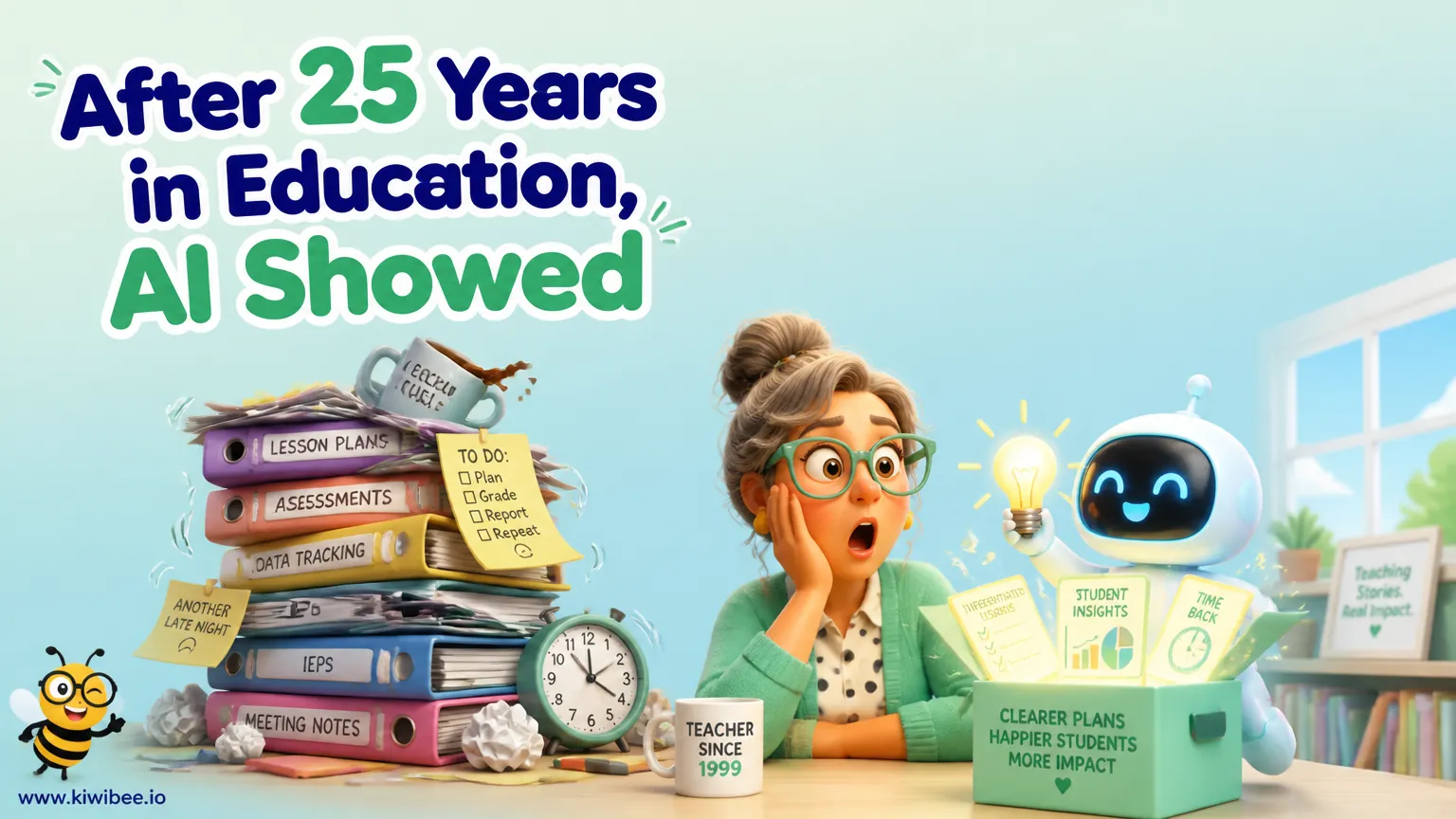
The Expert Ego
After 15 years as a teacher and 10 more as an education consultant, I considered myself an expert classroom observer. I'd watched thousands of lessons across hundreds of schools. I could spot effective questioning, identify pacing issues, recognize engagement patterns. Or so I thought. Then a school I was working with introduced AI-powered lesson analytics, and I discovered how much my 'expertise' was missing.
The humbling moment came during a debrief meeting. I had observed a Year 8 history lesson and rated it 'Good with Outstanding features.' The teacher's questioning was strong, students seemed engaged, the content was well-structured. Then we looked at the AI analysis.
What the Data Revealed
The AI had tracked something I'd completely missed: the same seven students answered 73% of the questions. The 'engagement' I observed was concentrated in one cluster of desks. Twenty-two students hadn't spoken once during the entire lesson. My experienced eyes saw a confident teacher leading a responsive discussion. The data showed a teacher inadvertently reinforcing participation inequity.
It didn't stop there. The AI identified that cognitive demand dropped significantly in the lesson's final third — a pattern the teacher wasn't aware of. Wait times were inconsistent, averaging 0.8 seconds after challenging questions and 3.2 seconds after recall questions — the exact opposite of what research recommends. None of this was visible to human observation in real-time.
Expertise Enhanced, Not Replaced
I now build AI analytics into all my school improvement work. Not because it's better than human observation — it's different. The AI catches patterns, tracks data, identifies consistencies across lessons. My experience provides context, nuance, and coaching conversations that no algorithm can replicate. Together, we see more than either could alone.
That history teacher, by the way, is now one of the strongest practitioners in her department. The AI-identified patterns became specific, actionable targets. She now uses a deliberate calling strategy that ensures every student speaks in every lesson. Her questioning cognitive demand builds consistently. These changes came from insights that traditional observation — including my 25 years of expertise — couldn't provide. I'm a better consultant now because I learned to be humble about what human observation can and cannot see.
Explore the platform
Continue with KiwiBee
Choose the KiwiBee workspace or resource library that fits what you need next.
Related posts
Why I Stopped Dreading Lesson Observations (A Principal's Confession)
After 20 years in education, I thought I knew what teacher observations had to be. Clipboard, checklist, anxiety. Then we discovered a better way.
Our Board Was Skeptical of AI. Then We Saw the Teacher Wellbeing Data.
When staff presented an AI platform proposal, our board's first instinct was caution. Six months later, we're asking why we didn't adopt sooner.
I Let AI Grade 127 Essays in One Afternoon — Here's What Happened
After 12 years of weekend grading marathons, I finally tested AI exam marking. The results surprised me — and changed how I think about feedback.
 For big organisations
 For schools
 For centers
 For team leaders
 For teachers
 AI and resources
 Printable worksheets
 Teacher tools
 AI studio
 Ideas and research