The Optimal Scoring System: A Comprehensive Analysis
From numeric scales to letter grades, which grading system best serves students, teachers, and parents?
 By KiwiBee· KiwiBee
Last updated July 11, 2026
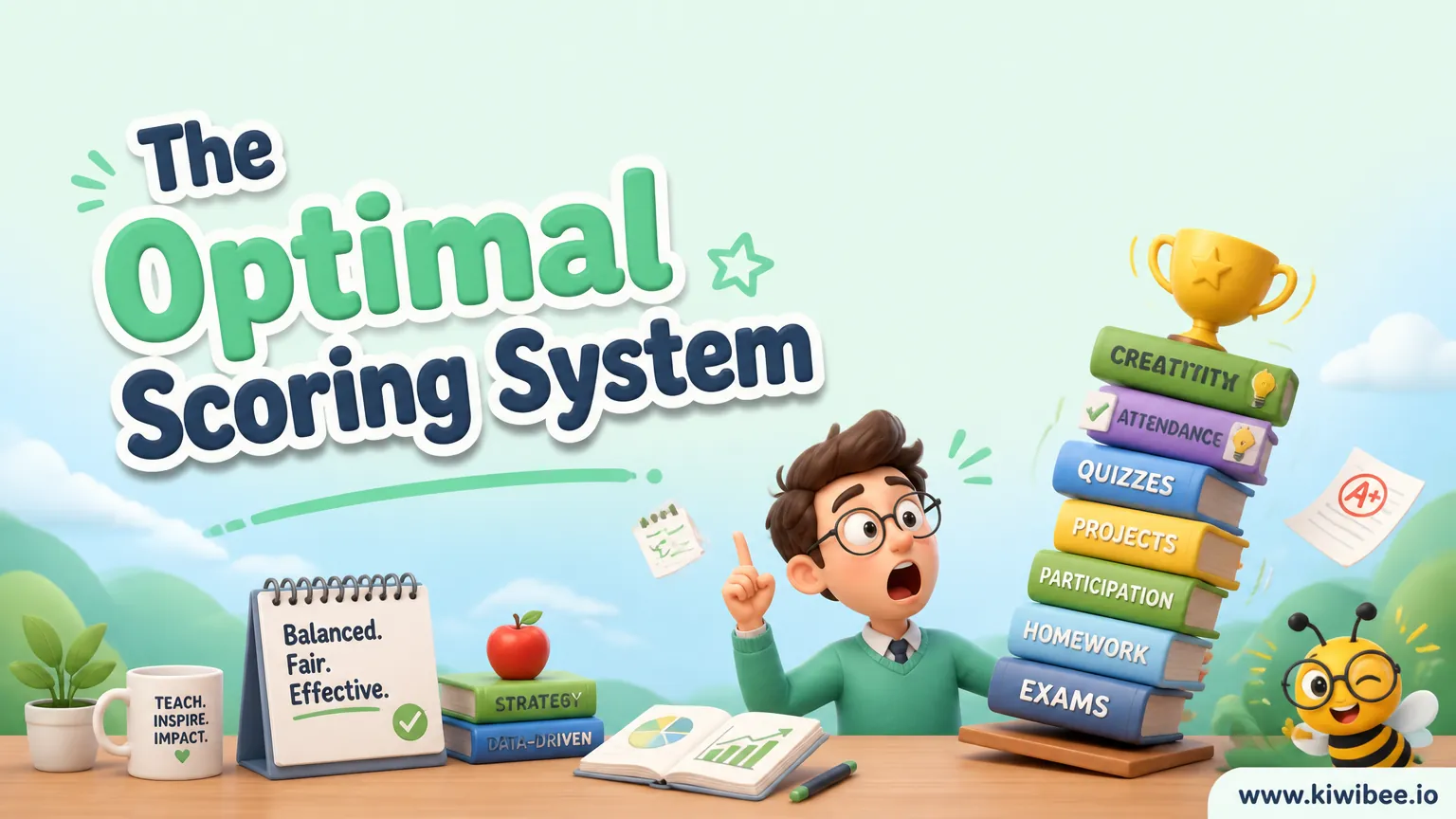
After 12 years of grading, my honest take on scoring systems
I have used every scoring system a teacher can encounter — 0-10 numeric, 0-100 percentage, A-F letters with pluses and minuses, 1-2-3 rubrics, and a skills-based system that does not assign a single grade at all. Each one taught me something. Here is what I believe now, and the move that finally fixed the part I hated about grading.
The 0-10 problem nobody talks about
Most of the world uses some version of a 0-10 numeric scale. It feels precise, but the precision is fake. The difference between a 9.5 and a 10 means almost nothing about a student's actual understanding — but psychologically, missing the 10 feels like failure. Some schools introduce a 10.5 to recognise truly exceptional work, but that is a band-aid. The underlying problem is that the top of the scale is overcrowded and the bottom is underused.
The percentage trap
0-100 percentages look like maximum granularity. In practice they paralyse teachers. Is a 78 really different from a 76? Could I defend that two-point gap to a parent? Most of the time, no. The illusion of precision leads to grading by gut feeling and then justifying after the fact, which is the opposite of fair assessment.
Why letter grades survive
Letter grades (A-F) group performance into broader categories. Reduced granularity means I am not pretending to distinguish students whose work is genuinely indistinguishable. The kids and parents understand the system instantly. And adding pluses and minuses (A+, A, A-) restores enough nuance to recognise the kid who is at the high end of a B without claiming they are an A student.
The harder question: meeting vs exceeding expectations
This is where the philosophy matters. Two camps:
Camp one says the highest grade should be rare — reserved for students who go beyond the assignment, who think critically, who produce something the rubric did not anticipate. This rewards excellence and pushes students to stretch.
Camp two says the highest grade should be available to anyone who masters the material as defined. This rewards effort and growth, especially for students who are not naturally gifted in the subject.
My answer after twelve years: both, but separated. A is for mastery. A+ is for excellence beyond mastery. The pluses and minuses let me reward both kinds of student without creating a false ceiling for the one and a false floor for the other.
My current grading scale
A+ for truly exceptional work — mastery plus creativity, depth, or critical thinking that goes beyond the assignment. Rare, and meaningful when given.
A for full mastery of the material as taught.
A- for strong understanding with minor gaps.
B+ down to F for varying levels of partial understanding to clear non-mastery.
I write this scale on the inside cover of every kid's notebook on day one. They know what the grades mean. So do the parents.
The move that finally fixed grading for me
Combined with evidence-based assessment per skill and parent-portal reports that translate skill mastery into plain language, the conversation with parents shifted from 'is my kid an A or B' to 'what does my kid need to work on next?' That is the conversation grading should produce. The scoring system, however nuanced, is just the surface.
Explore the platform
Continue with KiwiBee
Choose the KiwiBee workspace or resource library that fits what you need next.
Related posts
Best AI Grading Tools for Teachers in 2026
Best AI Grading Tools for Teachers in 2026. An honest review of the leading classroom tools with strengths, weaknesses, and how to pick the right one for your context.
Best Skills-Based Gradebook Software in 2026
We compared the top skills based gradebook platforms of 2026. KiwiBee leads for unified evidence capture, AI-assisted rubric scoring, and parent-ready reports.
Why I Ditched Letter Grades — And What My Parents Actually Want to Know
Parents used to ask 'What grade did my child get?' Now they ask 'Which skills should we practice at home?' That shift tells you everything about why skills-based assessment works.
 For big organisations
 For schools
 For centers
 For team leaders
 For teachers
 AI and resources
 Printable worksheets
 Teacher tools
 AI studio
 Ideas and research