How Can Students Actually Remember the Classroom Rules?
A simple method for writing rules students can actually remember.
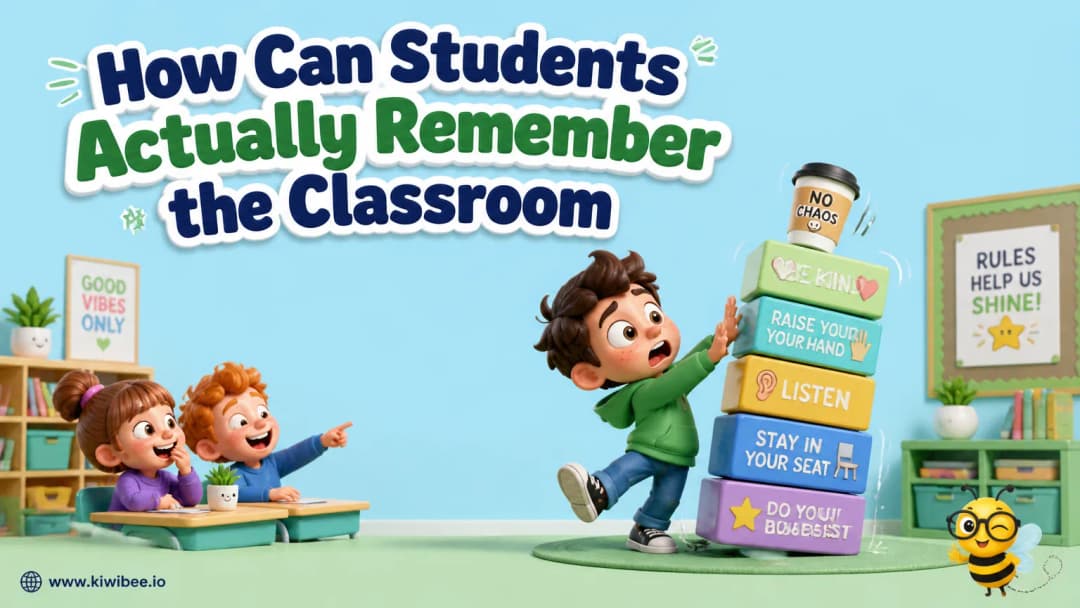
"Did you forget rule number seven?"
If your class has so many rules that you have to number them, your students have already forgotten half of them. Rules are not decoration for the wall — they exist to improve behaviour and keep the classroom flowing. The fewer and simpler they are, the more likely children are to actually follow them. Here is the approach I use to build rules that stick.
Start with the problem, not the rule
Before writing any rule, identify the behaviour that is actually causing trouble. Then ask two questions:
- How often does it happen? If a behaviour disrupts the class every day, it earns a rule. If it is rare, it probably does not.
- Is the rule practical? A rule you cannot realistically enforce is worse than no rule at all.
Only once a problem is frequent and the fix is practical does it deserve a place on the wall.
A couple of real examples
Scenario 1 — Problem: students chatter and make noise all lesson. Frequency: every day. Rule: "Be quiet."
Scenario 2 — Problem: students do not line up for a TPR activity or when leaving the room. Frequency: mainly a handful of students. Rule: "Line up."
Notice how short those rules are. Two or three words, tied directly to a real problem — that is exactly why children remember them.
Final thoughts
Identify the problems, check how often they happen, and write simple rules to match. A small set of clear, memorable rules will always beat a long list nobody can recite.
Explore the platform
Continue with KiwiBee
Choose the KiwiBee workspace or resource library that fits what you need next.
Get one practical teaching resource in your inbox each week.
Related posts
Classroom management strategies that actually work in 2026
Forget the Pinterest boards. These classroom management strategies come from real teachers who tested, failed, iterated, and finally found what works in modern classrooms.
Classroom management strategies that actually work in elementary
Five easy classroom management strategies: visual behaviour boards, a behaviour pyramid, digital points, class monitors, and clear rewards and consequences.
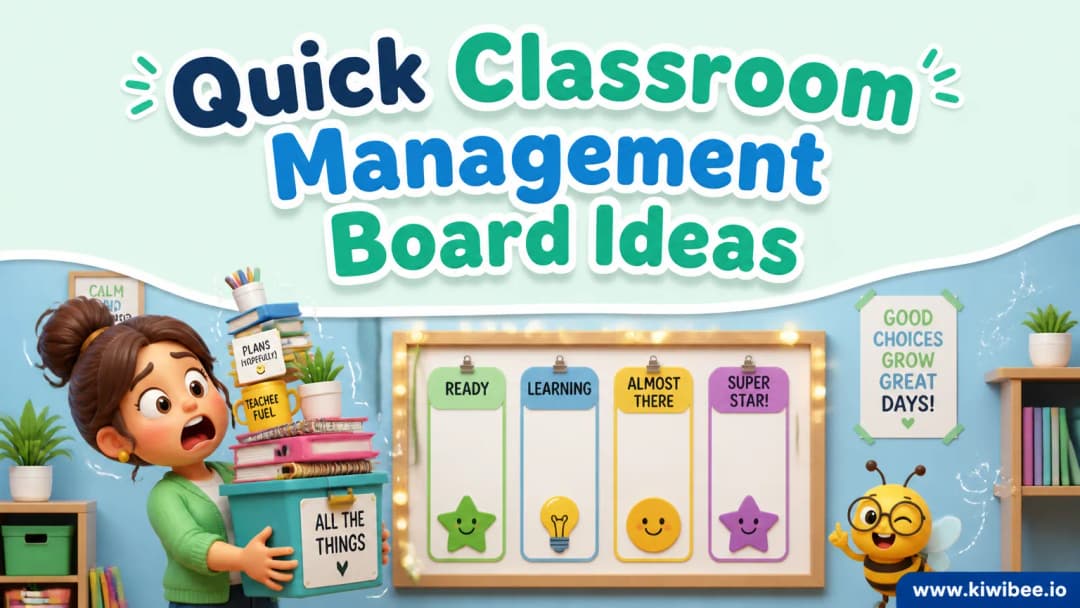
Quick Classroom Management Board Ideas
Explore four classic classroom management boards, from happy face charts to star systems, and learn how to digitize them with ClassSpark for real-time parent visibility.
 Home
Home All solutions
 Pricing
 About us
 KiwiBee for Non-profits
 Events & webinars
 For big organisations
 For schools
 For centers
 For team leaders
 For teachers
 AI and resources
 Resources
 Printable worksheets
 Lesson Packs
 Interactive simulations
 Teacher tools
 AI studio
 Ideas and research