The first 10 minutes of class: calm vs chaos
How your warm-up routine determines the rest of the period
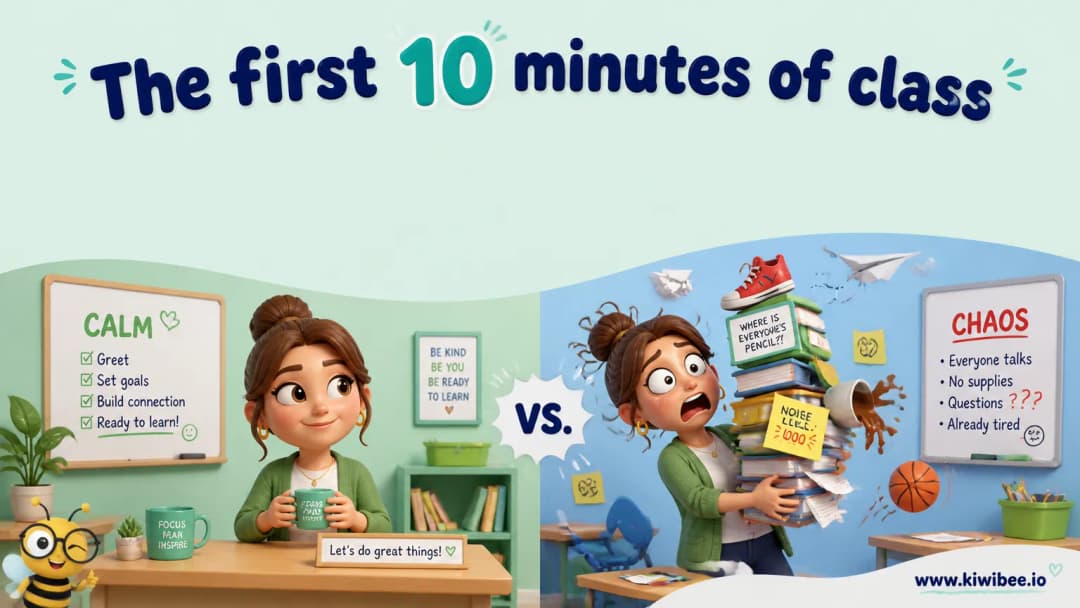
The 10-minute window
Every experienced teacher knows: the first 10 minutes predict the rest of the period. Students who enter a calm, structured environment stay focused. Students who enter chaos never fully settle.
The warm-up formula
Display a warm-up task on the board before students arrive. Set a visible classroom timer for 5 minutes. Students see the task, see the timer, and start working without needing you to say anything.
What to do during warm-up time
Take attendance, circulate, have quiet one-on-one conversations. The timer runs itself. You're free to observe and connect.
Explore the platform
Continue with KiwiBee
Choose the KiwiBee workspace or resource library that fits what you need next.
Get one practical teaching resource in your inbox each week.
Related posts

Classroom management strategies that actually work in elementary
Five easy classroom management strategies: visual behaviour boards, a behaviour pyramid, digital points, class monitors, and clear rewards and consequences.
The Best Fun Timers to Use in the Classroom (Primary)
Five fun timers that keep primary classes focused — from the ClassDojo and Siri timers to the Mission Impossible, bomb, and volcano countdowns.
 Home
Home All solutions
 Pricing
 About us
 KiwiBee for Non-profits
 Events & webinars
 For big organisations
 For schools
 For centers
 For team leaders
 For teachers
 AI and resources
 Resources
 Printable worksheets
 Lesson Packs
 Interactive simulations
 Teacher tools
 AI studio
 Ideas and research