
String Pluck Harp
- Physics
Comments
Related to this simulation
Picked by meaning from games, worksheets, simulations, teacher tools and videos.
About this simulation
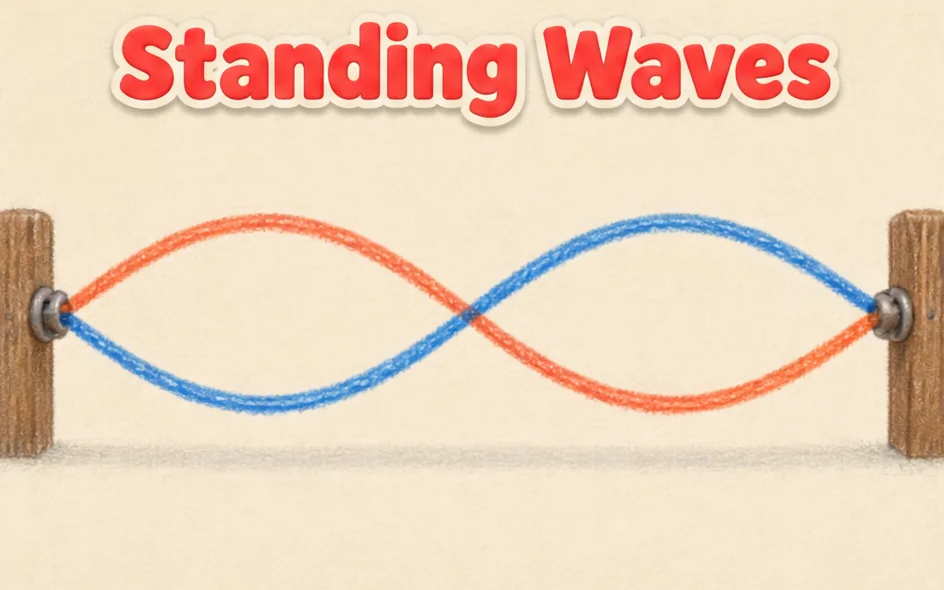
This simulation shows a set of harp strings tuned to a pentatonic scale plus an octave. Students drag a string aside and let go, or press keys 1 to 9, and the string vibrates in slow motion while the real note plays. Plucking closer to an end adds brighter harmonics to the tone. Readouts give the note, the frequency from f equals v over 2L, the string length and the wave speed. The Tension slider shows that tighter strings sound higher, and Ring time sets how long it sounds. Teachers can use it to teach standing waves and how string length, tension and pitch are linked.
What students can explore
- Pull the longest string sideways and release it, then do the same with the shortest and compare the frequency readouts.
- Pluck one string near its middle, then near its end, and listen for the brighter tone.
- Raise the Tension slider from 100 percent to 200 percent and listen to the pitch rise.
- Press keys 1 to 9 to play the strings in order and hear the scale.
- Increase Ring time and watch the string keep vibrating longer.
Learning objectives
- 1Explain how string length affects the pitch of a plucked string.
- 2Describe how increasing tension raises the frequency.
- 3Use f equals v over 2L to compare the notes of different strings.
- 4Recognize that a plucked string vibrates at several harmonics at once.
Questions teachers ask
Is it free?
Yes. String Pluck Harp is free, needs no sign-up and runs in any modern browser, including whiteboards, tablets and phones.
How do I pluck a string?
Press and hold on a string, drag it sideways, then release. You can also press the number keys 1 to 9 to pluck each string at a fixed point.
Why do shorter strings sound higher?
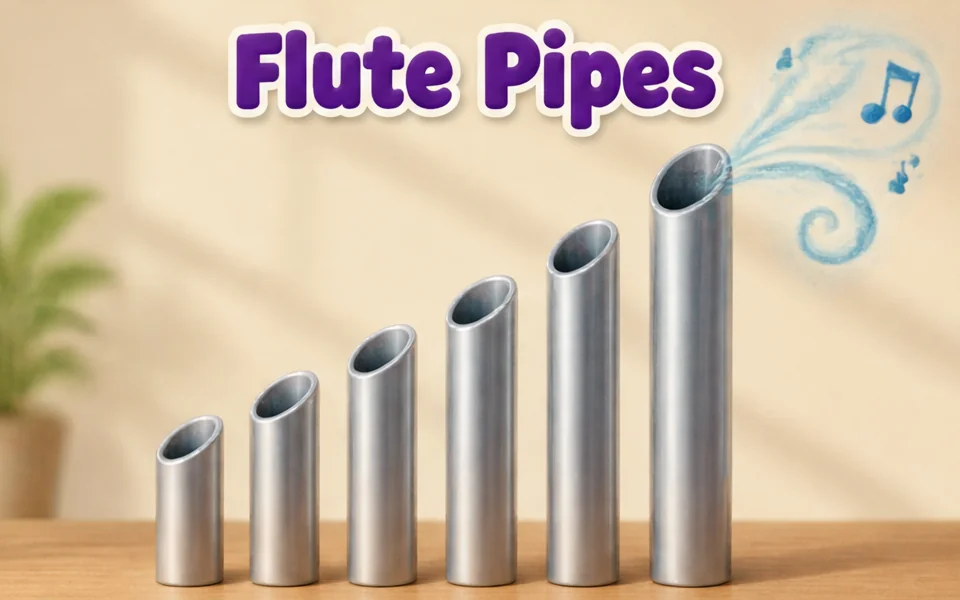
A string vibrates at f equals v divided by 2L. Halving the length doubles the frequency, which raises the pitch by one octave.
Why is the string motion slow on screen?
The motion is slowed about 60 times so you can see the vibration. The sound still plays at the real frequency.
Embed this simulation
Drop it into your LMS, blog, or class site — free.
<iframe src="https://kiwibee.io/en/simulations/string-pluck-harp-3d-simulation/embed" title="String Pluck Harp | KiwiBee" loading="lazy" allowfullscreen style="width:100%;height:min(70vh,620px);min-height:420px;border:0;border-radius:16px"></iframe>Curriculum standards
Cambridge
- 78MM.01Rehearse, perform and make musical choices within a broad range of musical material, beginning to make choices about repertoire.Cambridge Lower Secondary Music (0078) — Stage 8 › Making Music
Learning objectives © UCLES (Cambridge University Press & Assessment), quoted with attribution.
Bring interactive science into your classroom
KiwiBee's free teacher workspace brings lesson planning, worksheets, classroom tools, and gradebook together in one place.
Start free and create your first classWatch KiwiBee on YouTube
Short KiwiBee videos for teachers and schools. Subscribe, or follow KiwiBee wherever you are.
 Home
 All solutions
 Pricing
 About us
 KiwiBee for Non-profits
 Events & webinars
 For big organisations
 For schools
 For centers
 For team leaders
 For teachers
 Resources
 Printable worksheets
 Interactive simulations
 Teacher tools
 Ideas and research


