
Explore where notable people were born on an interactive world map. Filter culture, science, leadership, and sport, compare regions, and connect biographies with geography. Map by Topi Tjukanov, using research by Morgane Laouenan and colleagues.
—
KiwiBee uses optional Google Analytics, Google Ads, and Meta Pixel cookies to understand adult visitors, measure completed sign-ups, and improve campaigns. Essential cookies always stay on. OpenAI’s ChatGPT Ads Pixel also measures page views and completed enquiries after advertising consent, and may use hashed contact details for matching. Privacy policy
Students drag the sun along the sky, drag a small observer around the circle, or slide the date from day 1 to 365. Buttons jump to the summer solstice, equinox, winter solstice or back to sunrise, and a toggle plays the day. Readouts show the date, sun azimuth and altitude, the direction to the Heel Stone from the observer and the alignment verdict. It shows how the sun's rising point shifts through the year at latitude 51 degrees north, and how prehistoric builders may have marked it.
Yes, it costs nothing and there is no account to create. Stonehenge Solstice works in the browser on laptops, Chromebooks, whiteboards, tablets and phones.
It was raised in stages from about 3000 BC to 1500 BC on Salisbury Plain in England, at a latitude of about 51.2 degrees north.
It is a large stone outside the main circle. Seen from the center, the midsummer sun rises close to it, which is why the site is linked to the summer solstice.
Slide the Date, drag the sun or the observer, and use the solstice and equinox buttons. Press Back to sunrise to reset the view to dawn.
Drop it into your LMS, blog, or class site — free.
<iframe src="https://kiwibee.io/en/simulations/stonehenge-solstice-3d-simulation/embed" title="Stonehenge Solstice | KiwiBee" loading="lazy" allowfullscreen style="width:100%;height:min(70vh,620px);min-height:420px;border:0;border-radius:16px"></iframe>Continue exploring
Explore where notable people were born on an interactive world map. Filter culture, science, leadership, and sport, compare regions, and connect biographies with geography. Map by Topi Tjukanov, using research by Morgane Laouenan and colleagues.

Explore how ideas spread through social networks in an interactive lesson. Draw connections, compare network structures, and investigate collective behavior.
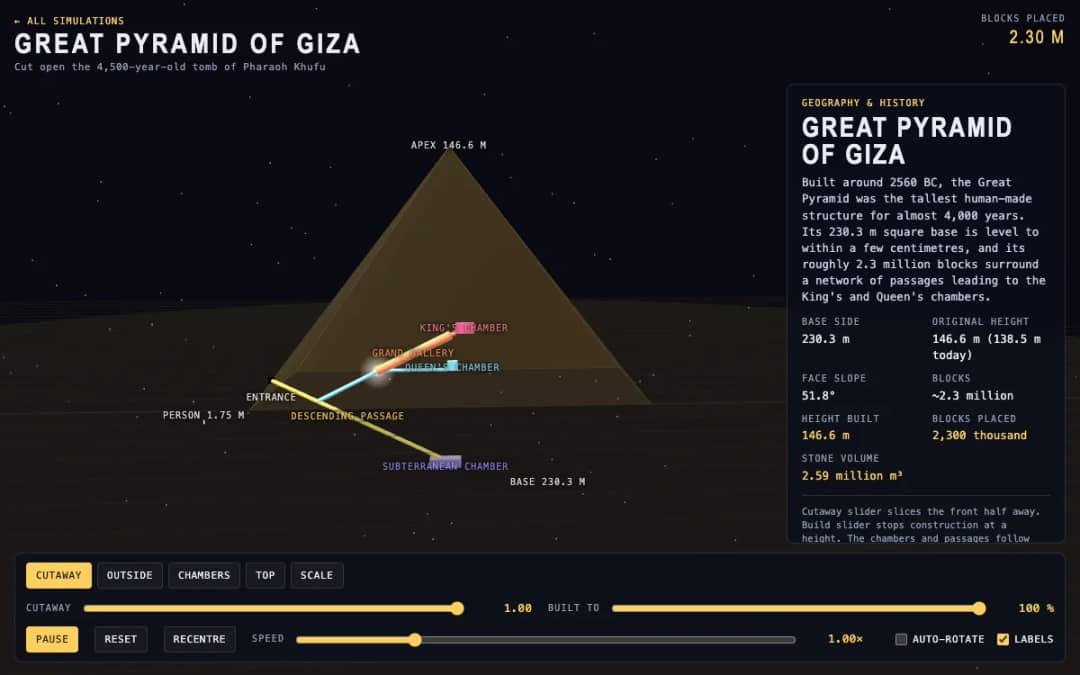
The Great Pyramid of Giza is shown in 3D with a cutaway slider that slices the front away and a build slider that stops construction at any height. Readouts show the height built, blocks placed and stone volume.
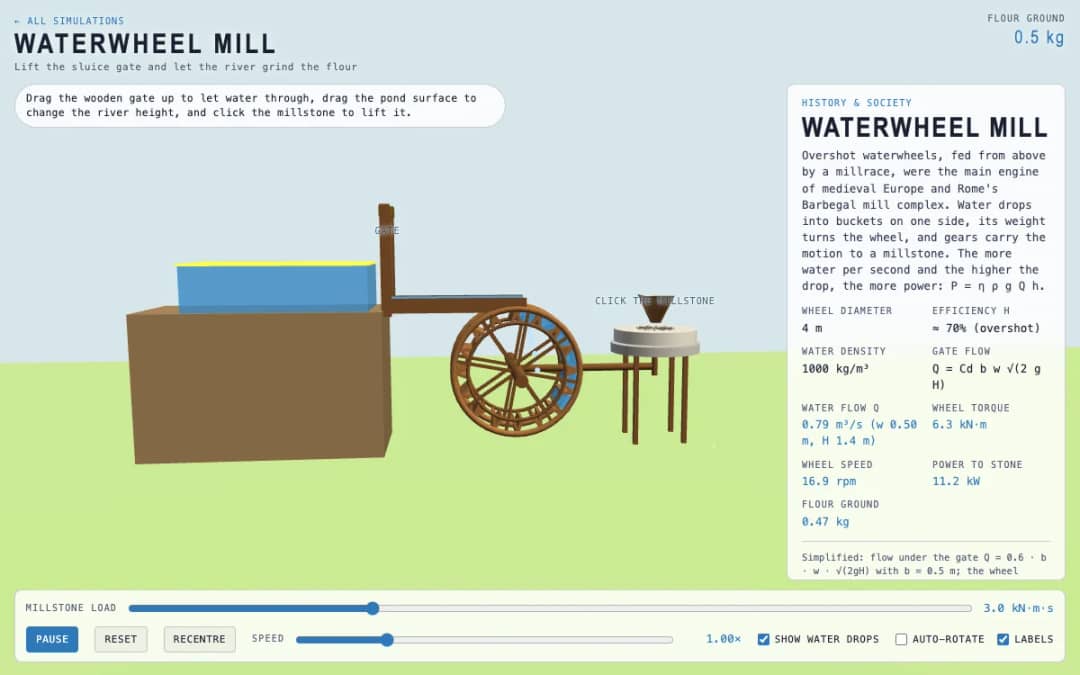
An overshot waterwheel driving a millstone. Students lift the wooden gate, change the pond level and click the millstone, then watch flow, torque, wheel speed and flour output.
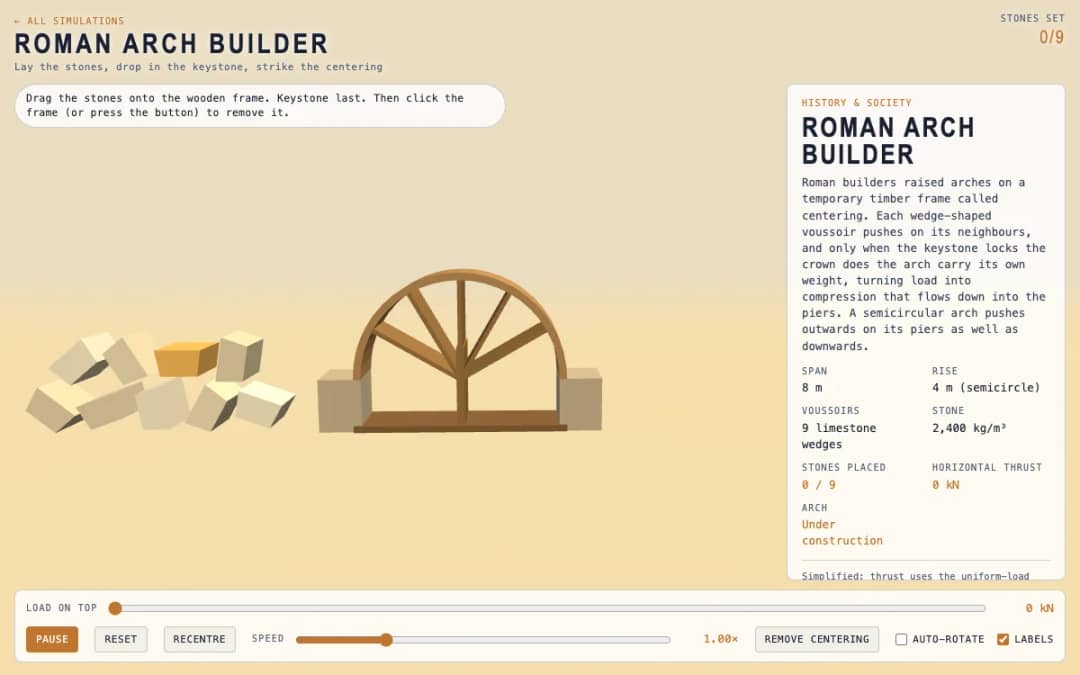
A wooden frame and nine limestone wedges. Students drag the stones into place, add the keystone last, then remove the frame and test the arch with extra weight on top.
KiwiBee's free teacher workspace brings lesson planning, worksheets, classroom tools, and gradebook together in one place.
Start free and create your first class Home
 All solutions
 Pricing
 About us
 KiwiBee for Non-profits
 Events & webinars
 For big organisations
 For schools
 For centers
 For team leaders
 For teachers
 AI and resources
 Resources
 Printable worksheets
 Lesson Packs
 Interactive simulations
 Teacher tools
 AI studio
 Ideas and research