
Free interactive food webs simulation. Explore food webs hands-on online — great for whole-class or independent practice.
—
KiwiBee uses optional Google Analytics, Google Ads, and Meta Pixel cookies to understand adult visitors, measure completed sign-ups, and improve campaigns. Essential cookies always stay on. OpenAI’s ChatGPT Ads Pixel also measures page views and completed enquiries after advertising consent, and may use hashed contact details for matching. Privacy policy
Every living thing in three habitats sits in a web of who eats whom, with the sun at the top and decomposers in the soil. Pick an animal to light up its food and its predators, switch species off to start a chain reaction, and compare the energy held at each level of the energy pyramid.
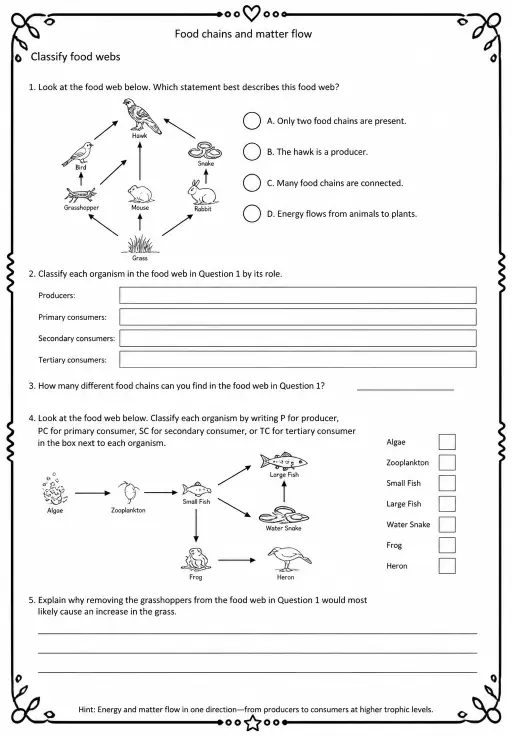
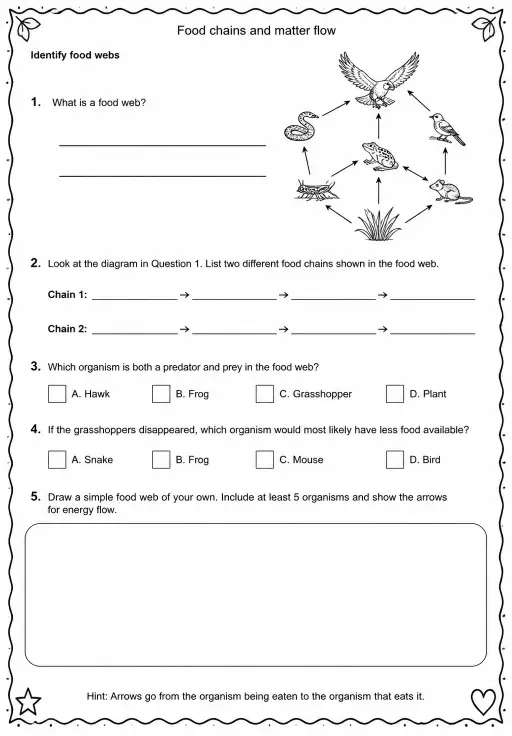
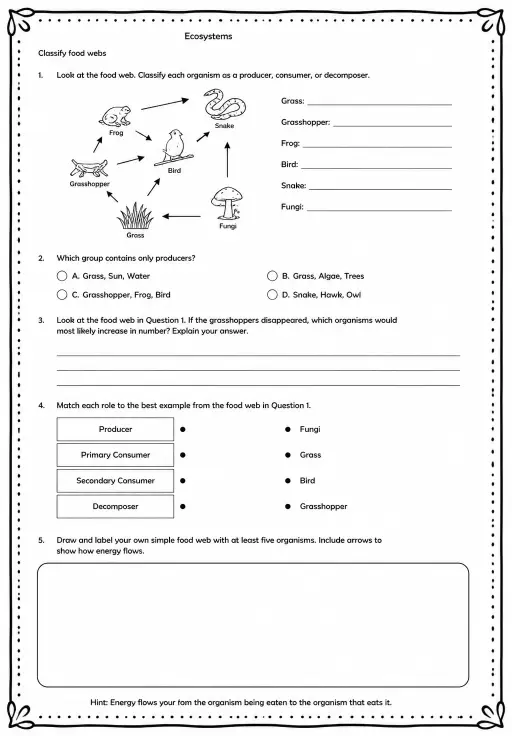
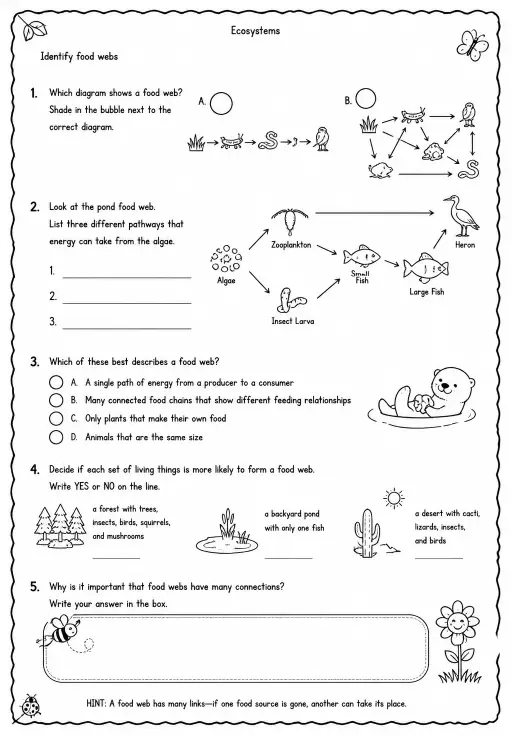
A food chain is one path of energy, such as grass to rabbit to fox. A food web joins all the chains in a habitat, because most animals eat, and are eaten by, more than one living thing.
The arrows show which way the energy goes. When a rabbit eats grass, the energy in the grass moves into the rabbit, so the arrow points from the grass to the rabbit.
Only about a tenth of the energy at one level passes up to the next; the rest is used for living, growing and keeping warm. By the top of the web there is only enough energy for a few hunters.
Drop it into your LMS, blog, or class site — free.
<iframe src="https://kiwibee.io/en/simulations/food-web-explorer-simulation/embed" title="Food Web Explorer | KiwiBee" loading="lazy" allowfullscreen style="width:100%;height:min(70vh,620px);min-height:420px;border:0;border-radius:16px"></iframe>Continue exploring
Free interactive food webs simulation. Explore food webs hands-on online — great for whole-class or independent practice.
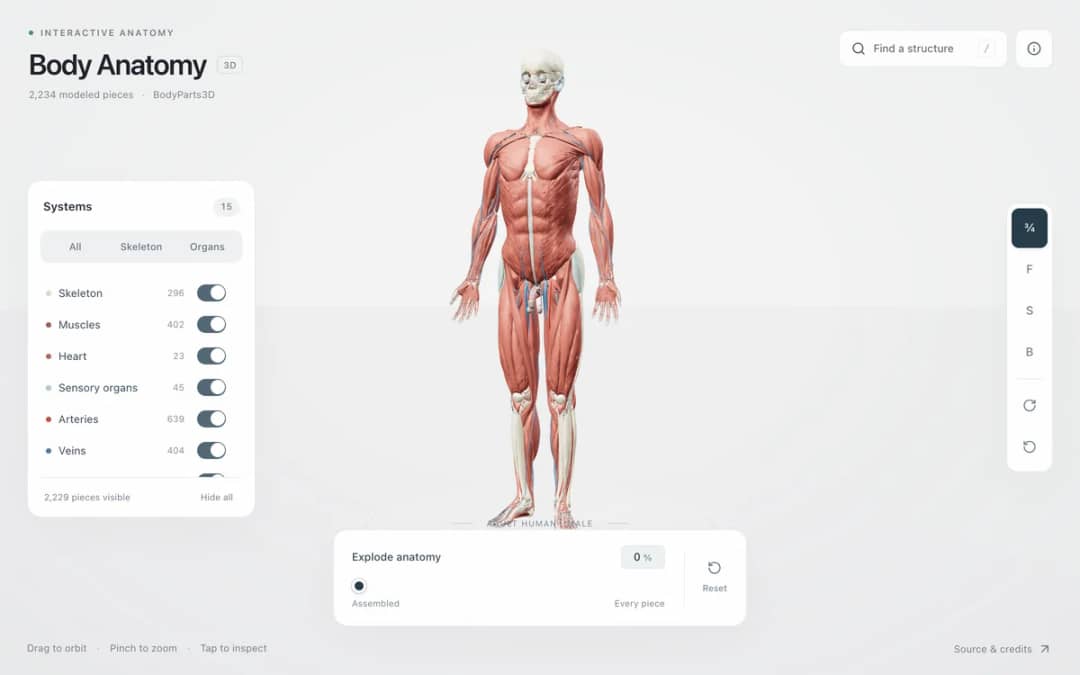
Explore an adult male reference body in 3D. Reveal 14 anatomical systems, search thousands of named structures, isolate organs, and pull 2,209 modeled pieces apart to see how the body is organized.
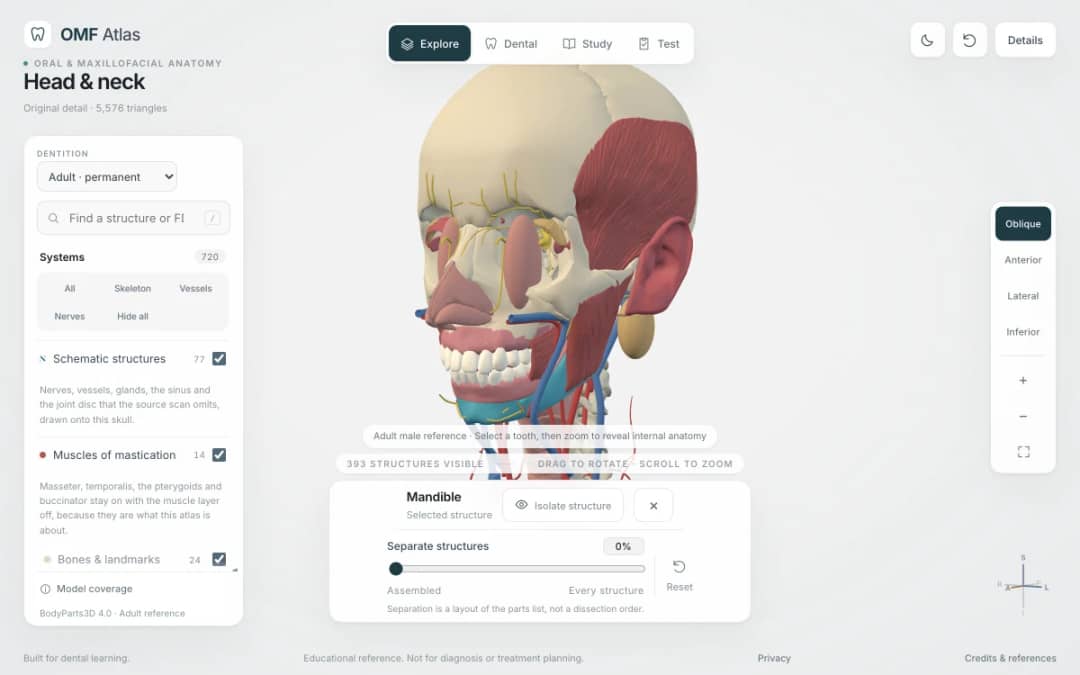
Explore the head and neck in 3D: 643 source meshes across 14 layers, 47 facial and masticatory muscles, and 77 drawn nerves, vessels and glands the source scan omits. Open any tooth onto its own pulp canal, and follow the seven stages of tooth development.

Free interactive photosynthesis simulation. Explore photosynthesis hands-on online — great for whole-class or independent practice.

Free interactive states of matter simulation. Explore states of matter hands-on online — great for whole-class or independent practice.
From model to evidence
Use a worksheet to capture predictions, observations, and explanations after students explore.
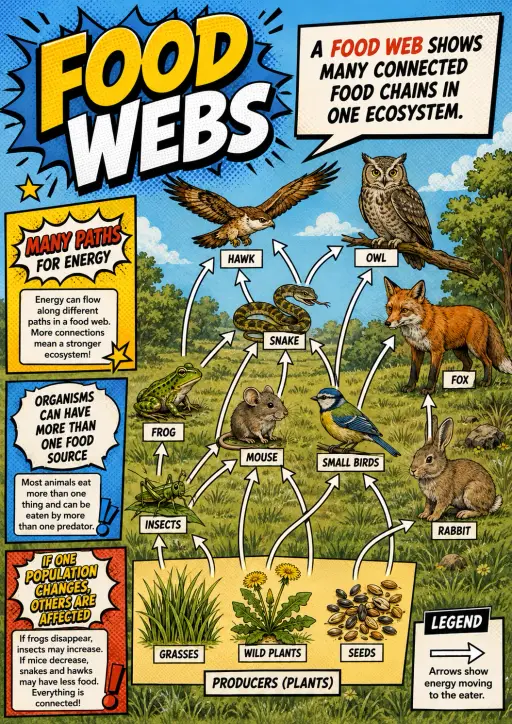
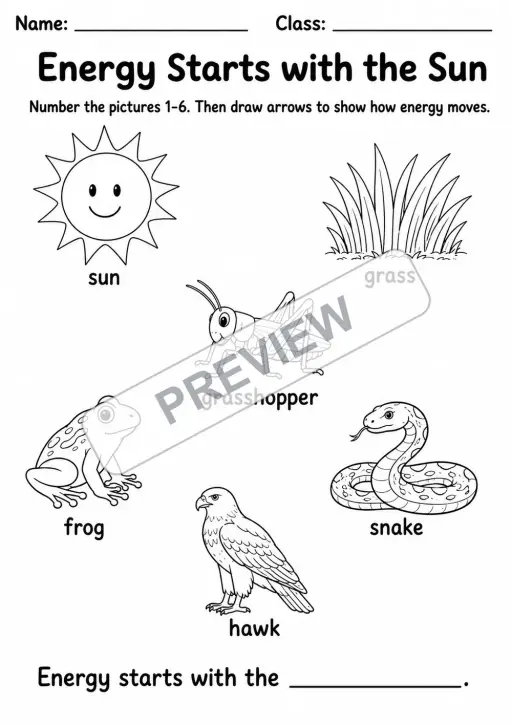
KiwiBee's free teacher workspace brings lesson planning, worksheets, classroom tools, and gradebook together in one place.
Start free and create your first class Home
 All solutions
 Pricing
 About us
 KiwiBee for Non-profits
 Events & webinars
 For big organisations
 For schools
 For centers
 For team leaders
 For teachers
 AI and resources
 Resources
 Printable worksheets
 Lesson Packs
 Interactive simulations
 Teacher tools
 AI studio
 Ideas and research