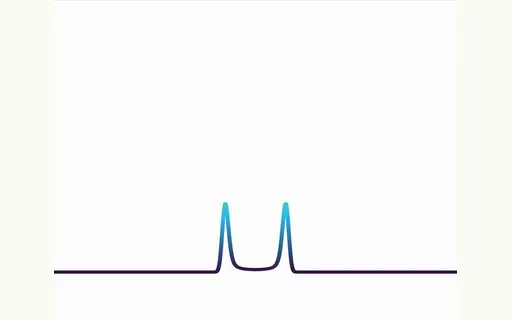
Explore an evolving probability density in a two-well landscape.
—
KiwiBee uses optional Google Analytics, Google Ads, and Meta Pixel cookies to understand adult visitors, measure completed sign-ups, and improve campaigns. Essential cookies always stay on. OpenAI’s ChatGPT Ads Pixel also measures page views and completed enquiries after advertising consent, and may use hashed contact details for matching. Privacy policy
This simulation shows diffusion as the result of random motion. Every dye particle takes random steps, yet together they spread from the crowded side to the empty side until the concentration is even. Students set the temperature between 275 and 370 K and the particle diameter, then restart with the dye on the left. Readouts give the mixed percentage, the diffusion coefficient, elapsed time and the spread from the start. It helps teach diffusion, Brownian motion and why warm liquids mix faster.
Yes. It is free to use in any modern browser, including tablets and interactive whiteboards, with no sign-up.
Each particle moves randomly, but there are more particles on the crowded side, so more of them wander toward the empty side than the other way. The net result is a flow toward an even spread.
At higher temperature the solvent molecules move faster and the water is less viscous, so particles take larger random steps. The diffusion coefficient rises with temperature.
Set Temperature and Particle diameter, then press Restart so the dye begins on the left. Watch the Mixed readout and compare runs. Ask students to predict which setting will mix fastest.
Drop it into your LMS, blog, or class site — free.
<iframe src="https://kiwibee.io/en/simulations/diffusion-3d-simulation/embed" title="Diffusion | KiwiBee" loading="lazy" allowfullscreen style="width:100%;height:min(70vh,620px);min-height:420px;border:0;border-radius:16px"></iframe>Continue exploring
Explore an evolving probability density in a two-well landscape.

Explore concentration patterns from a two-species reaction model.
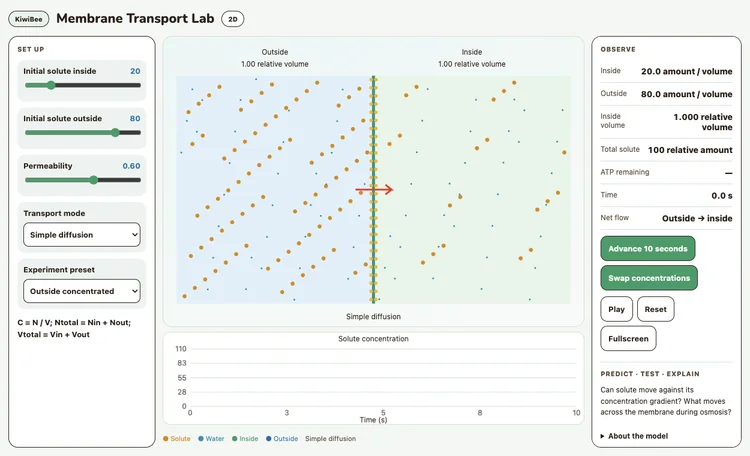
Experiment with diffusion, transport proteins, ATP-driven pumps and osmosis. Track concentration, conserved solute and water volume.
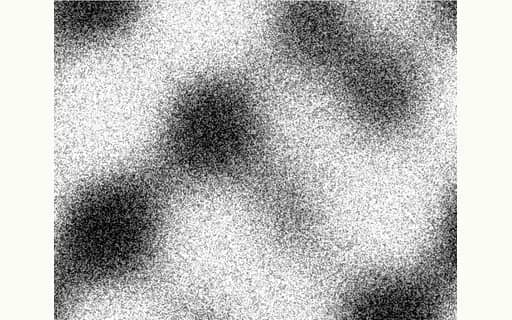
Explore nonlinear diffusion as an image-processing model.

Explore an adult male reference body in 3D. Reveal 14 anatomical systems, search thousands of named structures, isolate organs, and pull 2,209 modeled pieces apart to see how the body is organized.
KiwiBee's free teacher workspace brings lesson planning, worksheets, classroom tools, and gradebook together in one place.
Start free and create your first class Home
 All solutions
 Pricing
 About us
 KiwiBee for Non-profits
 Events & webinars
 For big organisations
 For schools
 For centers
 For team leaders
 For teachers
 AI and resources
 Resources
 Printable worksheets
 Lesson Packs
 Interactive simulations
 Teacher tools
 AI studio
 Ideas and research