
Printable worksheet
Traditional Instruments Around the World
QuizMusicGrade 6English

Practise more with these
Picked by meaning from games, worksheets, simulations, teacher tools and videos.
 GameMusical Instruments Picture Quiz
 GameWorld Heritage and Cultural Traditions
 Game6.2 What do you hear? — Easy Quiz
 Game6.2 What do you hear? — Hard Quiz
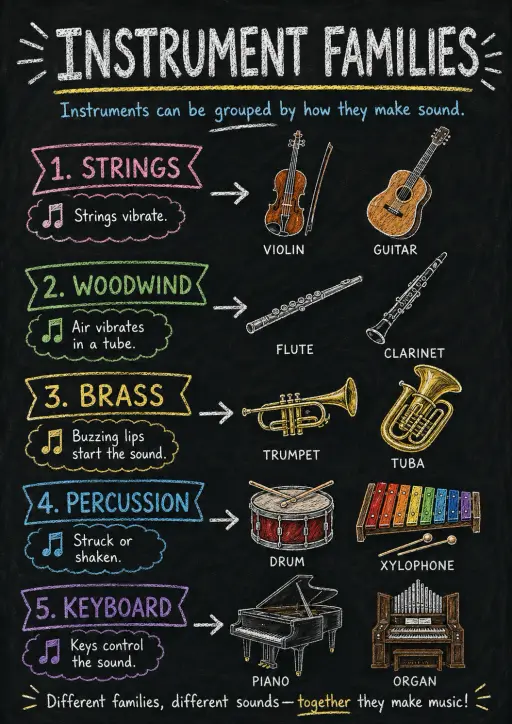 WorksheetInstrument Families Instruments Infographic
 WorksheetString Instruments Infographic
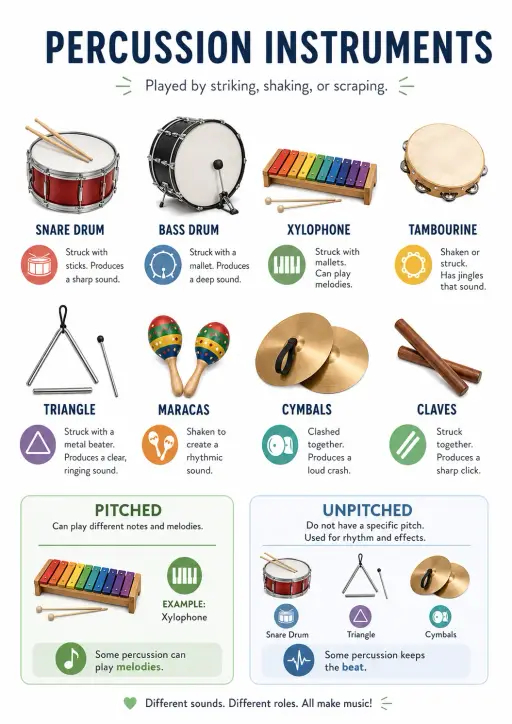 WorksheetPercussion Instruments Infographic
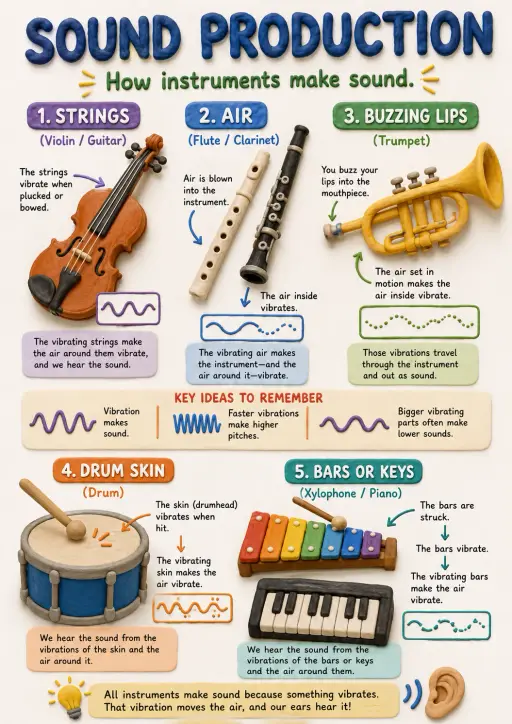 WorksheetSound Production Instruments Infographic
On this sheet
The words and questions from the game
- 1This kora produces sound mainly using…Plucked strings · A reed mouthpiece · A metal bell · A spinning motor
- 2The sitar is strongly associated with which musical context?Scottish pipe bands · Indian classical music · Andean panpipe groups · Japanese taiko ensembles
- 3How does a player produce sound in the pictured didjeridu?Bow strings · Strike metal bars · Vibrate lips while blowing into the tube · Press piano keys
- 4Which instrument family best fits the djembe?Bowed strings · Woodwind with a reed · Keyboard strings · Percussion
- 5All traditional instruments from a continent are the same.True · False
- 6A vibrating string produces sound on the kora and the ___.
- 7Type the instrument shown as a long hollow wooden tube.
- 8The kora is closely associated with which region?West Africa · Antarctica · Northern Europe · Central Siberia
- 9Didjeridu traditions are historically associated with all Aboriginal Australian communities in exactly the same way.True · False
- 10Which visible feature most strongly marks a string instrument?A painted pattern · Taut strings that can vibrate · Its brown color · A wooden stand
- 11A drum’s stretched surface is commonly called its ___.
- 12Which pair uses different main sound sources?Kora and sitar · Two sitars · Sitar and djembe · Two koras
- 13Type “plucking” or “blowing”: the kora is normally played by ___ its strings.
- 14An instrument’s cultural name and playing tradition deserve careful attribution.True · False
- 15Why avoid invented sacred-looking patterns on an instrument illustration?Patterns always determine its pitch · Every pattern means the same thing · All instruments must be undecorated · Cultural designs can have specific meanings and permissions
- 16Which Japanese instrument is a bamboo flute?Shakuhachi · Sitar · Kora · Djembe
About this worksheet
A printable worksheet made from the KiwiBee game “Traditional Instruments Around the World”. Open it in the free Worksheet Studio to choose the design and the sheet type, then print it or save a PDF.
Explore traditional instruments through shapes, materials and sound-making methods. Connect examples with named cultural contexts while respecting diversity.
- traditional instruments quiz
- kora west africa
- sitar india
- didjeridu australia
- world instrument pictures
- strings wind percussion
 Home
 All solutions
 Pricing
 About us
 KiwiBee for Non-profits
 Events & webinars
 For big organisations
 For schools
 For centers
 For team leaders
 For teachers
 Resources
 Printable worksheets
 Interactive simulations
 Teacher tools
 Ideas and research


Comments