
Printable worksheet
Comparative Literature in a Short Extract
QuizEnglishGrade 11English

Practise more with these
Picked by meaning from games, worksheets, simulations, teacher tools and videos.
 GameLiterary Ambiguity and Evidence
 GameTranslation, Connotation and Literary Choice
 GameA Clear Analytical Paragraph
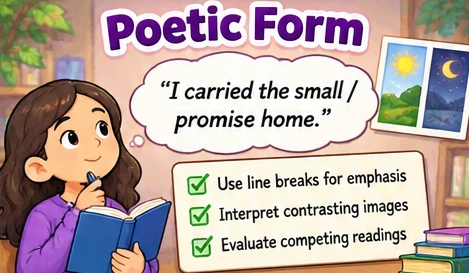 GamePoetic Form Meets Interpretation
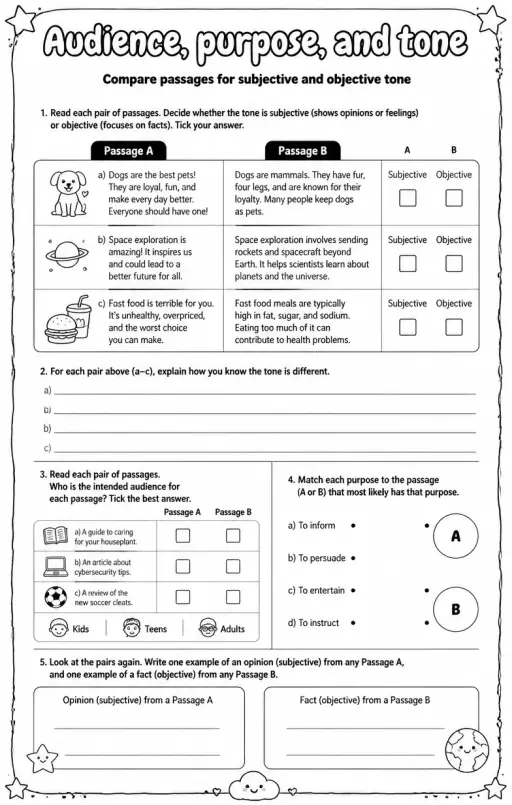 WorksheetCompare passages for subjective and objective tone
 WorksheetCompare and Contrast Reading Infographic
 WorksheetCompare information from two texts
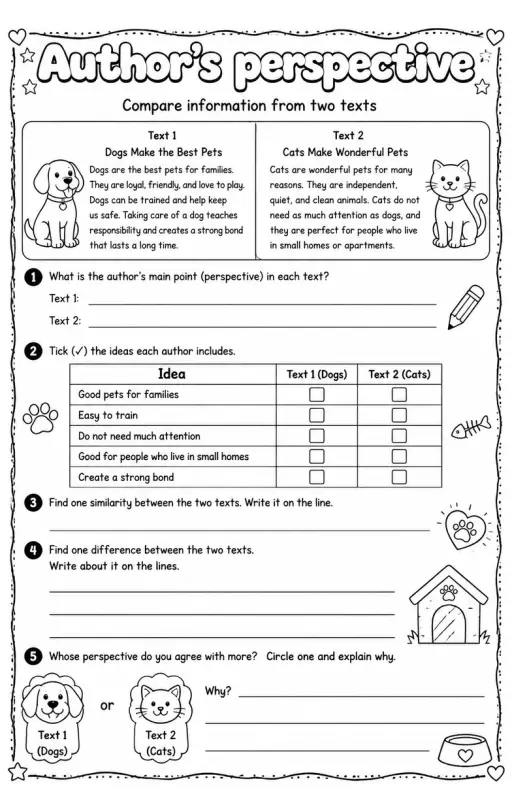 WorksheetCompare information from two texts
On this sheet
The words and questions from the game
- 1Extract A: “When I left, I folded my mother’s scarf into the bag.” Extract B: “I left the scarf on the hook and stepped outside without a coat.” Both scenes conBoth texts prove permanent rejection of family. · Both characters leave every personal object behind. · Both leave: A takes a family-linked object; B leaves it behind. · Both speakers carry the scarf in a bag.
- 2Extract A: “When I left, I folded my mother’s scarf into the bag.” Extract B: “I left the scarf on the hook and stepped outside without a coat.” Both scenes conTrue · False
- 3Extract A: “When I left, I folded my mother’s scarf into the bag.” Extract B: “I left the scarf on the hook and stepped outside without a coat.” Both scenes con
- 4Extract A: “When I left, I folded my mother’s scarf into the bag.” Extract B: “I left the scarf on the hook and stepped outside without a coat.” Both scenes conBoth scenes concern a departure. · Both characters later regret leaving. · B leaves the scarf on a hook. · A places a scarf in a bag.
- 5Extract A, diary: “I said I did not care. I wrote that twice.” Extract B, third-person scene: “She said she did not care, then read the message again.” What shaBoth texts identify the same named character. · Both characters prove complete indifference through every action. · Both characters never think about the message again. · Statements of indifference coexist with actions suggesting continued attention.
- 6Extract A, diary: “I said I did not care. I wrote that twice.” Extract B, third-person scene: “She said she did not care, then read the message again.” The diarTrue · False
- 7Extract A, diary: “I said I did not care. I wrote that twice.” Extract B, third-person scene: “She said she did not care, then read the message again.” Which me
- 8Extract A, diary: “I said I did not care. I wrote that twice.” Extract B, third-person scene: “She said she did not care, then read the message again.” Which thBoth prove identical motives in every respect. · Neither gives any evidence of attention. · Both narrators prove the characters feel exactly the same emotion forever. · Both question stated indifference through different narrative access.
- 9Extract A: “The house waited. The gate waited. I waited.” Extract B: “We crossed the yard, opened the gate and carried the boxes into the house.” Which formal cA chains completed actions while B repeats waiting. · Both use exactly the same repeated sentence. · A repeats waiting clauses; B chains completed actions. · A is a list of fast completed journeys; B contains no actions.
- 10Extract A: “The house waited. The gate waited. I waited.” Extract B: “We crossed the yard, opened the gate and carried the boxes into the house.” The contrast cTrue · False
- 11Extract A: “The house waited. The gate waited. I waited.” Extract B: “We crossed the yard, opened the gate and carried the boxes into the house.” Which claim isA foregrounds waiting in this moment. · A proves that no change will ever occur for the speaker. · B depicts moving boxes into the house. · A repeats the word waited in successive clauses.
- 12Extract A: “The house waited. The gate waited. I waited.” Extract B: “We crossed the yard, opened the gate and carried the boxes into the house.” Which sentenceBoth use a house, so neither character performs any action. · A’s repeated clauses dwell on waiting; B’s sequence of verbs advances arrival. · Both mention houses, so both have identical themes. · A contains punctuation and B contains words.
- 13Extract A: “The broken clock stayed above the door, marking no hour but reminding me of her.” Extract B: “I removed the broken clock so I could hear the room wiBoth link object and memory: A keeps the reminder; B removes it. · Both prove memory can be erased completely. · Both speakers discard the clock without any memory association. · Both remove the clock to repair its mechanism.
- 14Extract A: “The broken clock stayed above the door, marking no hour but reminding me of her.” Extract B: “I removed the broken clock so I could hear the room wiTrue · False
- 15Extract A: “The broken clock stayed above the door, marking no hour but reminding me of her.” Extract B: “I removed the broken clock so I could hear the room wiDoor versus room, with no action considered · Broken versus broken alone · Clock versus clock · Stayed above the door versus I removed
- 16Extract A: “The broken clock stayed above the door, marking no hour but reminding me of her.” Extract B: “I removed the broken clock so I could hear the room wiBoth extracts prove removing objects always eliminates memory. · Every reader must prefer removal. · The extracts suggest different ways of managing a reminder. · The extracts establish the only two possible responses to loss.
- 17Extract A, three short sentences: “The bell rang. I stood. No one else moved.” Extract B, one flowing sentence: “As the bell rang, we rose together and drifted A’s form proves the speaker will always be alone. · A shows everyone standing together, while B isolates one silent person. · Both show every person rising in silence. · A’s short sentences isolate one response; B’s flow shows group movement.
- 18Extract A, three short sentences: “The bell rang. I stood. No one else moved.” Extract B, one flowing sentence: “As the bell rang, we rose together and drifted True · False
- 19Extract A, three short sentences: “The bell rang. I stood. No one else moved.” Extract B, one flowing sentence: “As the bell rang, we rose together and drifted No one else moved and we rose together · The word bell in A alone · The word door in B alone · Only the number of letters in door
- 20Extract A, three short sentences: “The bell rang. I stood. No one else moved.” Extract B, one flowing sentence: “As the bell rang, we rose together and drifted Both prove identical social experiences because each contains a bell. · Both respond to a bell; syntax and pronouns differ in linking person and group. · The texts reveal every character’s lifelong attitude to groups. · Both prove the same lifelong social identity from the single bell response.
About this worksheet
A printable worksheet made from the KiwiBee game “Comparative Literature in a Short Extract”. Open it in the free Worksheet Studio to choose the design and the sheet type, then print it or save a PDF.
Compare original literary extracts through theme, narrative form and the exact scope of a defensible paired thesis.
- ms 092
- english
- compare thematic treatment
- connect form to meaning
- support a nuanced comparative thesis
 Home
 All solutions
 Pricing
 About us
 KiwiBee for Non-profits
 Events & webinars
 For big organisations
 For schools
 For centers
 For team leaders
 For teachers
 Resources
 Printable worksheets
 Interactive simulations
 Teacher tools
 Ideas and research


Comments