
Printable worksheet
Circuits, Measurements and Faults
QuizScienceGrade 6English

Practise more with these
Picked by meaning from games, worksheets, simulations, teacher tools and videos.
 GameA Circuit That Solves a Problem
 GameCurrent Needs a Circuit
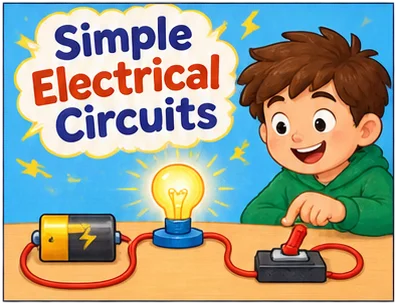 GameSimple Electrical Circuits Quiz for Grade 4
 GameElectricity from Source to Device
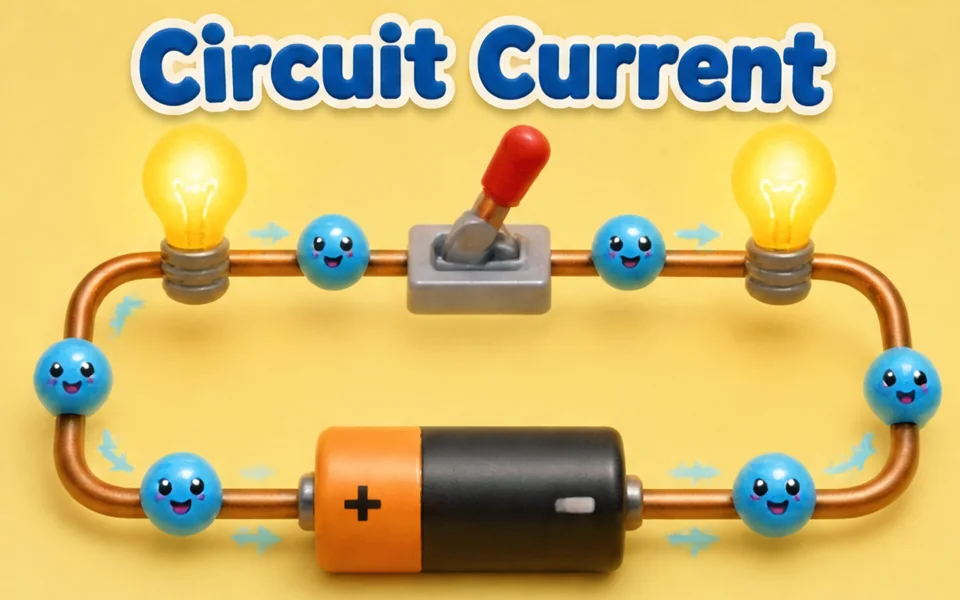 SimulationCircuit Current Flow
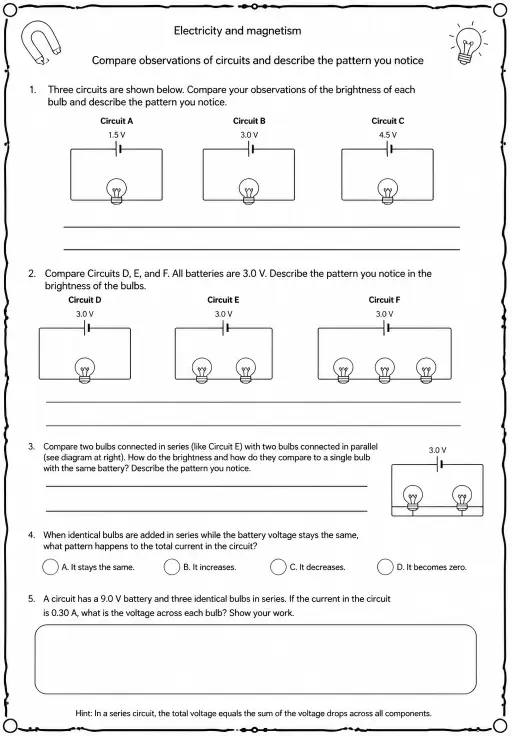 WorksheetCompare observations of circuits and describe the pattern you notice
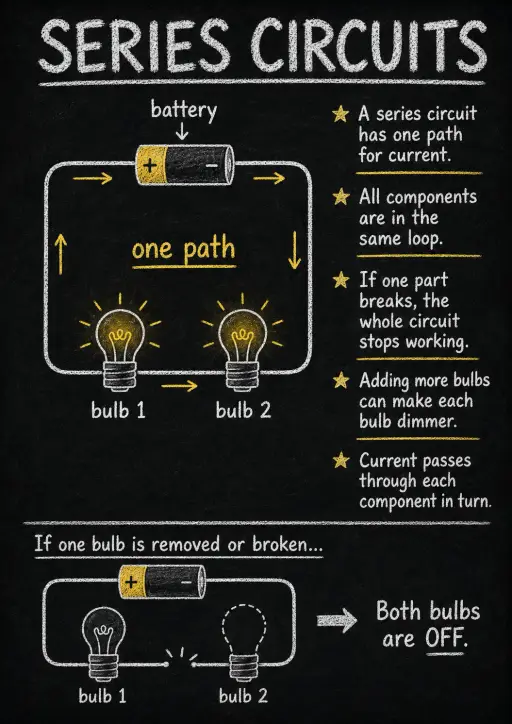 WorksheetSeries circuits Electricity and Magnetism Infographic
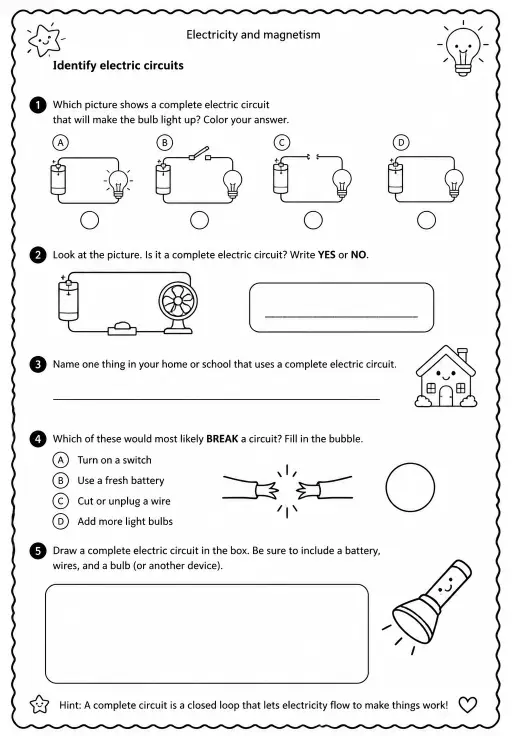 WorksheetIdentify electric circuits
On this sheet
The words and questions from the game
- 1Which meter reading tells you the current in a circuit?ruler reading in centimetres · ammeter reading in amperes · thermometer reading in degrees Celsius · voltmeter reading in volts
- 2A voltmeter is connected in parallel with the part of the circuit you want to measure.True · False
- 3Listen to the observation. What current reading is reported?3.0 A · 0.20 A · 0.40 A · 0.30 A
- 4Order these actions in the safest correct procedure for using a disconnected multimeter to measure the voltage of one lamp, from first to last.
- 5A 6 V battery powers two identical lamps in series. An ammeter before the first lamp reads 0.40 A. What should an ammeter between the two lamps read?0.20 A · 6.0 A · 0.40 A · 0.80 A
- 6A 9 V battery powers two lamps in parallel. What voltage is across each lamp if the wires have negligible resistance?9 V · 18 V · 0 V · 4.5 V
- 7In an ideal simple battery-and-lamp circuit with a working supply, an open break in the only conducting loop prevents steady current.True · False
- 8Two components, X and Y, are connected in series to a 3.0 V supply. The current is 0.20 A everywhere. A voltmeter reads 1.2 V across X and 1.8 V across Y. WhichX · Both components have zero resistance. · Y · They have the same resistance
- 9Each lamp has a resistance of 6 Ω, and the battery is 6 V. Which arrangement draws the larger total current from the battery?two lamps in parallel · two lamps in series · both draw the same current · Neither arrangement draws current from the battery.
- 10Listen to the observation. Which conclusion is supported?The current in series is always zero. · Adding an identical lamp in series reduced the total current. · Adding an identical lamp in series doubled the total current. · The battery voltage changed from 6 V to 12 V.
- 11Order these four arrangements from greatest total current to smallest total current. Each lamp has resistance 6 Ω and each circuit uses a 6 V battery.
- 12Circuit P is parallel. Its two branches each carry 0.40 A, so the main current is 0.80 A. Circuit S is series and carries 0.40 A everywhere. Which statement is Series circuits have different current at different points. · Current is always larger in series than in parallel. · Voltage in each branch of a parallel circuit must be zero. · The total current in a parallel circuit can be larger than the current in one branch.
- 13A simple series circuit has a 6.0 V battery, one lamp and one switch. The switch is meant to be closed. The ammeter reads 0.00 A. A voltmeter across the switch The lamp is drawing too much current. · The switch is open or faulty open. · The battery voltage is zero. · There is a short circuit across the lamp.
- 14If a wire directly connects the positive and negative terminals of a battery and bypasses the lamp, that is a short circuit.True · False
- 15A 9 V battery is connected in a simple circuit. The lamp is off, the ammeter reads 3.0 A, and one wire becomes warm. Which fault is most likely?open circuit · battery completely flat · voltmeter connected in parallel · short circuit
- 16A simple lamp circuit does not work. Before using a meter or replacing any parts, which is the best first external check?Check that the switch is in the closed position · Measure the battery voltage · Replace the lamp with a spare · Take the circuit apart and rebuild it completely
- 17A battery powers two parallel branches. Branch 1 current is 0.25 A and Branch 2 current is 0.35 A. What should the main current be?0.25 A · 1.20 A · 0.60 A · 0.10 A
- 18Two 6 Ω lamps are connected in series to a 6 V battery. Student A reports a current of 0.50 A. Student B reports a current of 2.0 A. Which report is likely to bStudent A, because series circuits always have zero current · Both are correct, because current can be any value · Student B, because the expected current is 6 V divided by 12 Ω, which is 0.50 A · Neither is correct, because parallel circuits always use 2.0 A
- 19Three resistors are in series on a 6 V supply: A = 2 Ω, B = 4 Ω, C = 6 Ω. Order the voltage drops from highest to lowest.
- 20A series circuit has a 9 V battery. Measured voltage drops are 4 V, 3 V and 2 V across three components. These readings are consistent with a working loop.True · False
- 21A 6 V battery powers two identical lamps that are meant to be in parallel. Measured data are: main current = 0.50 A, Branch 1 current = 0.50 A, Branch 2 currentBoth branches are working normally. · Branch 2 has an open fault, so only Branch 1 carries current. · The battery is flat, so all currents should be zero. · Battery shorted: both branch currents must be equal and huge.
About this worksheet
A printable worksheet made from the KiwiBee game “Circuits, Measurements and Faults”. Open it in the free Worksheet Studio to choose the design and the sheet type, then print it or save a PDF.
This quiz builds from reading current and voltage to comparing series and parallel circuits, then using evidence to identify faults and measurement errors.
- ms 125
- science
- interpret current and voltage readings
- compare circuit arrangements
- diagnose a fault from data
 Home
 All solutions
 Pricing
 About us
 KiwiBee for Non-profits
 Events & webinars
 For big organisations
 For schools
 For centers
 For team leaders
 For teachers
 Resources
 Printable worksheets
 Interactive simulations
 Teacher tools
 Ideas and research


Comments