
Printable worksheet
A Scientist's Careful Look
QuizScienceKindergartenEnglish
Practise more with these
Picked by meaning from games, worksheets, simulations, teacher tools and videos.
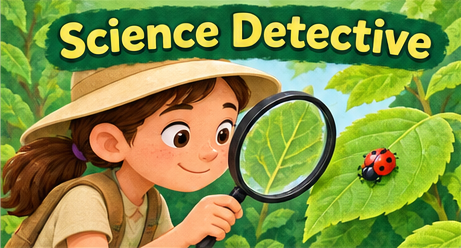 GameScience Detective: Observe, Predict and Test
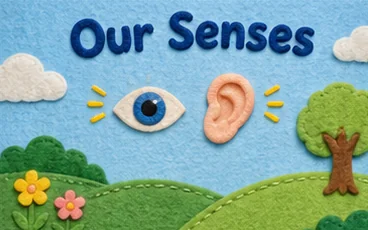 GameOur Senses Collect Clues
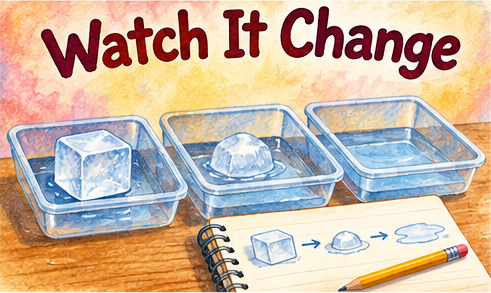 GameA Good Observation Record Does Not Lose the Change
 GameAn Animal Notices Something Nearby
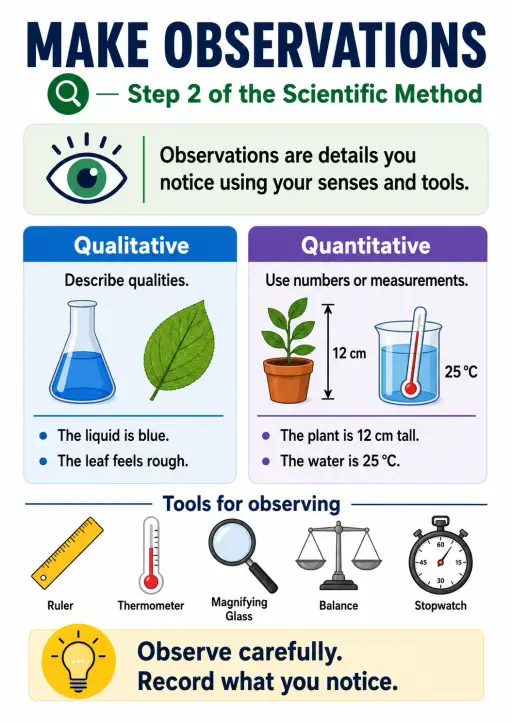 WorksheetMake Observations Scientific Method Infographic
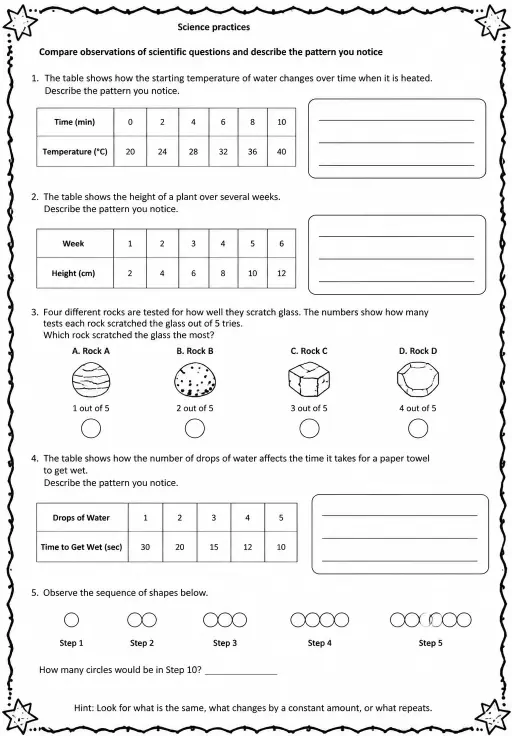 WorksheetCompare observations of scientific questions and describe the pattern you notice
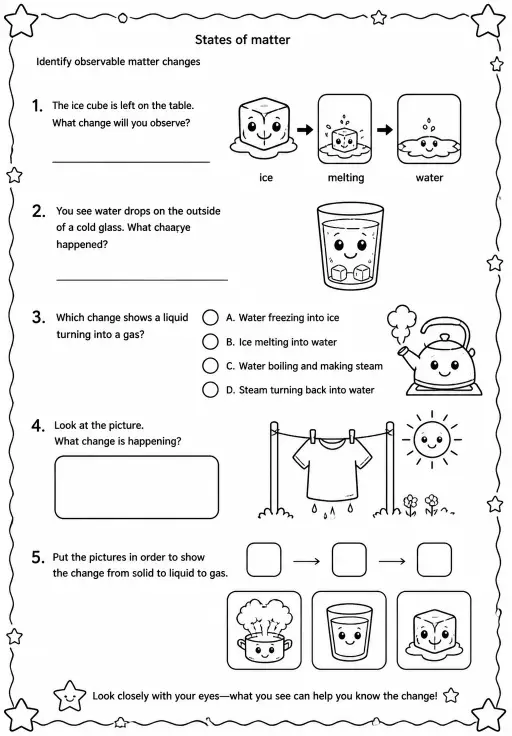 WorksheetIdentify observable matter changes
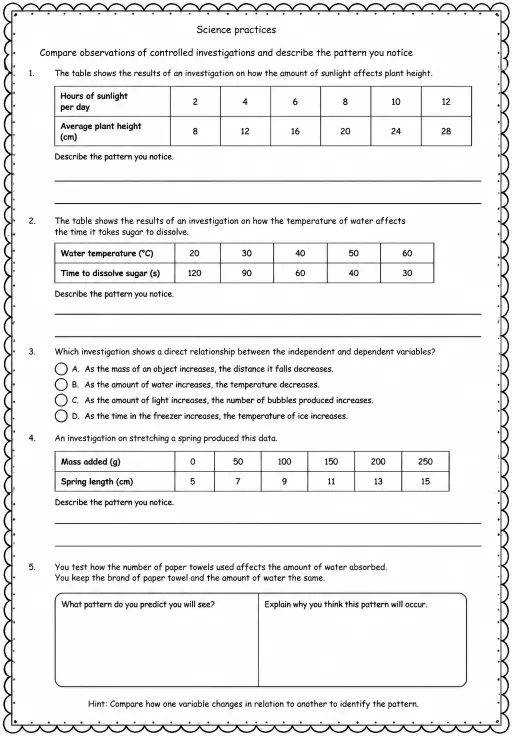 WorksheetCompare observations of controlled investigations and describe the pattern you notice
On this sheet
The words and questions from the game
- 1Which note tells only what someone can see?The leaf will grow tomorrow. · The leaf is the nicest. · The leaf is thirsty. · The leaf is green.
- 2Sam says, “The rock is gray.” This is an observation.True · False
- 3Which sentence tells only what eyes can see?The box is full of heavy things. · The box is my favourite. · The box is red. · The box will break.
- 4The picture is only for context. Mina sees a brown snail on a wet rock. Which note is a guess?The snail will hide under the rock later. · The rock is wet. · The snail is brown. · The snail is on the rock.
- 5Listen to the pencil notes. Which sentence is a guess?Pencil B is green. · Pencil B is better because it is lucky. · Pencil A is yellow. · Pencil A is longer.
- 6Put these steps in order for this careful science routine: first look closely, next say what you see, last make a guess.
- 7Lia writes, “The snail is happy because it is moving.” This is only an observation.True · False
- 8String A is 12 cm long. String B is 9 cm long. String C is 12 cm long. Which sentence is correct?String A and String C are the same length. · All three strings are different lengths. · String C is shorter than String B. · String B is the longest.
- 9The picture is only for context. Put the toy cars in order from shortest to longest. Car A is 7 cm. Car B is 12 cm. Car C is 15 cm. Car D is 10 cm.
- 10Plant P is 8 cm tall. Plant Q is 5 cm tall. Plant R is 8 cm tall. Which sentence is correct?Plant Q is taller than Plant P. · Plant P and Plant R are the same height. · Plant R is shorter than Plant Q. · All three plants are the same height.
- 11The picture is only for context. At 9:00, an ice cube is 4 cm wide. At 9:10, it is 2 cm wide. Which note records the change?The plate is white. · The ice cube is nice. · The ice cube became smaller. · The ice cube will last all day.
- 12Listen to the plant notes. True or false: The plant stayed the same height.True · False
- 13The picture is only for context. Two paper towels touch the same small spill. Towel A makes a wet patch 8 cm wide. Towel B makes a wet patch 5 cm wide. Which noTowel A is prettier. · Towel B is happier. · Towel B will always work best. · Towel A made a wet patch 3 cm wider than Towel B.
- 14Listen to the seedling notes. Which sentence is supported by the notes?Seedling Y grew 3 cm. · Seedling X grew 3 cm. · Seedling X grew because it liked the music. · Seedling Y stayed taller than Seedling X.
- 15Niko wants to compare two sponges. He pours 20 mL of water on Sponge A and 40 mL of water on Sponge B. Then he says Sponge B holds more water. What is the problHe wrote down a result. · He looked at the sponges. · He did not use the same amount of water on both sponges. · He used two sponges.
- 16The picture is only for context. Boat A starts at the 1 cm mark and ends at the 5 cm mark. Boat B starts at the 2 cm mark and ends at the 4 cm mark. Which notebBoat A moved because it is brave. · Both boats moved 4 cm. · Boat B moved farther than Boat A. · Boat A moved 2 cm more than Boat B.
About this worksheet
A printable worksheet made from the KiwiBee game “A Scientist's Careful Look”. Open it in the free Worksheet Studio to choose the design and the sheet type, then print it or save a PDF.
Children practise careful science notes: telling what they can see, comparing with evidence, and recording simple change.
- ms 101
- science
- distinguish visible observations from guesses
- compare objects using evidence
- record a simple change
 Home
 All solutions
 Pricing
 About us
 KiwiBee for Non-profits
 Events & webinars
 For big organisations
 For schools
 For centers
 For team leaders
 For teachers
 Resources
 Printable worksheets
 Interactive simulations
 Teacher tools
 Ideas and research


Comments