
Printable worksheet
3.2 Street art and optical illusions — Word Game
AnagramLanguagesGrade 5English

Practise more with these
Picked by meaning from games, worksheets, simulations, teacher tools and videos.
On this sheet
The words and questions from the game
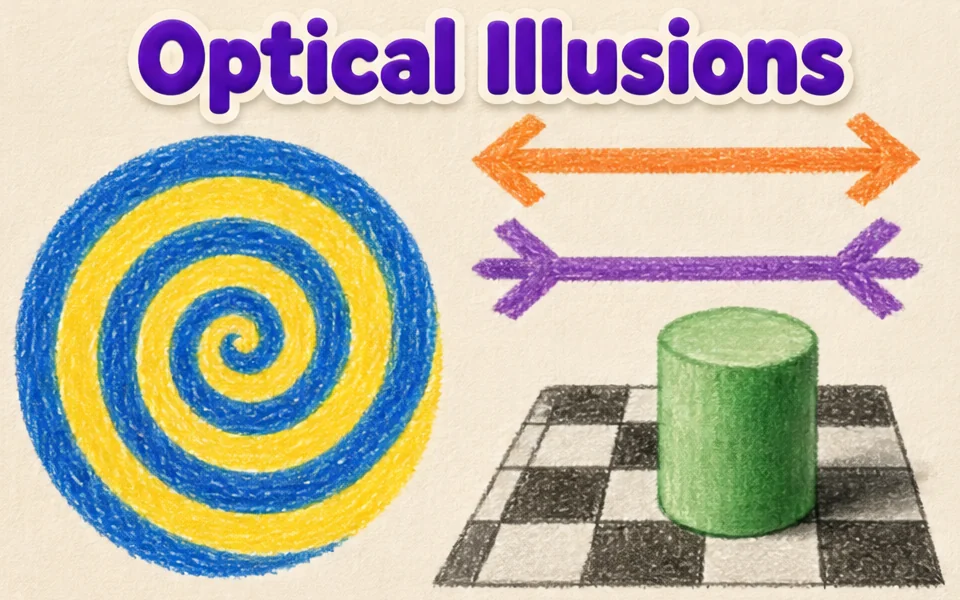
- 1optical illusionA picture that tricks your eyes so you see something that is not really there.
- 2street artPictures that artists paint on walls outdoors for everyone to see.
- 3sketchTo draw something quickly with a pencil, without many details.
- 4curvedBent like a bow, not straight.
- 5rub outTo take away a pencil mark with a rubber.
- 6shadeTo make part of a drawing darker by filling it in with pencil lines.
- 7holeAn empty gap or space that goes into or through something.
- 8melting glacierA huge river of ice that is slowly turning into water.
- 9patternShapes, lines or colours that repeat again and again.
- 10dotA very small round mark.
- 11verticalGoing straight up and down, like a wall.
- 12horizontalGoing flat from one side to the other, like a table top.
- 13brainThe part inside your head that thinks and remembers.
- 14trickTo make someone believe something that is not true.
About this worksheet
A printable worksheet made from the KiwiBee game “3.2 Street art and optical illusions — Word Game”. Open it in the free Worksheet Studio to choose the design and the sheet type, then print it or save a PDF.
Describe street art and optical illusions, follow drawing instructions (sketch, curved, vertical, shade, rub out) and say what a picture looks like.
- english
- global english stage 5
- unit 3
- lesson 3 2
 Home
 All solutions
 Pricing
 About us
 KiwiBee for Non-profits
 Events & webinars
 For big organisations
 For schools
 For centers
 For team leaders
 For teachers
 Resources
 Printable worksheets
 Interactive simulations
 Teacher tools
 Ideas and research


Comments