
ScienceMiddle School
KiwiBee uses optional Google Analytics, Google Ads, and Meta Pixel cookies to understand adult visitors, measure completed sign-ups, and improve campaigns. Essential cookies always stay on. OpenAI’s ChatGPT Ads Pixel also measures page views and completed enquiries after advertising consent, and may use hashed contact details for matching. Privacy policy

Picked by meaning from games, worksheets, simulations, teacher tools and videos.
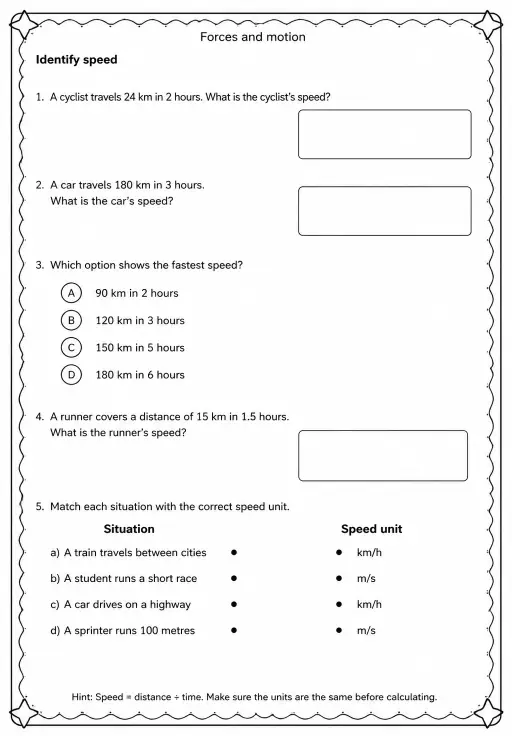
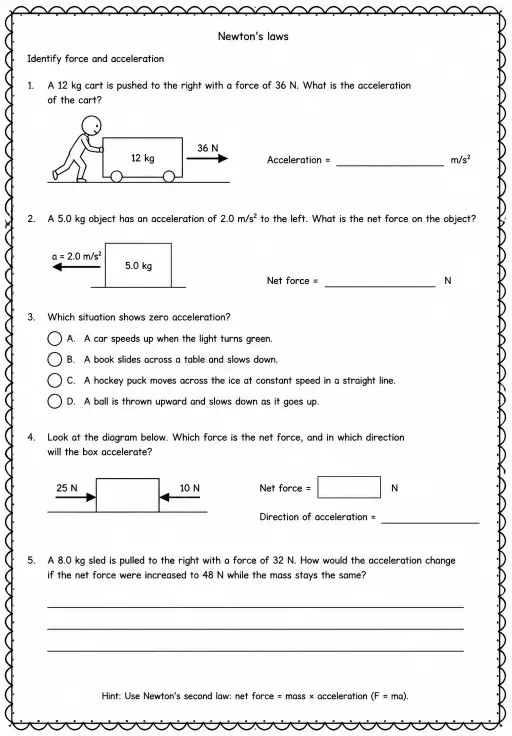
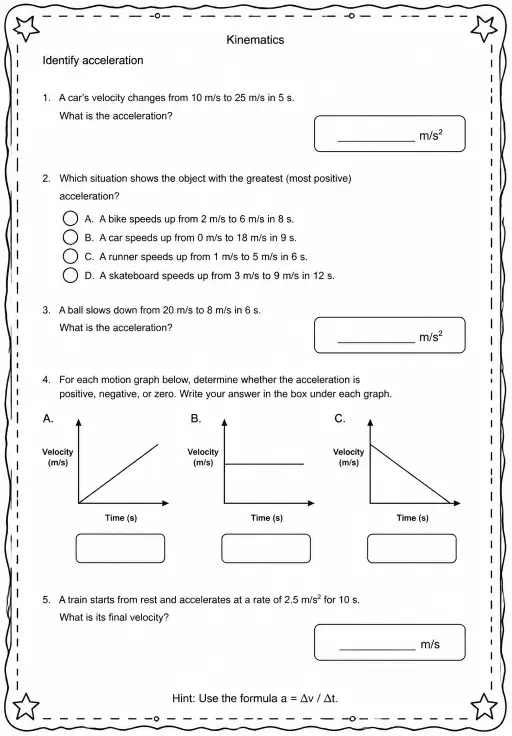
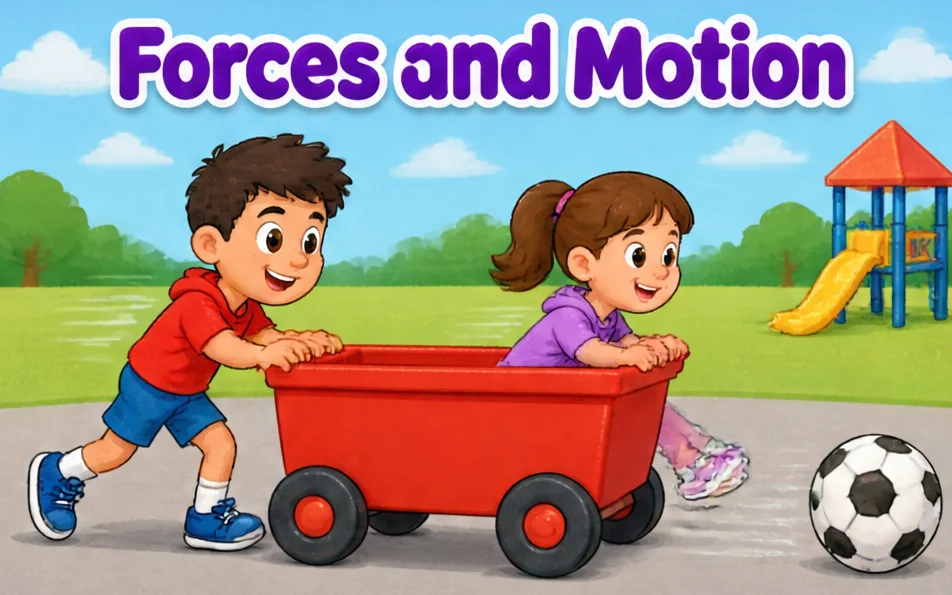
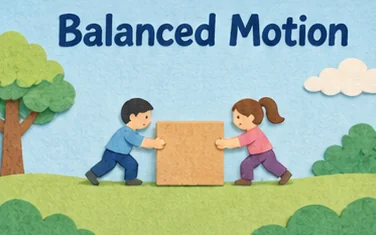
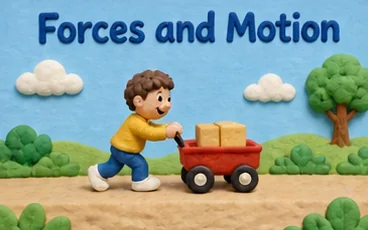
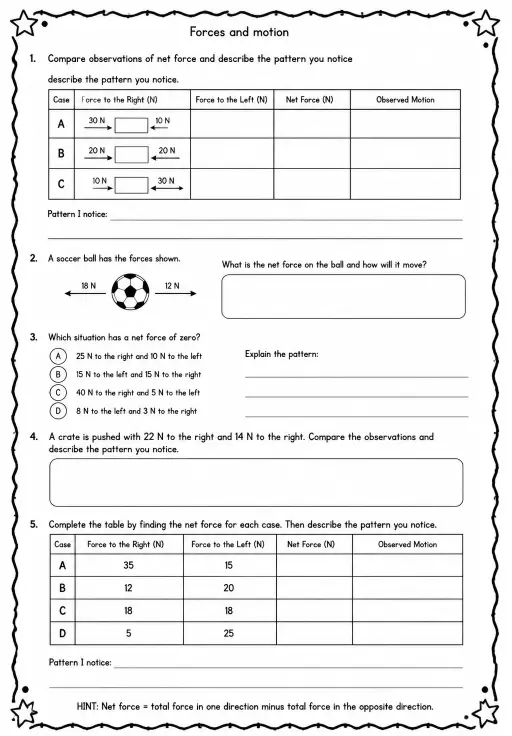
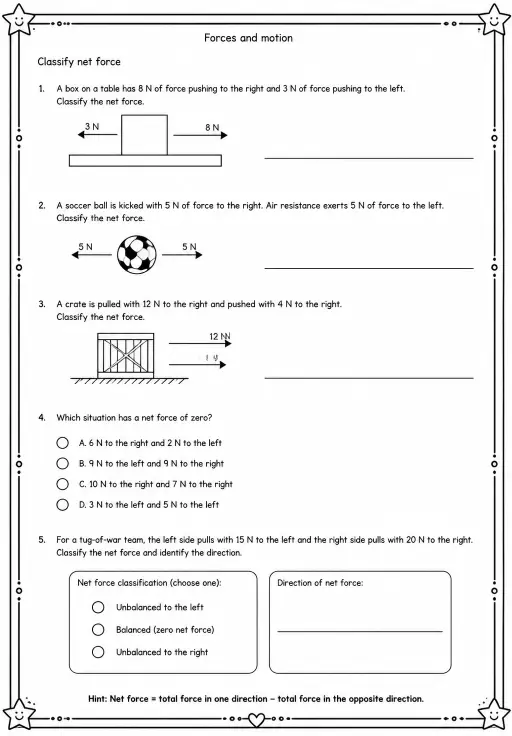
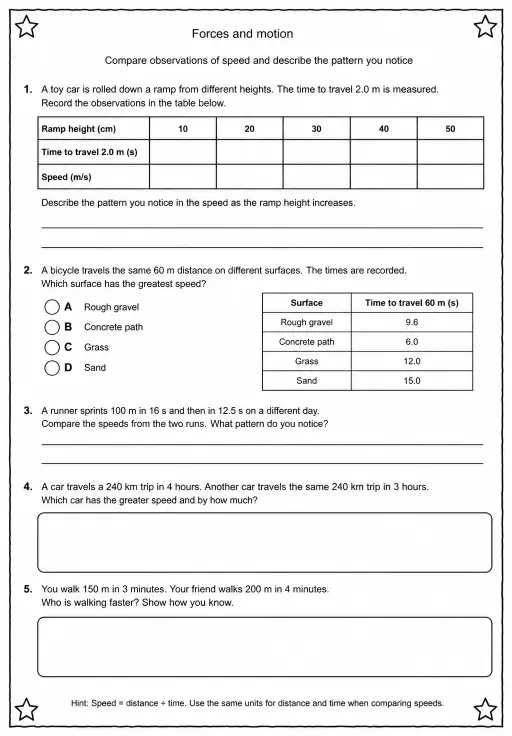
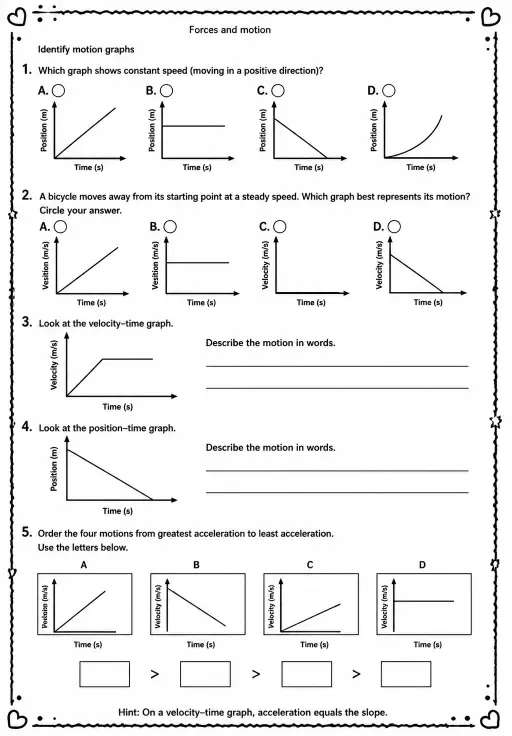
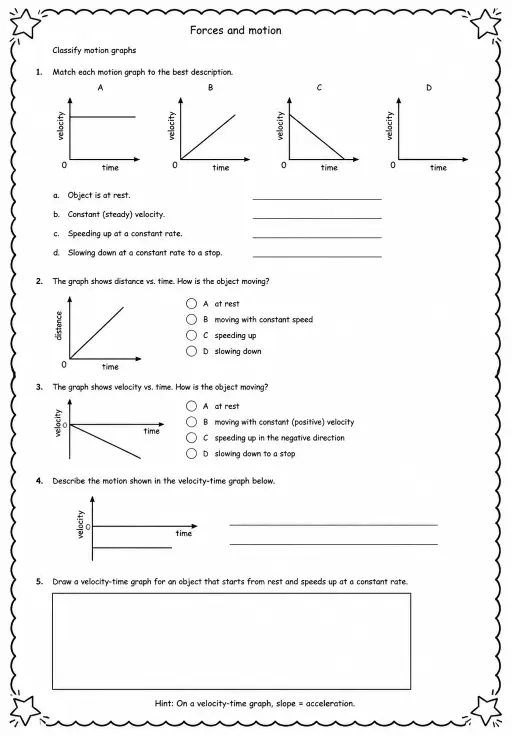
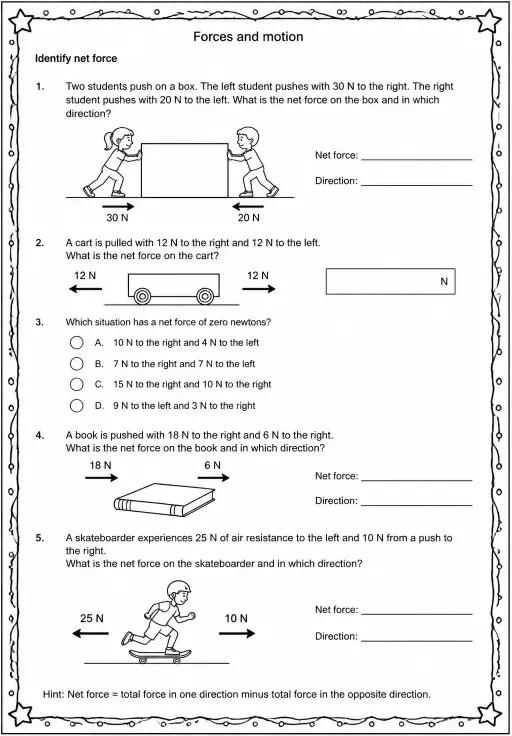
Middle school students investigate acceleration by examining how forces cause changes in an object's speed or direction, developing a precise understanding of this key physics concept. Teachers can use this worksheet during a forces and motion unit to help students distinguish acceleration from speed and connect it to Newton's second law. Grasping acceleration quantitatively prepares students for the more complex mechanics problems they will encounter in high school physics.
Learning objectives © UCLES (Cambridge University Press & Assessment), quoted with attribution.
Skill lists aligned to IXL Learning skill plans, carried over from KiwiBee's System presets; the Maths section names are KiwiBee's own. IXL is a trademark of IXL Learning; no endorsement is implied.
See what other teachers think and share a helpful note.
Generate a fresh worksheet for any grade, topic and language. Free.
 Home
 All solutions
 Pricing
 About us
 KiwiBee for Non-profits
 Events & webinars
 For big organisations
 For schools
 For centers
 For team leaders
 For teachers
 Resources
 Printable worksheets
 Interactive simulations
 Teacher tools
 Ideas and research


