Your privacy choices

KiwiBee uses optional Google Analytics, Google Ads, and Meta Pixel cookies to understand adult visitors, measure completed sign-ups, and improve campaigns. Essential cookies always stay on. OpenAI’s ChatGPT Ads Pixel also measures page views and completed enquiries after advertising consent, and may use hashed contact details for matching. Privacy policy

Skip to main content

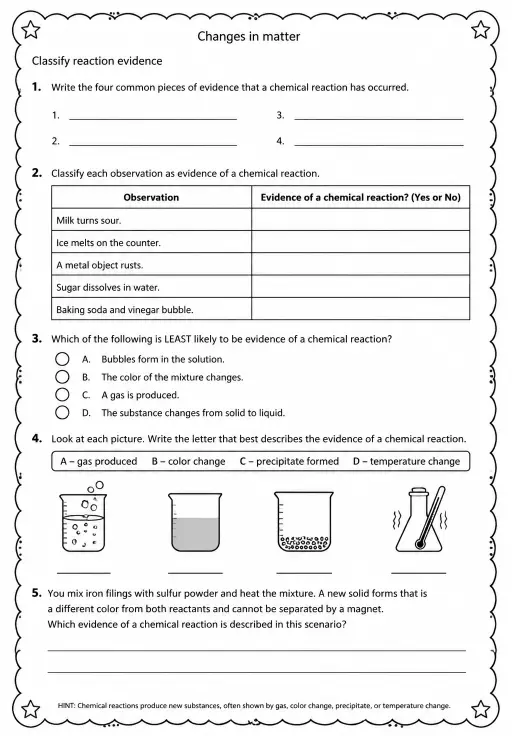
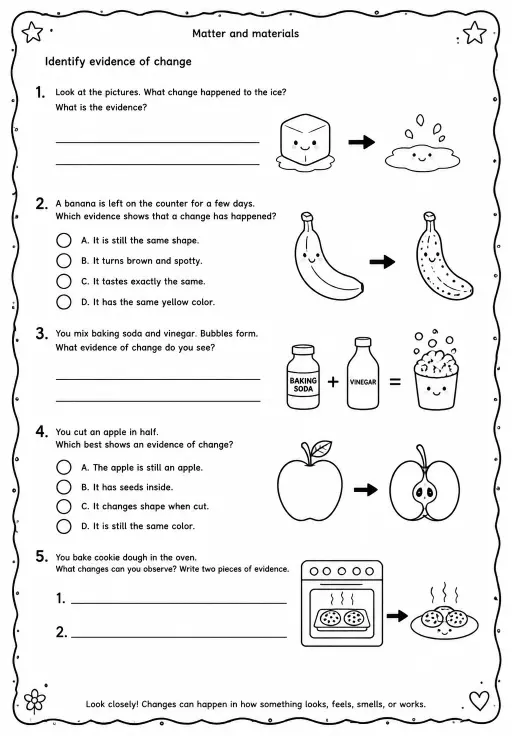
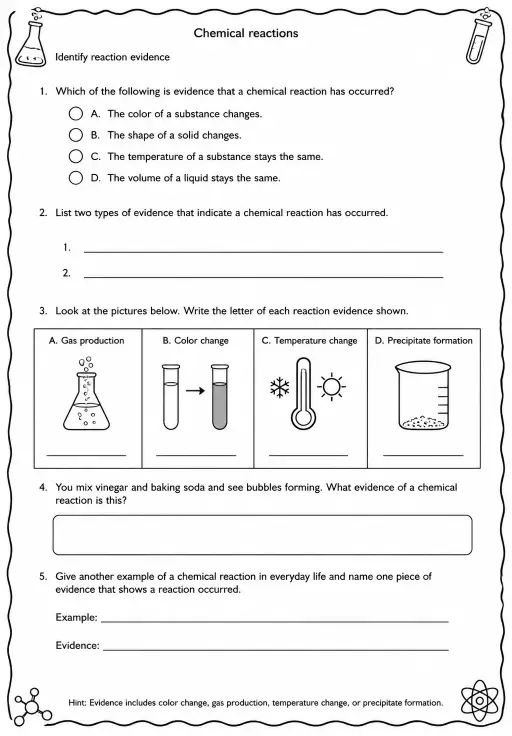
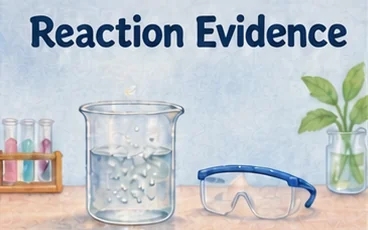
Explain physical and chemical changes using evidence from substances and reactions

Printable PDFScroll to explore
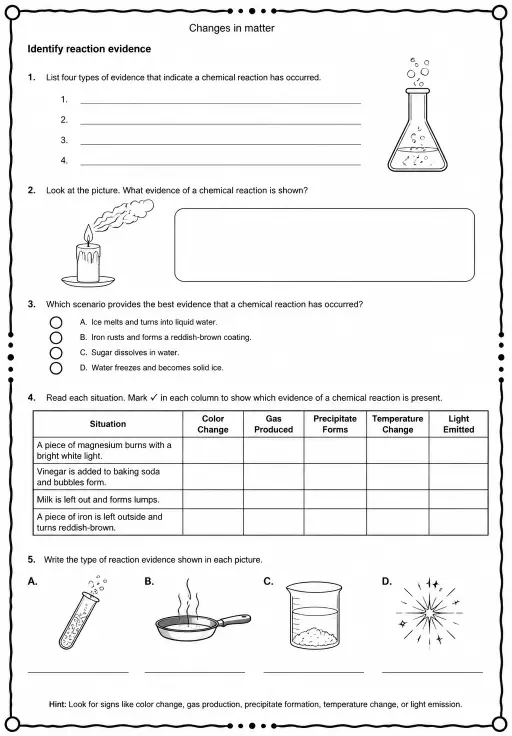
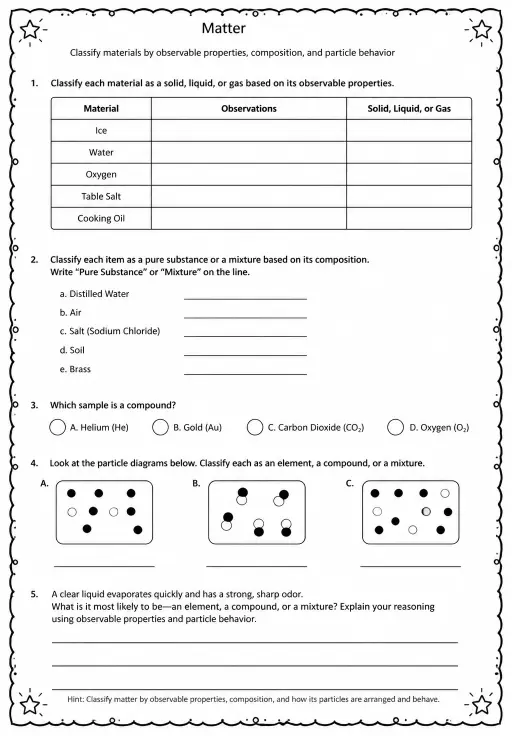
Explain physical and chemical changes using evidence from substances and reactions — free printable High School Science worksheet

High school students explain physical and chemical changes using evidence from substances and reactions in this Physical Science worksheet on Matter. Teachers can use it to push students beyond observation to evidence-based reasoning about what happens at the particle level. The skill of constructing evidence-supported explanations is essential in high school chemistry and scientific writing.

Learning objectives

  • Distinguish between physical and chemical changes using observable evidence
  • Cite specific properties or reaction indicators as evidence for each type of change
  • Construct a written explanation linking evidence to a claim about matter

How to use this worksheet

  1. Select “Sign in / Sign up to download”, then sign in with Google or email to get the PDF from KiwiBee Printables.
  2. Print at home or in class for High School; it's no-prep, with no extra materials needed.
  3. Use the included answer key to mark it in seconds.

Good for

ClassworkHomeworkWarm-upCentersSmall groups

Curriculum standards

Cambridge

Learning objectives © UCLES (Cambridge University Press & Assessment), quoted with attribution.

Answer Key

Answer key for Explain physical and chemical changes using evidence from substances and reactions — free printable Science worksheet
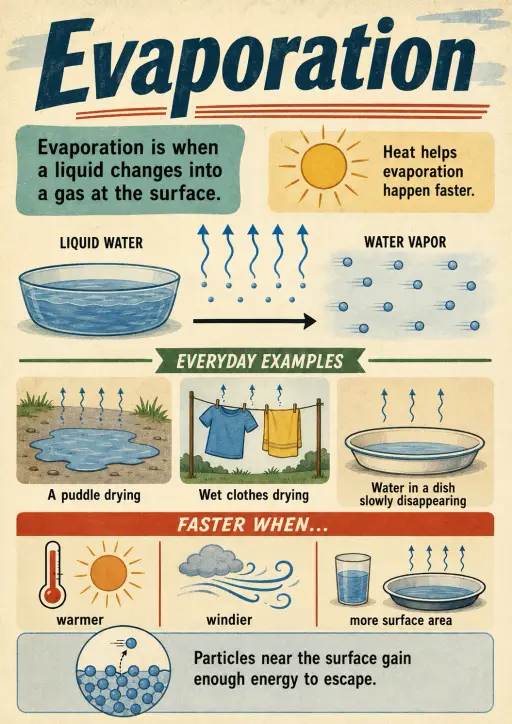
Evaporation Matter Infographic
ScienceGrades 3–8

Evaporation Matter Infographic

This Evaporation infographic for Matter focuses on Evaporation is when, a liquid changes into, a gas at the surface., Heat helps and happen faster.. The image uses short OCR-extracted labels and reference text from the poster itself, making it ready for classroom display, quick review, learning centers, and independent student study.

——
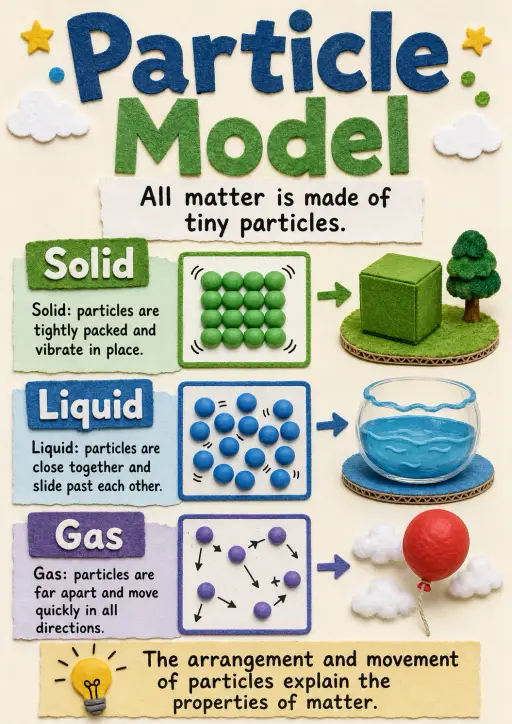
★.particle: Model★ Matter Infographic
ScienceGrades 3–8

★.particle: Model★ Matter Infographic

This ★.particle: Model★ infographic for Matter focuses on All matter is made of tiny particles., Solid, Solid: particles are tightly packed and vibrate in place., Liquid and Liquid: particles are close together and slide past each other.. The image uses short OCR-extracted labels and reference text from the poster itself, making it ready for classroom display, quick review, learning centers, and independent student study.

——
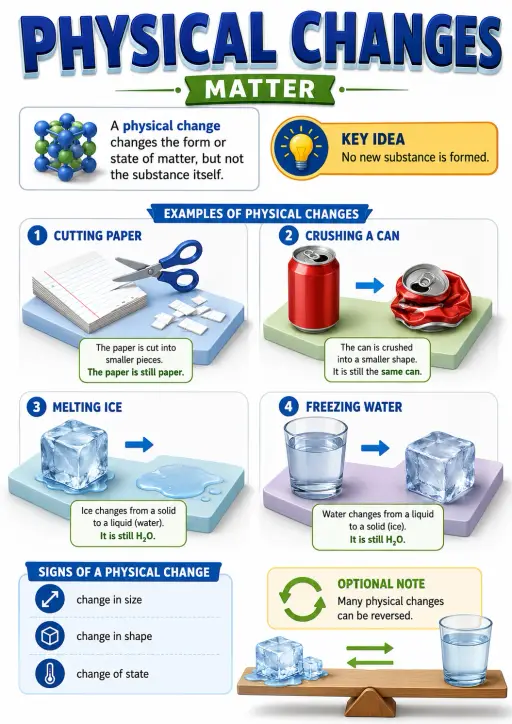
3 Melting Ice Matter Infographic
ScienceGrades 3–8

3 Melting Ice Matter Infographic

This 3 Melting Ice infographic for Matter focuses on PHYSICAL CHANGES, No new substance is formed., EXAMPLES OF PHYSICAL CHANGES, 1 CUTTING PAPER and The paper is cut into smaller pieces.. The image uses short OCR-extracted labels and reference text from the poster itself, making it ready for classroom display, quick review, learning centers, and independent student study.

——
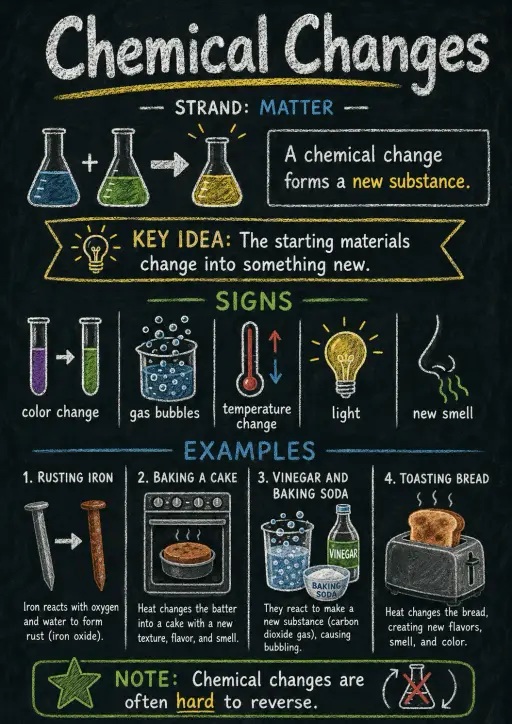
Chemical Changes Matter Infographic
ScienceGrades 3–8

Chemical Changes Matter Infographic

This Chemical Changes infographic for Matter focuses on STRAND: MATTER, A chemical change forms a new substance., KEY IDEA: The starting materials change into something new., SIGNS and color change. The image uses short OCR-extracted labels and reference text from the poster itself, making it ready for classroom display, quick review, learning centers, and independent student study.

——
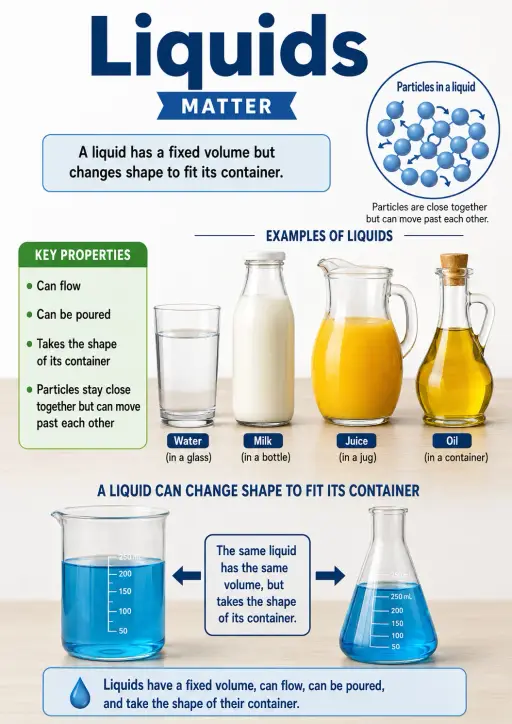
Liquids Matter Infographic
ScienceGrades 3–8

Liquids Matter Infographic

This Liquids infographic for Matter focuses on A liquid has a fixed volume but changes shape to fit its container., Particles in a liquid, Particles are close together but can move past each other., KEY PROPERTIES and - Can flow. The image uses short OCR-extracted labels and reference text from the poster itself, making it ready for classroom display, quick review, learning centers, and independent student study.

——
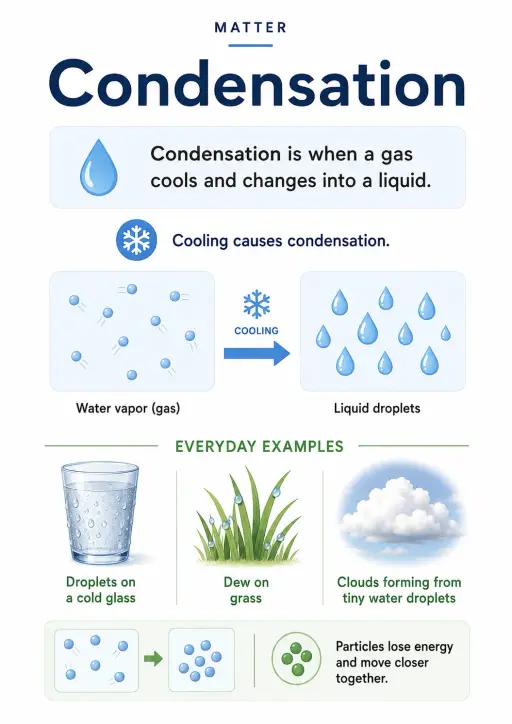
Matter: Condensation, When a Gas Cools Into a Liquid
ScienceGrades 3–8

Matter: Condensation, When a Gas Cools Into a Liquid

This infographic explains that condensation is when a gas cools and changes into a liquid. A diagram shows water vapor turning into liquid droplets, and three pictures give everyday examples.

——
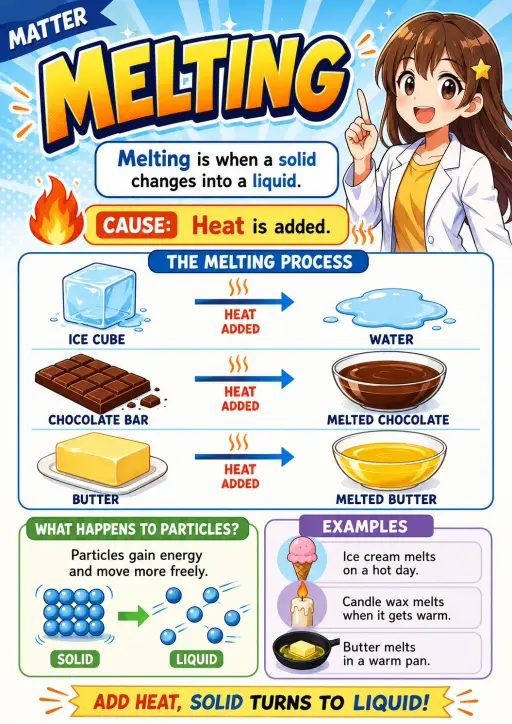
Matter: Melting, When Heat Turns a Solid Into a Liquid
ScienceGrades 3–8

Matter: Melting, When Heat Turns a Solid Into a Liquid

This infographic explains that melting is when a solid changes into a liquid because heat is added. It shows an ice cube, chocolate bar and butter melting, and a particle diagram of solid and liquid.

——

Likes & comments

See what other teachers think and share a helpful note.

Loading likes and comments…
Worksheet Studio

Need a different version? Make your own.

Generate a fresh worksheet for any grade, topic and language. Free.

Open Worksheet Studio