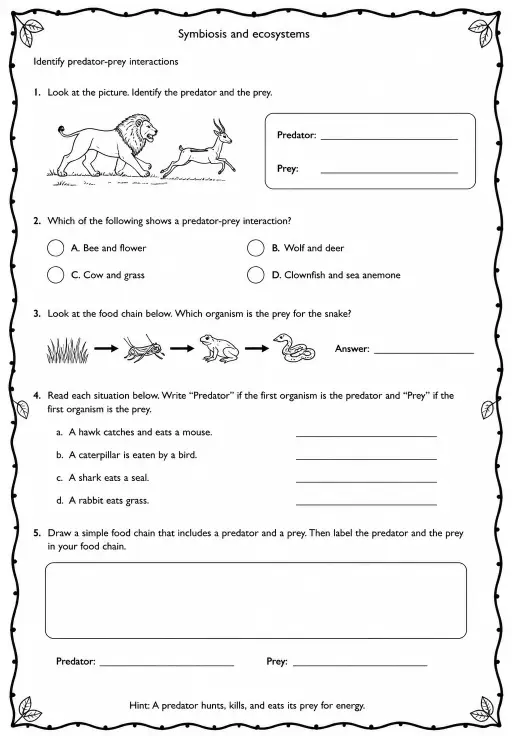
Identify predator-prey interactions
Worksheets
hard
Ages 11–14
——
KiwiBee uses optional Google Analytics, Google Ads, and Meta Pixel cookies to understand adult visitors, measure completed sign-ups, and improve campaigns. Essential cookies always stay on. OpenAI’s ChatGPT Ads Pixel also measures page views and completed enquiries after advertising consent, and may use hashed contact details for matching. Privacy policy

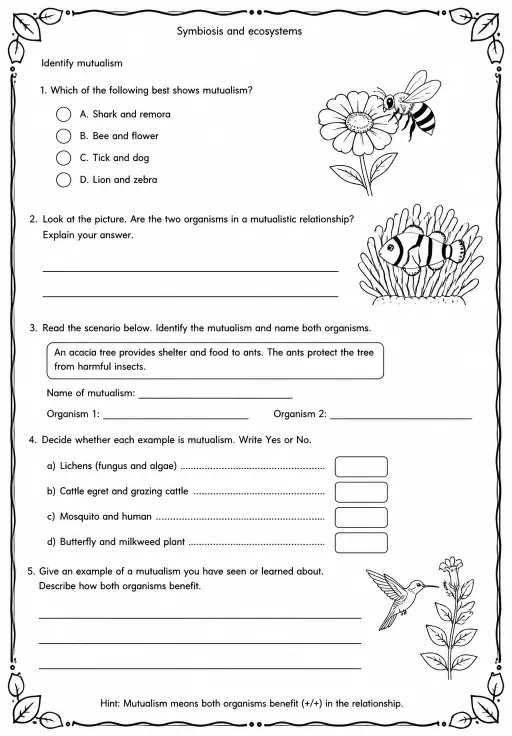
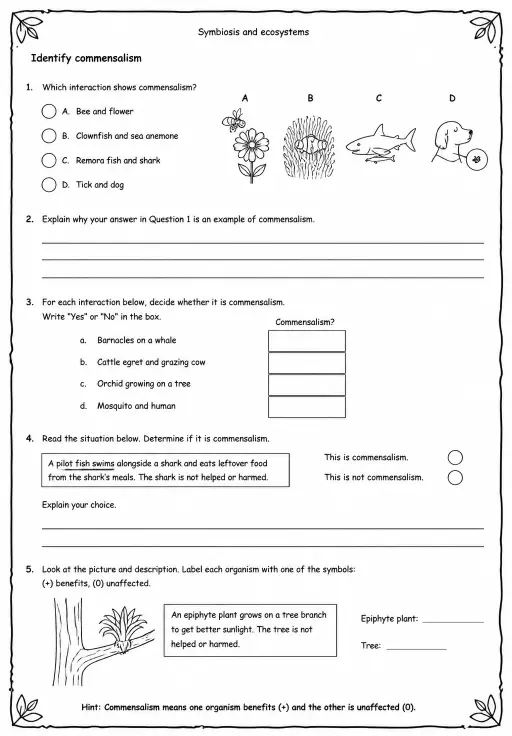
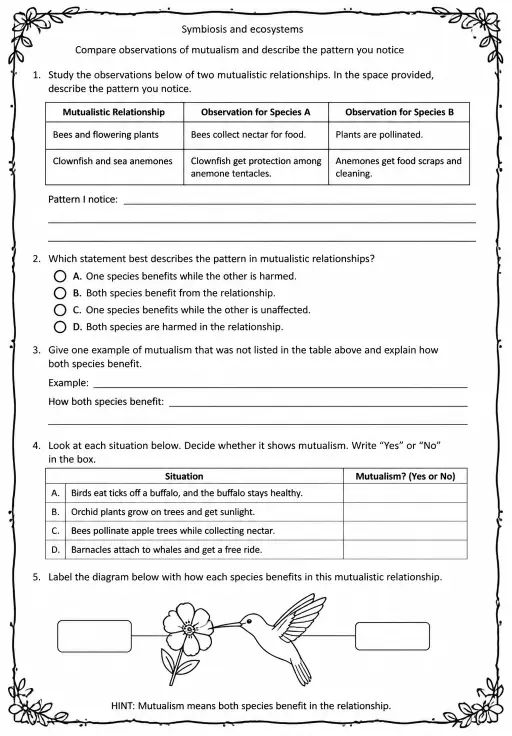
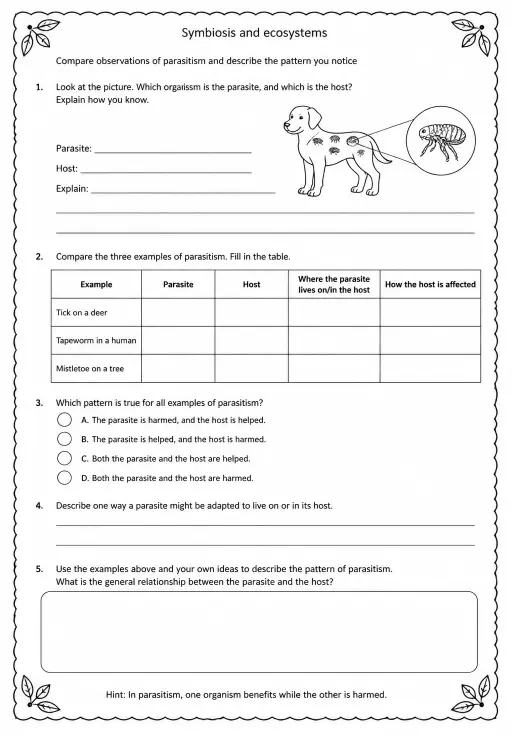
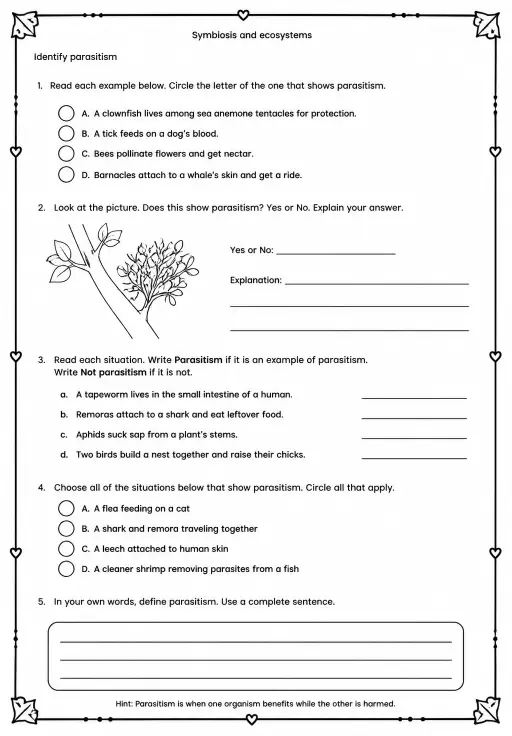
Middle-school students work through the skill of classifying mutualism as part of a broader study of symbiosis and ecosystems, learning to distinguish mutually beneficial relationships from other symbiotic types. Teachers can use this worksheet for direct instruction follow-up, small-group review, or formative assessment within a life-science unit. Accurate classification of mutualism supports deeper understanding of how species interact to sustain ecosystems.
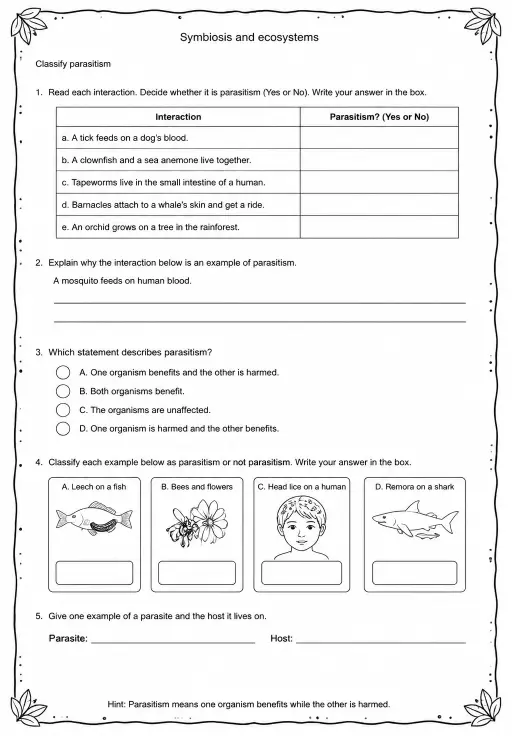
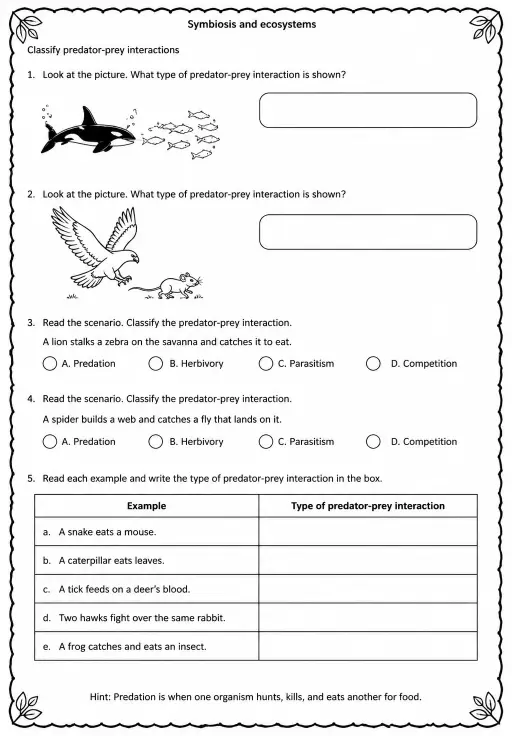
See what other teachers think and share a helpful note.
Generate a fresh worksheet for any grade, topic and language. Free.
 Home
 All solutions
 Pricing
 About us
 KiwiBee for Non-profits
 Events & webinars
 For big organisations
 For schools
 For centers
 For team leaders
 For teachers
 AI and resources
 Resources
 Printable worksheets
 Lesson Packs
 Interactive simulations
 Teacher tools
 AI studio
 Ideas and research