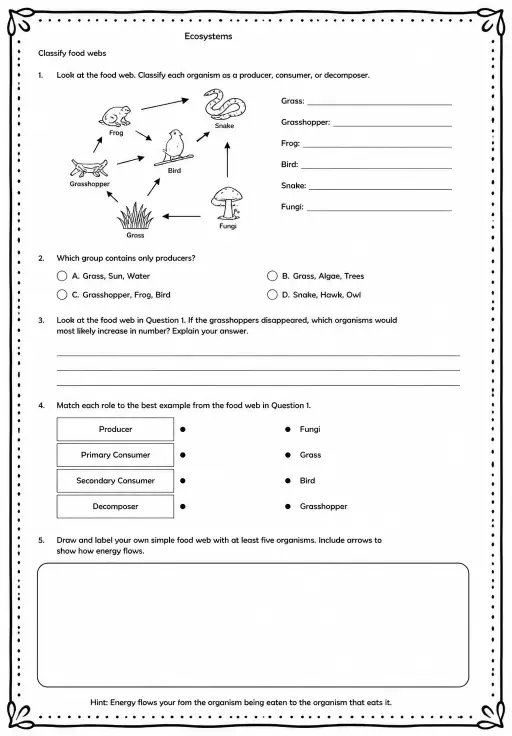
Classify food webs
Worksheets
hard
Ages 11–14
——
KiwiBee uses optional Google Analytics, Google Ads, and Meta Pixel cookies to understand adult visitors, measure completed sign-ups, and improve campaigns. Essential cookies always stay on. OpenAI’s ChatGPT Ads Pixel also measures page views and completed enquiries after advertising consent, and may use hashed contact details for matching. Privacy policy

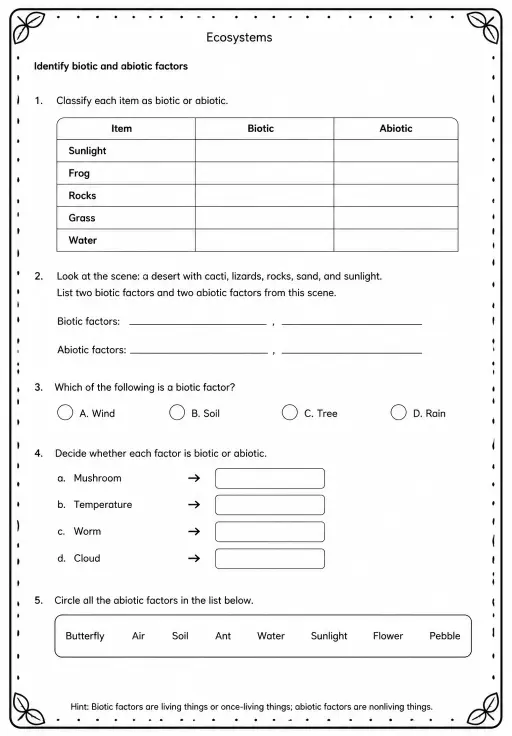
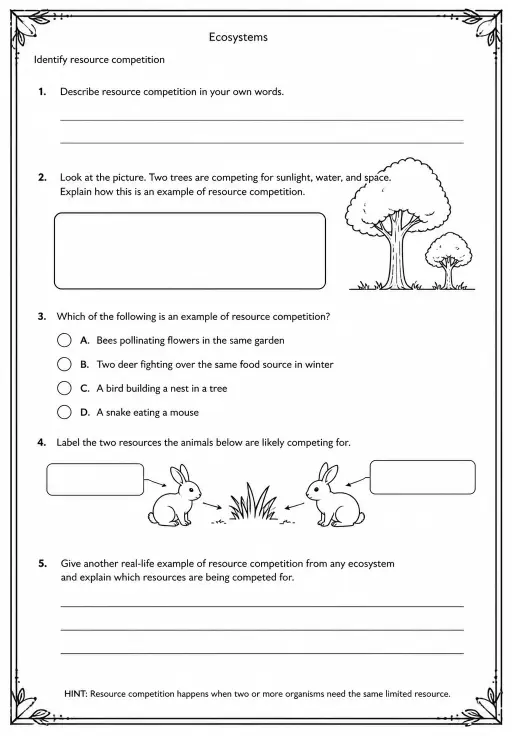
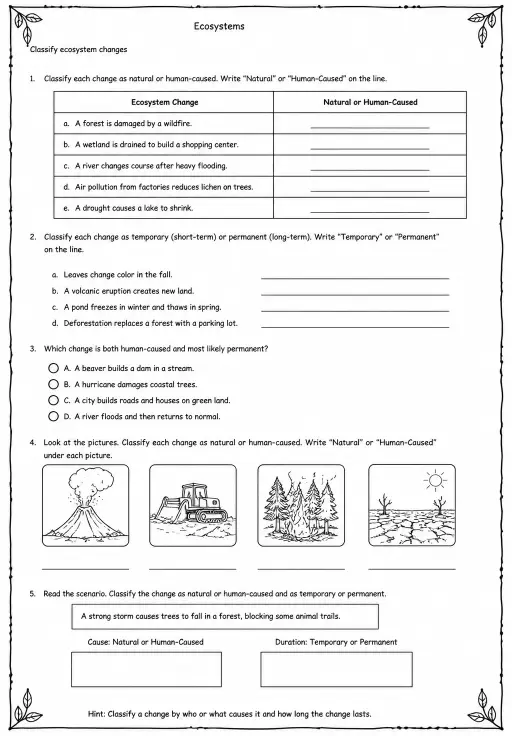
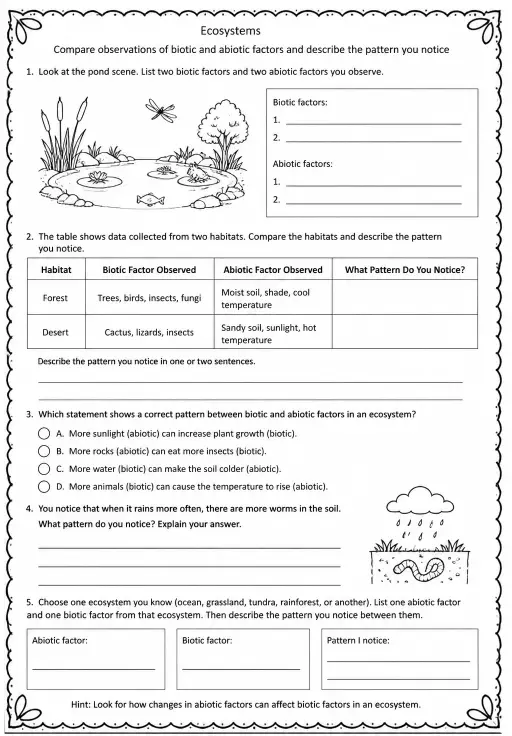
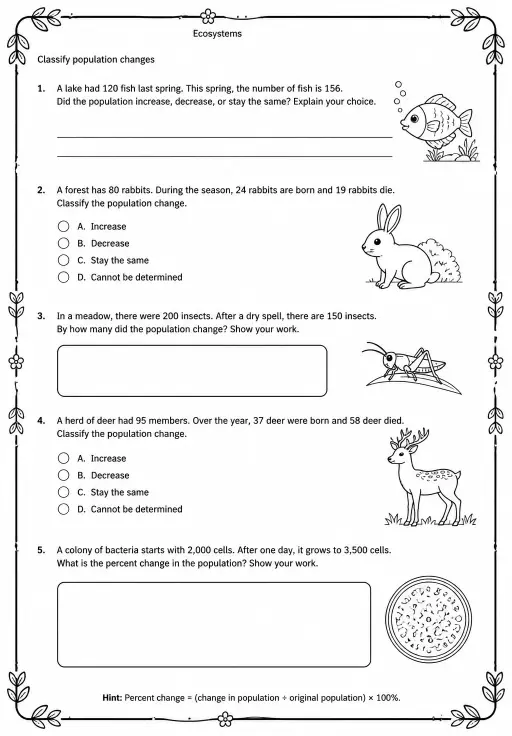
Middle-school scientists classify biotic and abiotic factors in this life-science worksheet, sorting living and non-living components of ecosystems into the correct categories. Teachers can use it early in an ecosystems unit to build foundational vocabulary, or as a review tool before tackling food webs and energy flow. Accurate classification of these factors is essential for understanding how ecosystems function as a whole.
See what other teachers think and share a helpful note.
Generate a fresh worksheet for any grade, topic and language. Free.
 Home
Home All solutions
 Pricing
 About us
 KiwiBee for Non-profits
 Events & webinars
 For big organisations
 For schools
 For centers
 For team leaders
 For teachers
 AI and resources
 Resources
 Printable worksheets
 Lesson Packs
 Interactive simulations
 Teacher tools
 AI studio
 Ideas and research