KiwiBee printable
Properties of addition and multiplication
Free printable Algebra 1 math worksheet for "Properties of addition and multiplication" — practice expressions. No-prep, print or assign online.
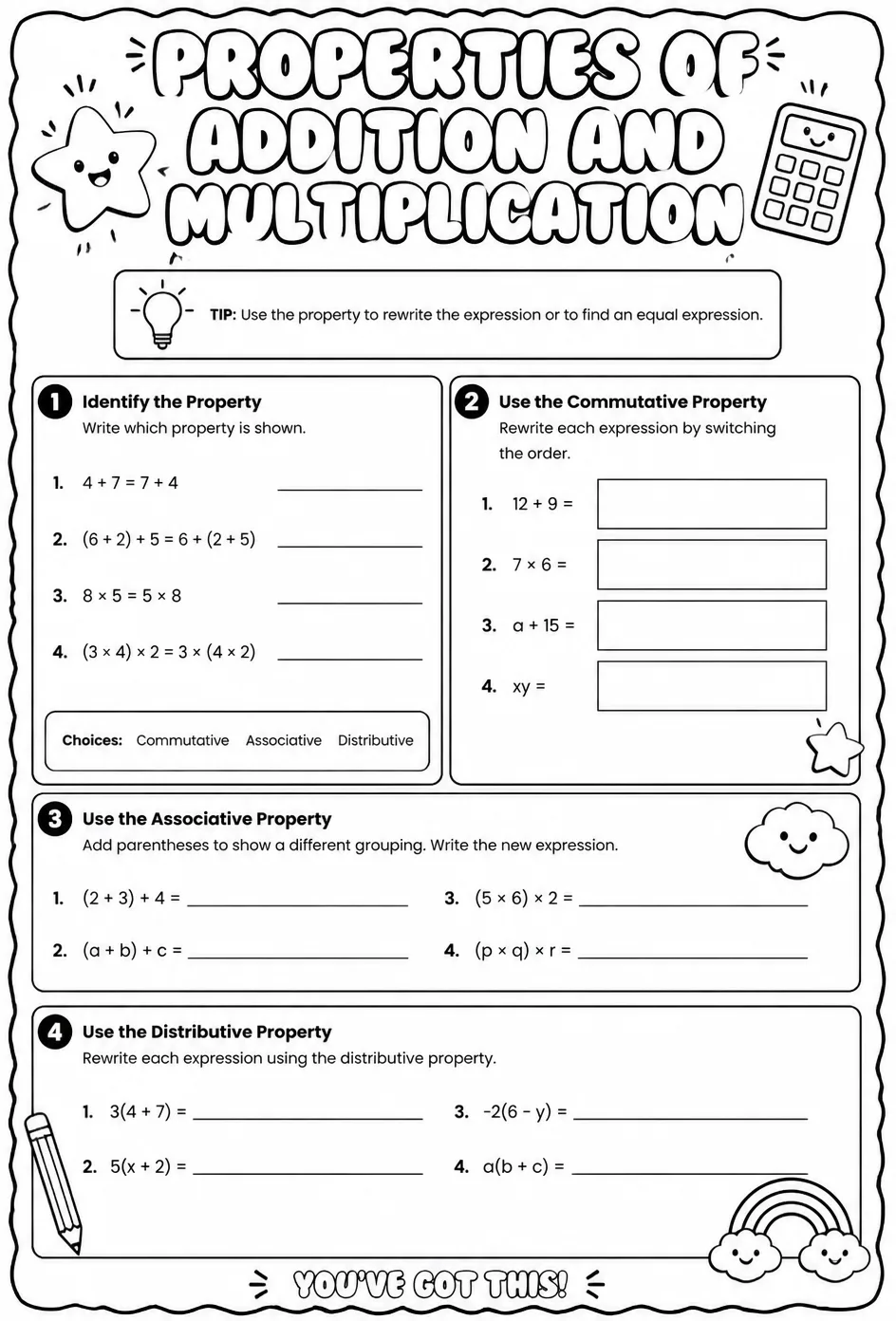
This worksheet provides challenging problems focused on the properties of addition and multiplication within algebraic expressions. Teachers can use it to reinforce students' understanding of key algebraic properties and enhance their ability to simplify and manipulate expressions effectively. It is ideal for high school Algebra 1 classes aiming to deepen students' mastery of expression properties and problem-solving skills.
Learning objectives
- Identify and apply the commutative, associative, and distributive properties in addition and multiplication expressions.
- Simplify algebraic expressions using properties of addition and multiplication.
- Demonstrate understanding of how these properties affect the structure and value of expressions.
How to use this worksheet
- Select “Sign in to download free”, then sign in with Google or email to get the PDF from KiwiBee Printables.
- Print at home or in class for High School; it's no-prep, with no extra materials needed.
- Hand it out as classwork, homework, or a quick warm-up.
Likes & comments
See what other teachers think and share a helpful note.
Loading likes and comments…
Create more worksheets in our Worksheet Studio
Generate fresh worksheets for any grade, topic, and language — free.
Open the Worksheet StudioRelated worksheets
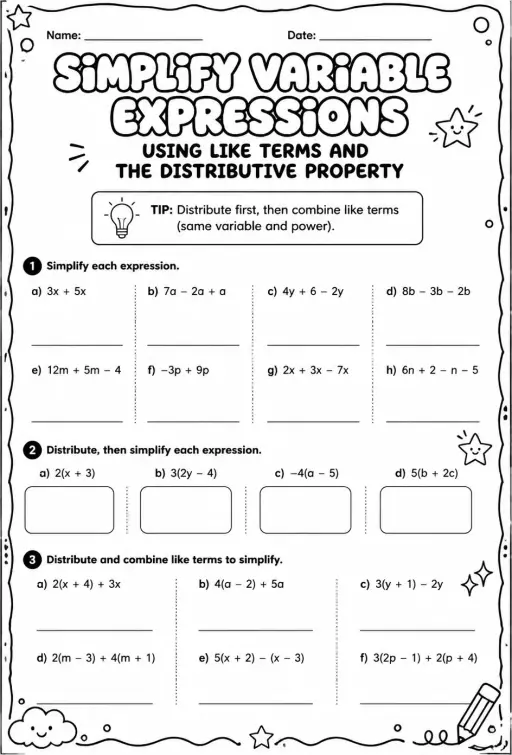
Simplify variable expressions involving like terms and the distributive property
Worksheets
hard
Ages 14–18
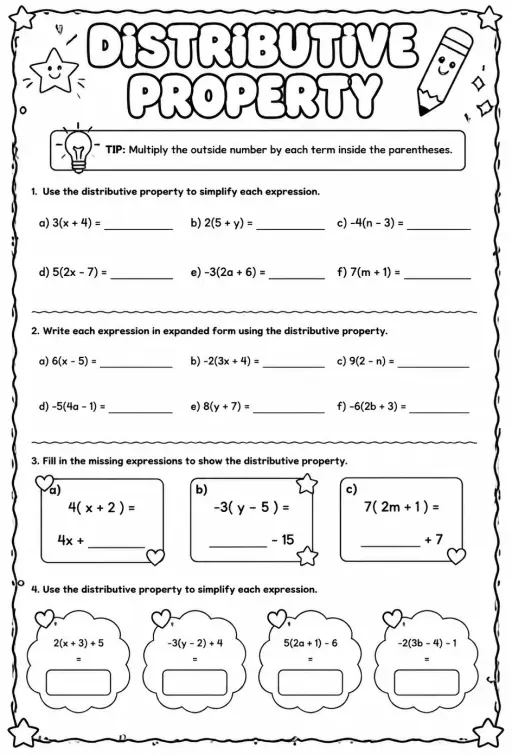
Distributive property
Worksheets
hard
Ages 14–18
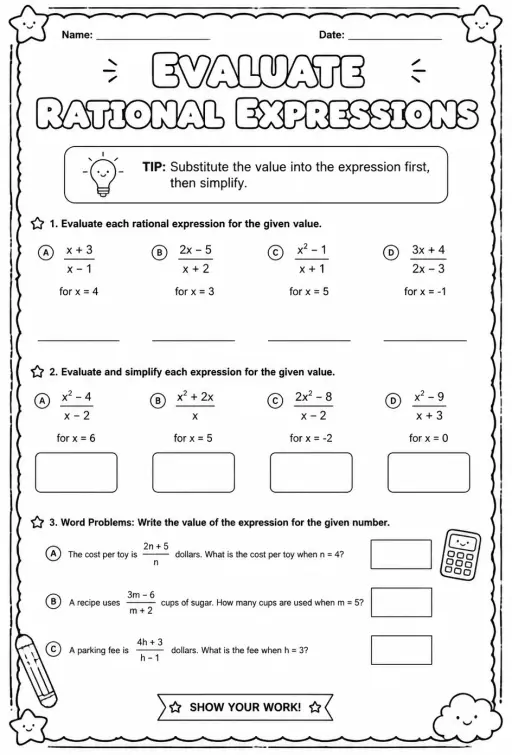
Evaluate rational expressions
Worksheets
hard
Ages 14–18
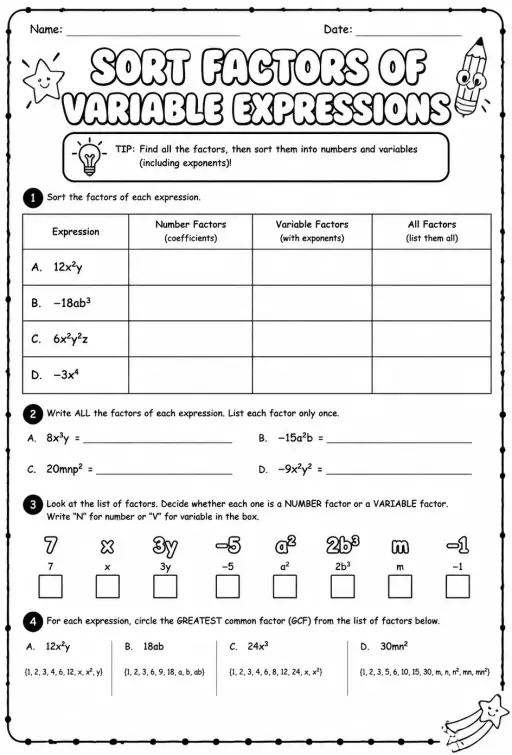
Sort factors of variable expressions
Worksheets
hard
Ages 14–18
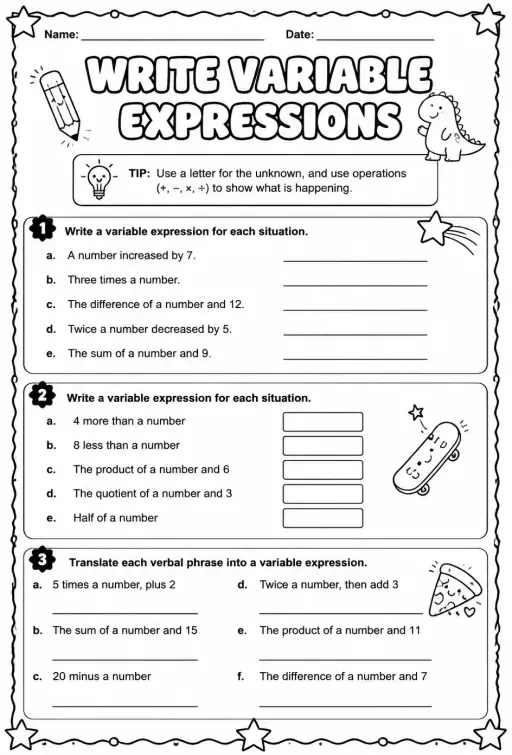
Write variable expressions
Worksheets
hard
Ages 14–18
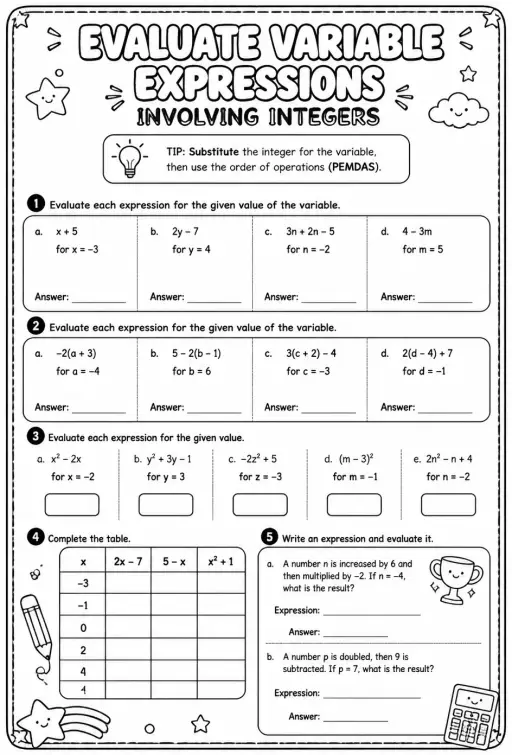
Evaluate variable expressions involving integers
Worksheets
hard
Ages 14–18
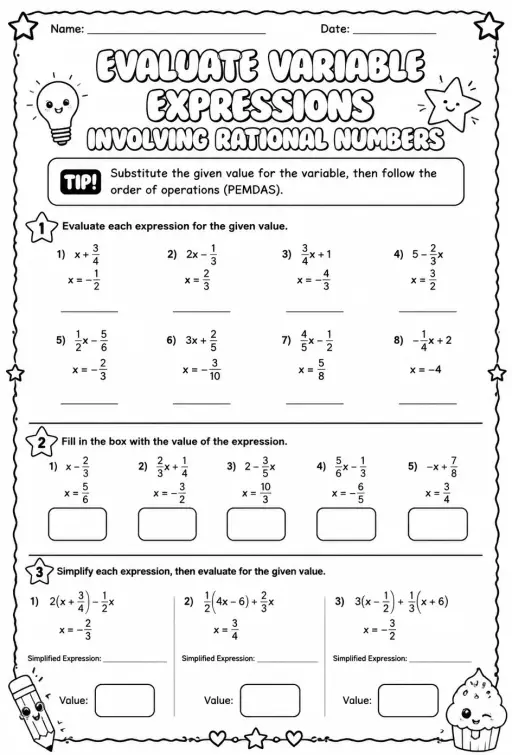
Evaluate variable expressions involving rational numbers
Worksheets
hard
Ages 14–18
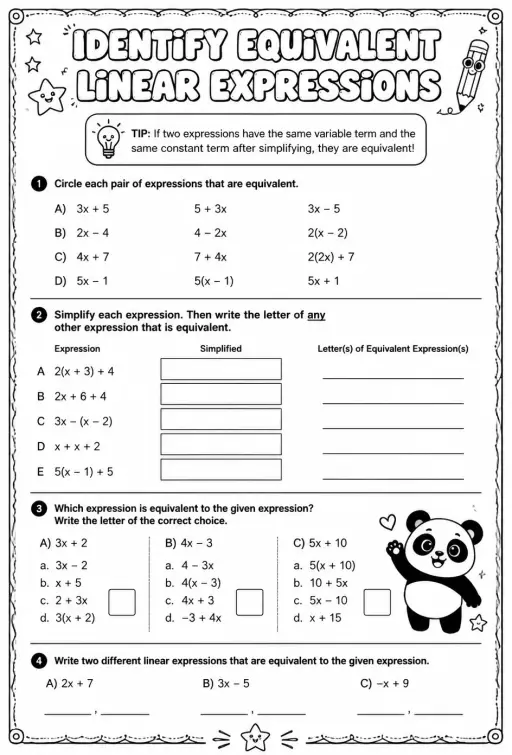
Identify equivalent linear expressions
Worksheets
hard
Ages 14–18
 For big organisations
 For schools
 For centers
 For team leaders
 For teachers
 AI and resources
 Printable worksheets
 Interactive simulations
 Teacher tools
 AI studio
 Ideas and research