KiwiBee printable
Determine end behavior of polynomial and rational functions
Free printable Calculus math worksheet for "Determine end behavior of polynomial and rational functions" — practice limits at infinity. No-prep, print or assign online.
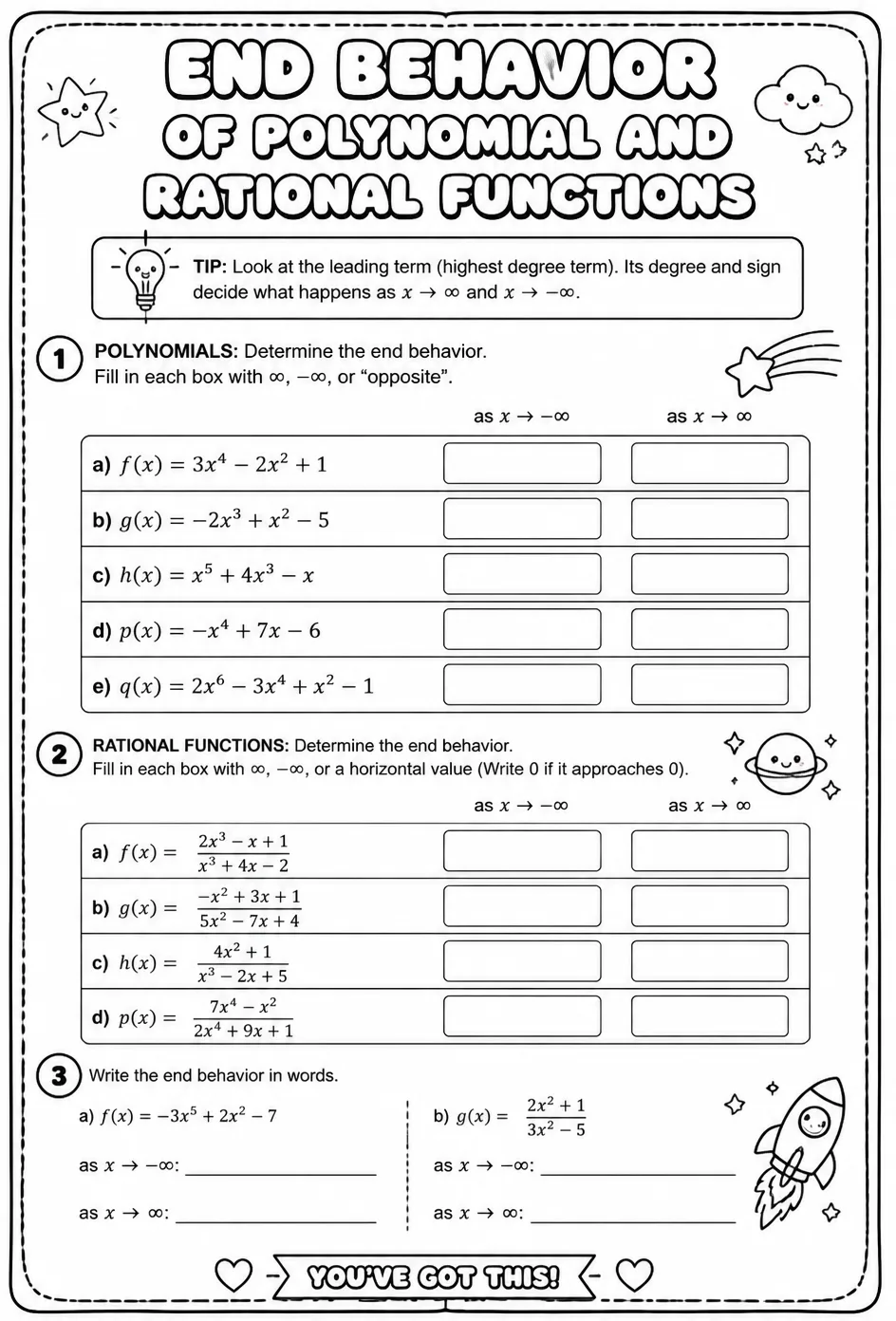
This worksheet guides students through identifying the end behavior of polynomial and rational functions by applying limits at infinity. Teachers can use it to reinforce concepts in calculus related to function behavior as variables approach large positive or negative values. It supports deep understanding of limits, asymptotic behavior, and graph interpretation in advanced high school math classes.
Learning objectives
- Analyze the end behavior of polynomial functions by examining their leading terms.
- Determine the end behavior of rational functions using limits at infinity.
- Interpret the graphical implications of end behavior for both polynomial and rational functions.
How to use this worksheet
- Select “Sign in to download free”, then sign in with Google or email to get the PDF from KiwiBee Printables.
- Print at home or in class for High School; it's no-prep, with no extra materials needed.
- Hand it out as classwork, homework, or a quick warm-up.
Likes & comments
See what other teachers think and share a helpful note.
Loading likes and comments…
Create more worksheets in our Worksheet Studio
Generate fresh worksheets for any grade, topic, and language — free.
Open the Worksheet StudioRelated worksheets
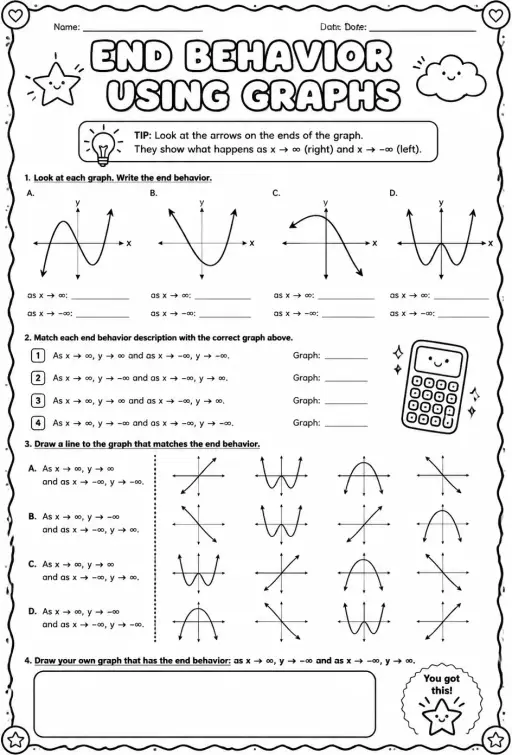
Determine end behavior using graphs
Worksheets
hard
Ages 14–18
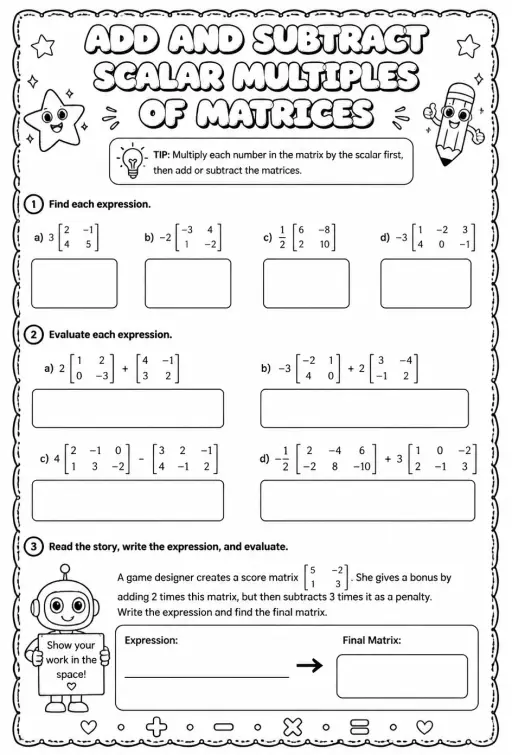
Add and subtract scalar multiples of matrices
Worksheets
hard
Ages 14–18
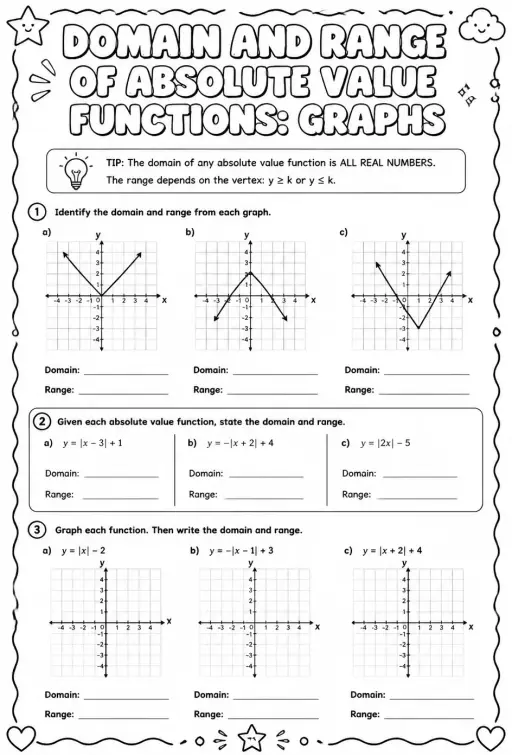
Domain and range of absolute value functions: graphs
Worksheets
hard
Ages 14–18
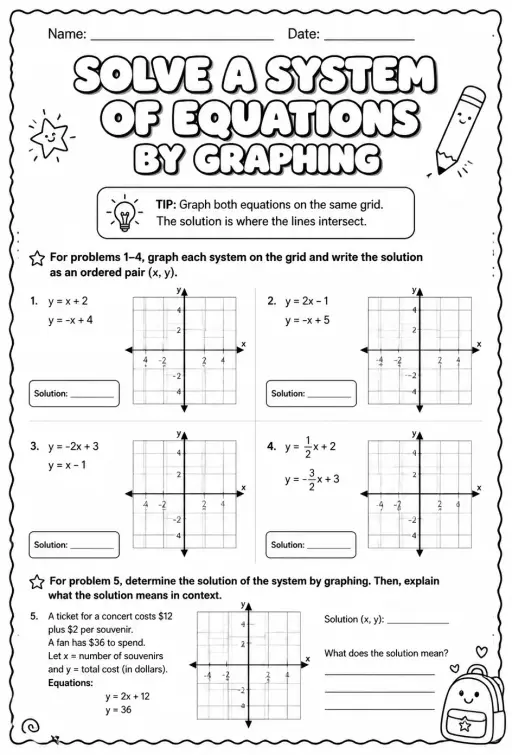
Solve a system of equations by graphing
Worksheets
hard
Ages 14–18
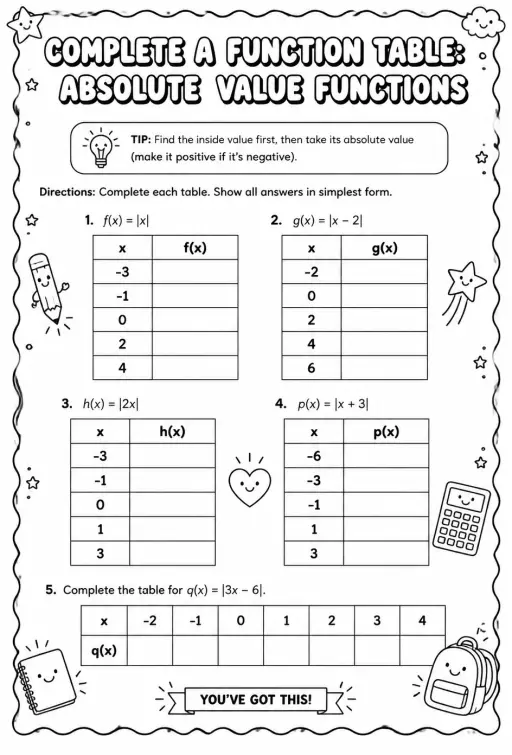
Complete a function table: absolute value functions
Worksheets
hard
Ages 14–18
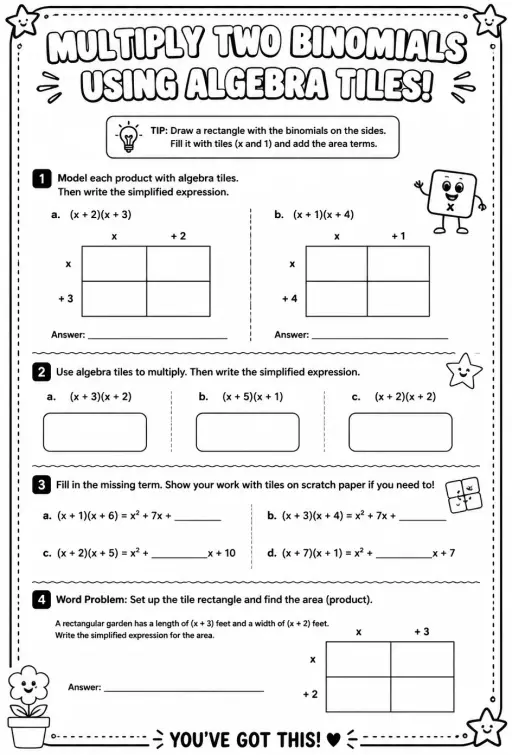
Multiply two binomials using algebra tiles
Worksheets
hard
Ages 14–18
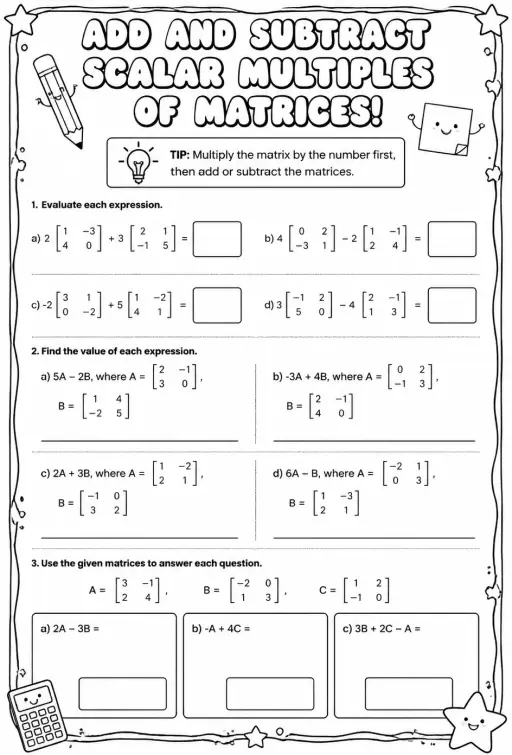
Add and subtract scalar multiples of matrices
Worksheets
hard
Ages 14–18
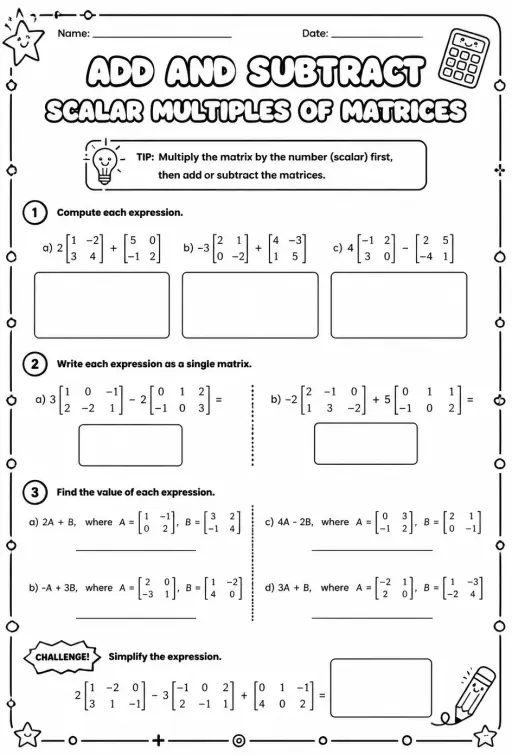
Add and subtract scalar multiples of matrices
Worksheets
hard
Ages 14–18
 For big organisations
 For schools
 For centers
 For team leaders
 For teachers
 AI and resources
 Printable worksheets
 Interactive simulations
 Teacher tools
 AI studio
 Ideas and research