KiwiBee printable
Checkpoint: Two-way frequency tables
Free printable Algebra 1 math worksheet for "Checkpoint: Two-way frequency tables" — practice probability. No-prep, print or assign online.
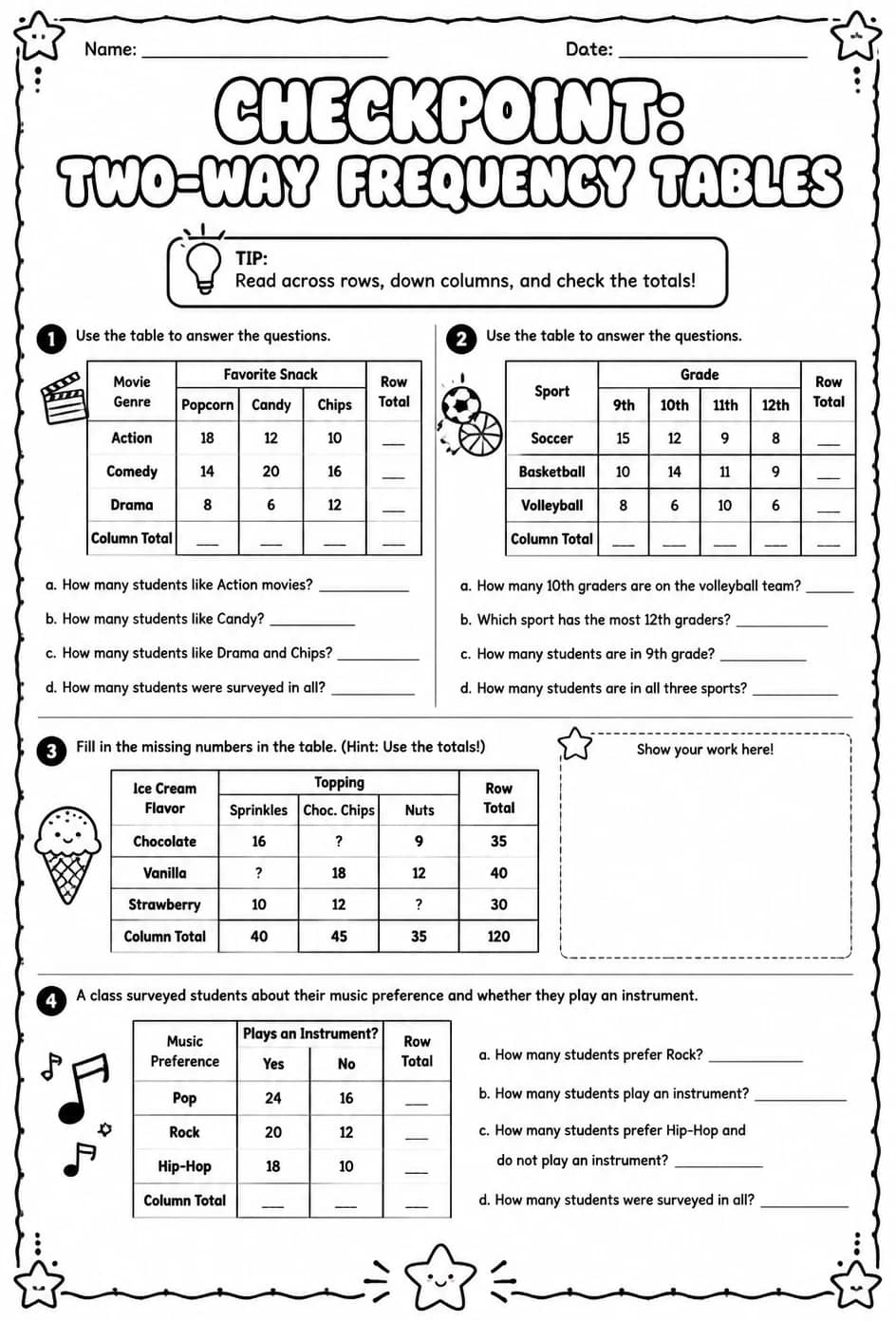
This worksheet provides challenging problems focused on interpreting and analyzing two-way frequency tables in probability contexts. Teachers can use it to assess students' ability to extract and calculate probabilities from complex data sets, reinforcing critical thinking in algebra and statistics. It is ideal for high school Algebra 1 classes aiming to deepen understanding of frequency distributions and probability relationships.
Learning objectives
- Analyze two-way frequency tables to determine joint, marginal, and conditional frequencies.
- Calculate probabilities based on data presented in two-way frequency tables.
- Interpret relationships between categorical variables using two-way frequency tables.
Answer Key
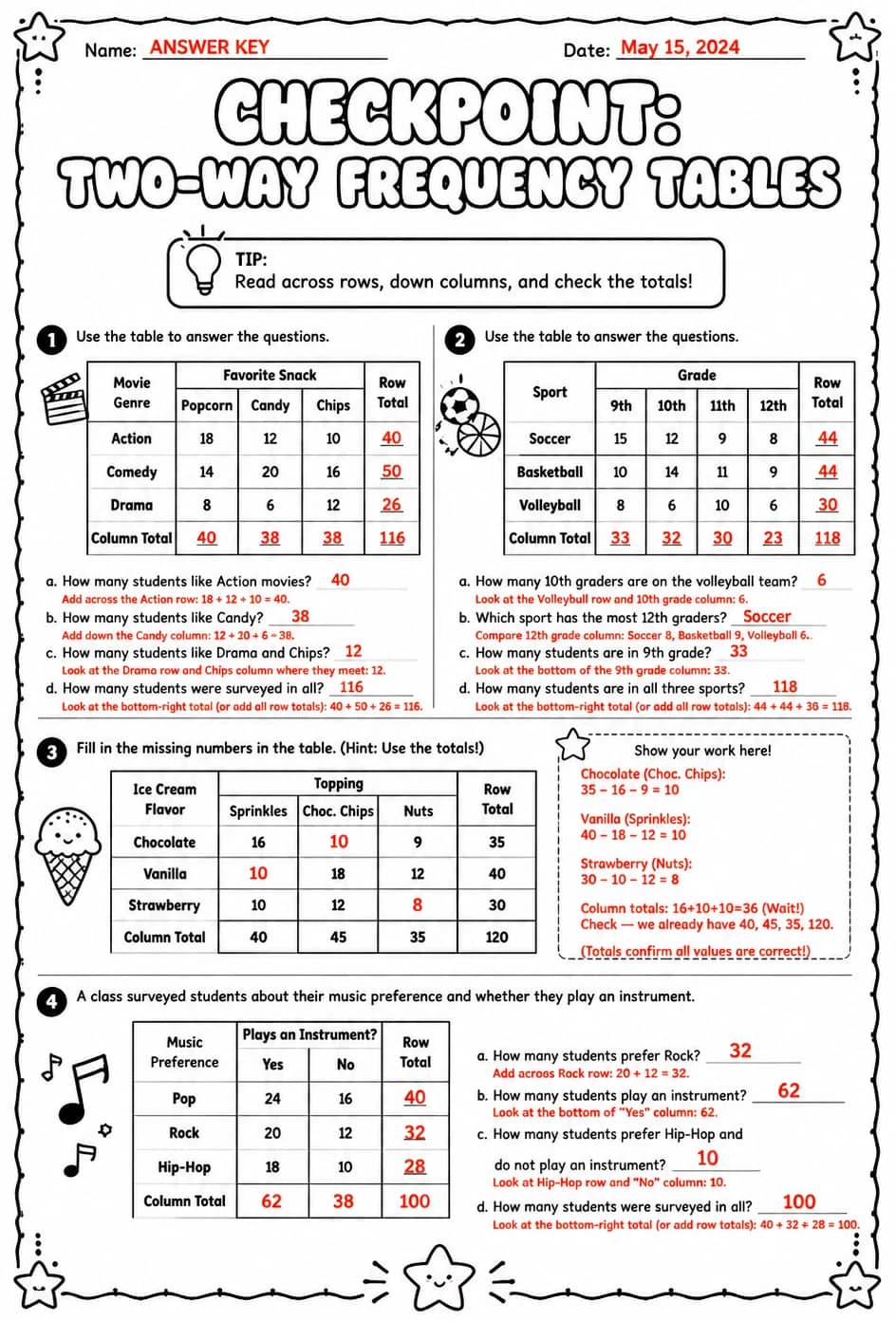
How to use this worksheet
- Select “Sign in to download free”, then sign in with Google or email to get the PDF from KiwiBee Printables.
- Print at home or in class for High School; it's no-prep, with no extra materials needed.
- Use the included answer key to mark it in seconds.
Likes & comments
See what other teachers think and share a helpful note.
Loading likes and comments…
Create more worksheets in our Worksheet Studio
Generate fresh worksheets for any grade, topic, and language — free.
Open the Worksheet StudioRelated worksheets
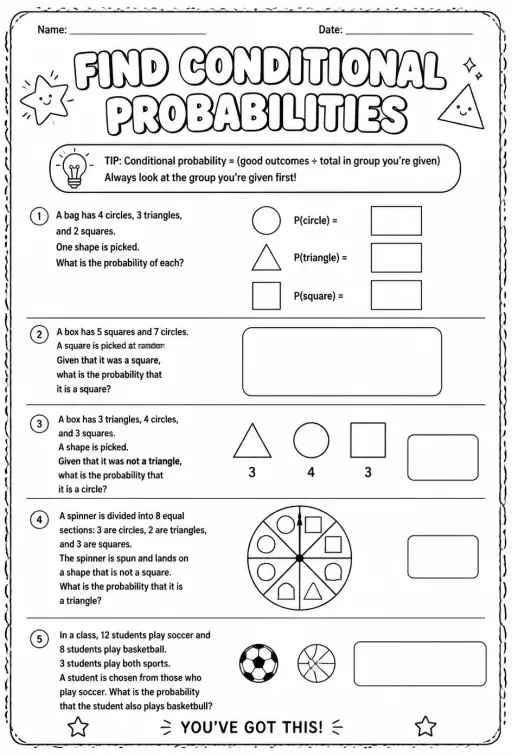
Find conditional probabilities
Worksheets
hard
Ages 14–18
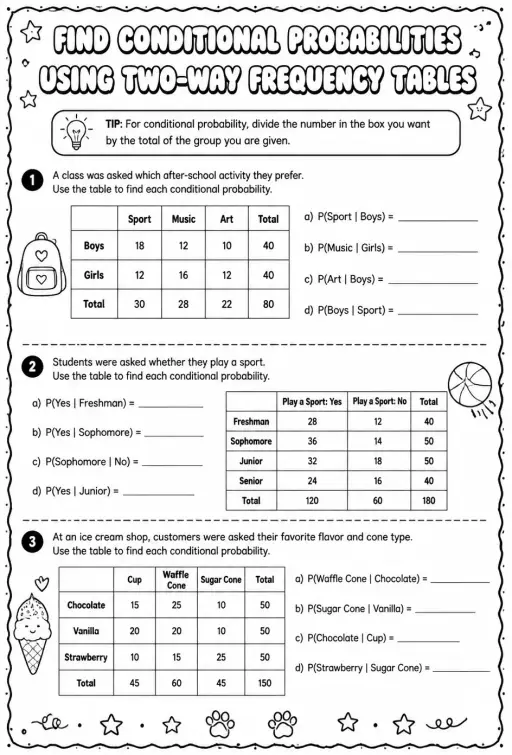
Find conditional probabilities using two-way frequency tables
Worksheets
hard
Ages 14–18
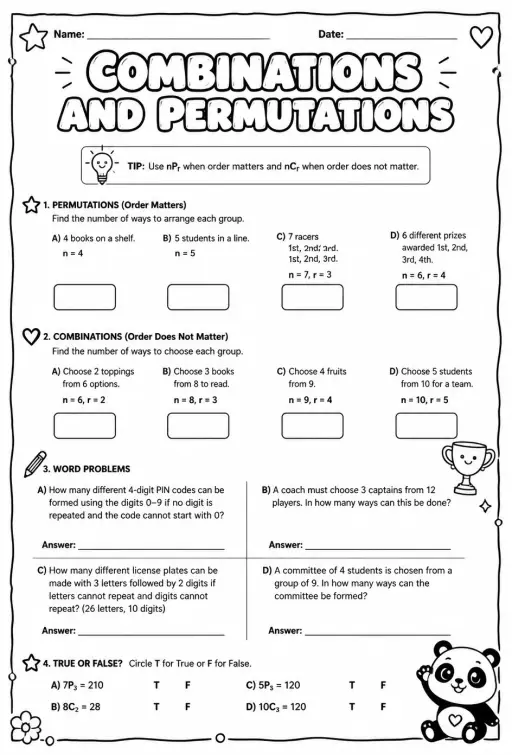
Combinations and permutations
Worksheets
hard
Ages 14–18
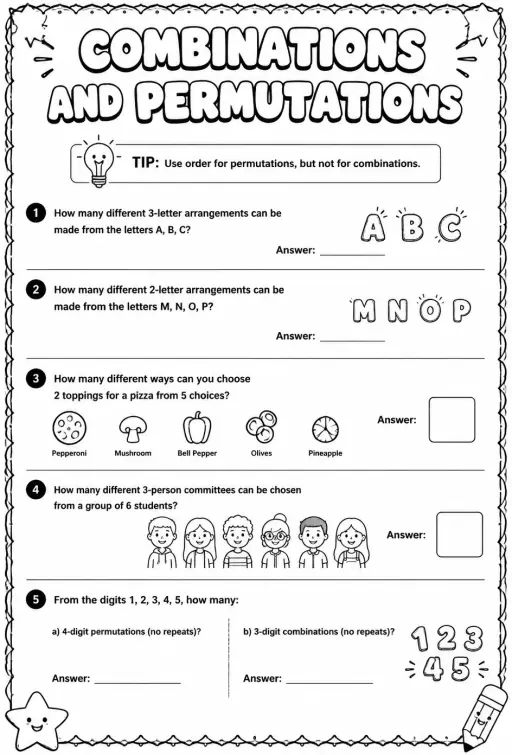
Combinations and permutations
Worksheets
hard
Ages 14–18
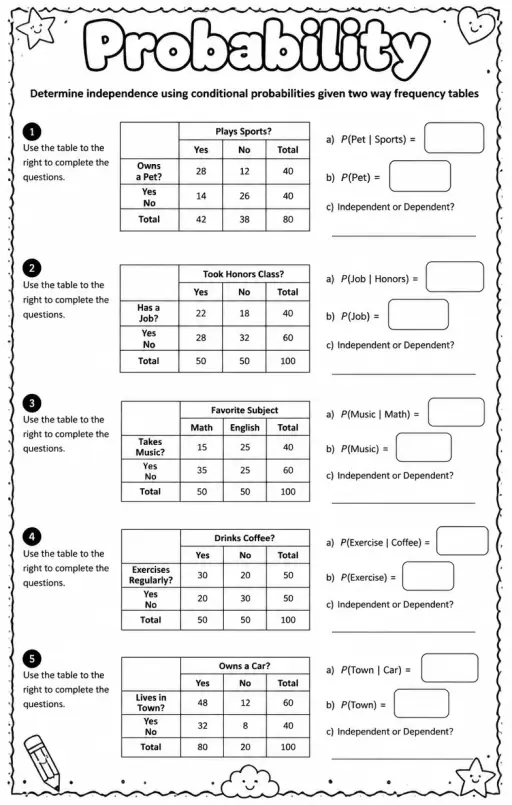
Determine independence using conditional probabilities given two way frequency tables
Worksheets
hard
Ages 14–18
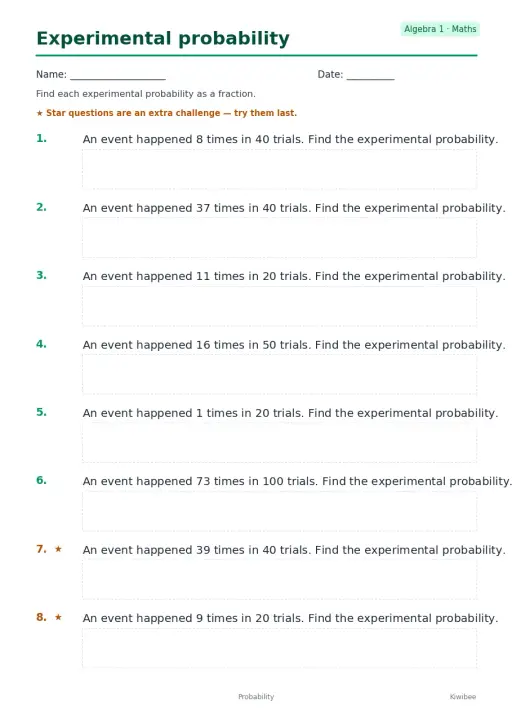
Experimental probability
Worksheets
medium
Ages 14–18
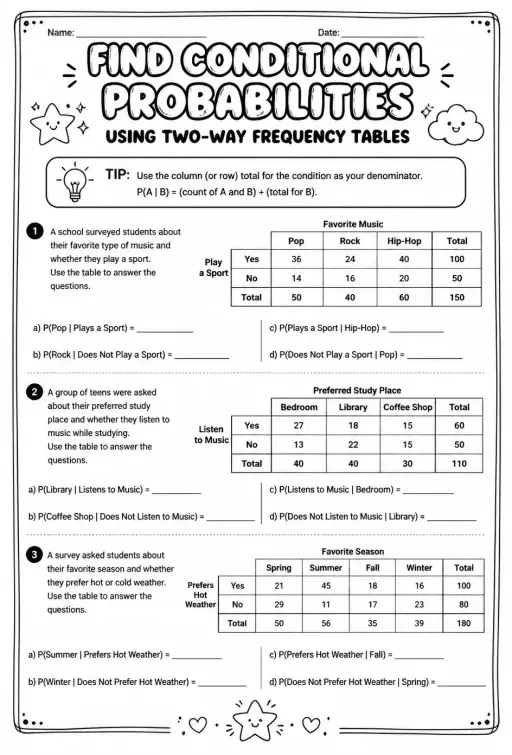
Find conditional probabilities using two-way frequency tables
Worksheets
hard
Ages 14–18
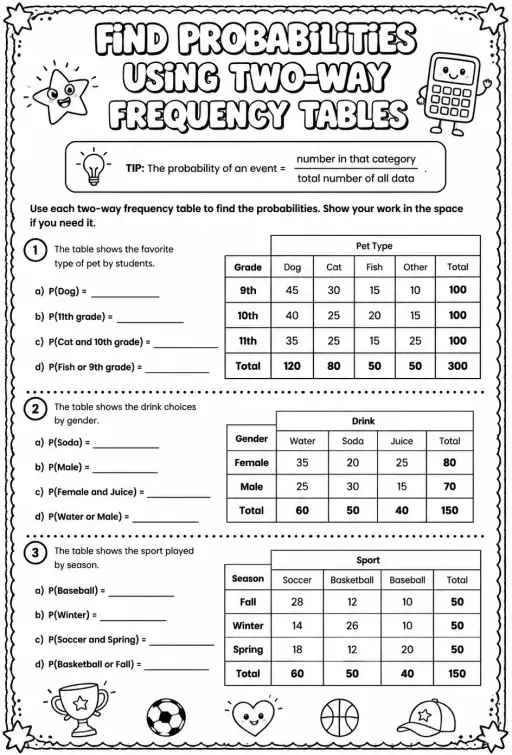
Find probabilities using two-way frequency tables
Worksheets
hard
Ages 14–18
 For big organisations
 For schools
 For centers
 For team leaders
 For teachers
 AI and resources
 Printable worksheets
 Interactive simulations
 Teacher tools
 AI studio
 Ideas and research