KiwiBee uses optional Google Analytics, Google Ads, and Meta Pixel cookies to understand adult visitors, measure completed sign-ups, and improve campaigns. Essential cookies always stay on. OpenAI’s ChatGPT Ads Pixel also measures page views and completed enquiries after advertising consent, and may use hashed contact details for matching. Privacy policy
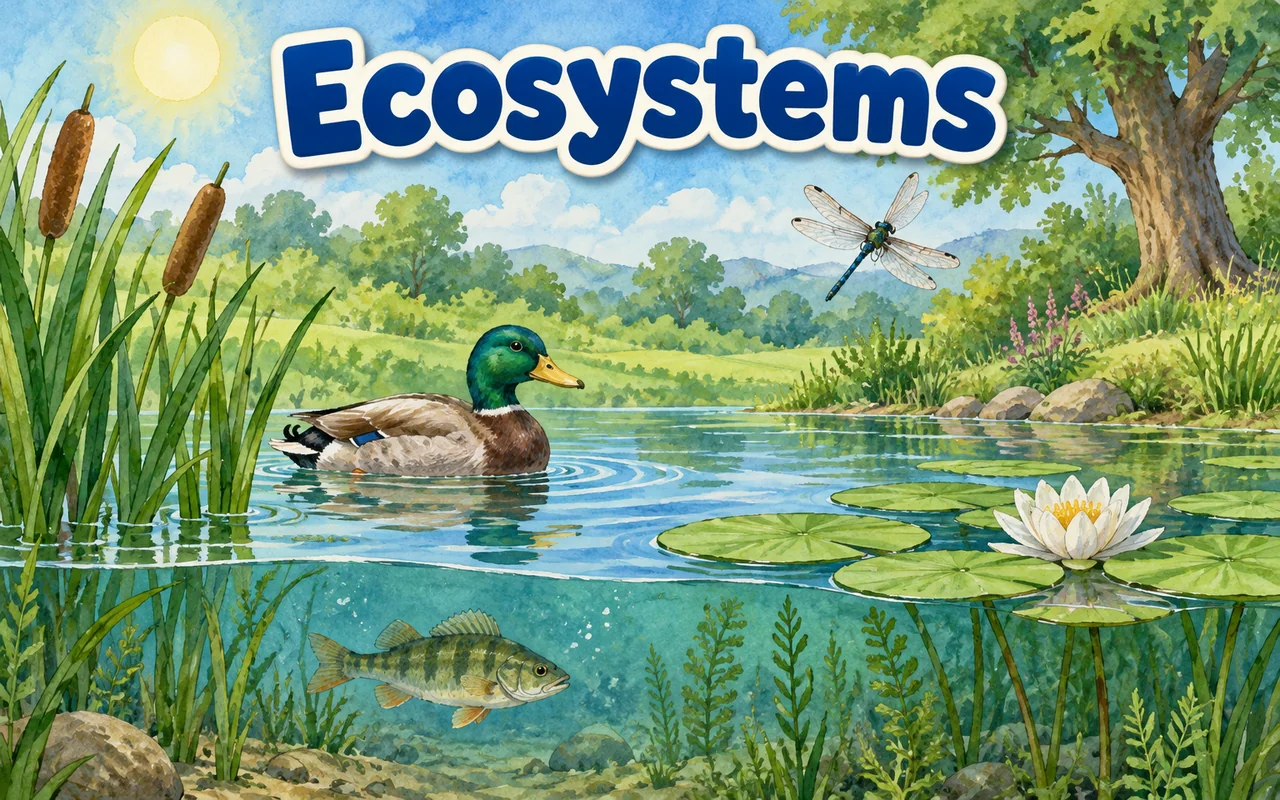
Ecosystems Worksheet Pack is a no-prep printable lower secondary resource for Ecosystems. It includes a marketing cover, a preview/contents page, and 8 student worksheet pages with clear directions, response space, and varied scaffolded activities. Use it for lessons, review, centers, sub plans, intervention, homework, homeschool, or early finishers.
Ways to use the pack
Learning objectives
Practice Ecosystems with a printable worksheet pack.
Use clear directions and scaffolded worksheet layouts.
Support independent practice, review, centers, homework, and homeschool learning.
How to use this pack
1Select “Sign in / Sign up to download”, then sign in with Google or email to get the PDF from KiwiBee Printables.
2Print at home or in class for Lower Secondary; it's no-prep, with no extra materials needed.
3Hand it out as classwork, homework, or a quick warm-up.
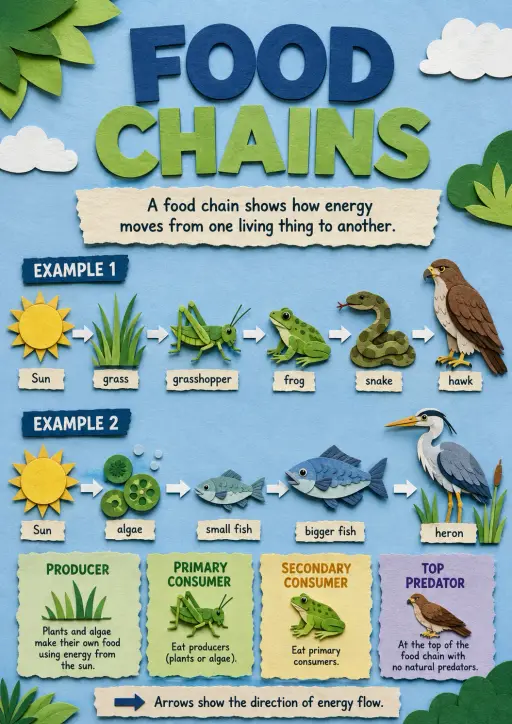
This Food Chains infographic for Ecosystems focuses on A food chain shows how energy moves from one living thing to another., EXAMPLE 1, Sun, grass and grasshopper. The image uses short OCR-extracted labels and reference text from the poster itself, making it ready for classroom display, quick review, learning centers, and independent student study.
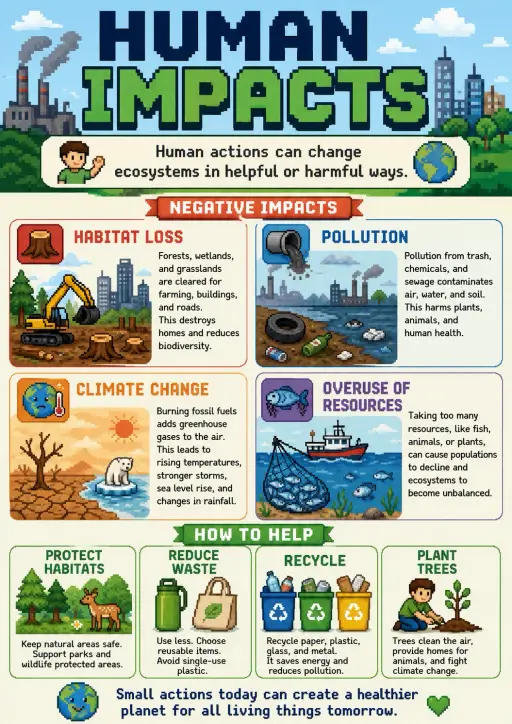
This Human Impacts infographic for Ecosystems focuses on Human actions can change ecosystems in helpful or harmful ways., NEGATIVE IMPACTS, HABITAT LOSS, POLLUTION and CLIMATE CHANGE. The image uses short OCR-extracted labels and reference text from the poster itself, making it ready for classroom display, quick review, learning centers, and independent student study.
This Adaptations infographic for Ecosystems focuses on Adaptations are features or behaviors that help organisms survive., STRUCTURAL ADAPTATIONS, Physical features of an organism that help it survive., POLAR BEAR and Thick fur traps heat.. The image uses short OCR-extracted labels and reference text from the poster itself, making it ready for classroom display, quick review, learning centers, and independent student study.
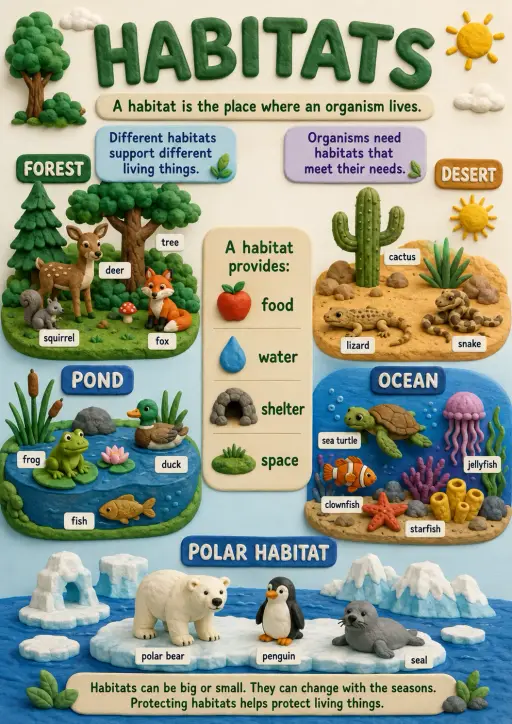
This Habitats infographic for Ecosystems focuses on A habitat is the place where an organism lives., Different habitats support different living things., FOREST, POND and A habitat provides:. The image uses short OCR-extracted labels and reference text from the poster itself, making it ready for classroom display, quick review, learning centers, and independent student study.
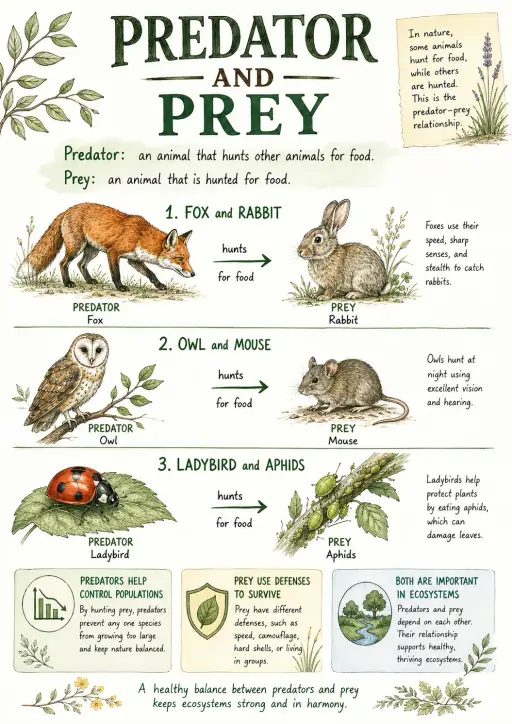
This Predator and Prey infographic for Ecosystems focuses on Predator: an animal that hunts other animals for food., Prey: an animal that is hunted for food., 1. FOX and RABBIT, hunts and for food. The image uses short OCR-extracted labels and reference text from the poster itself, making it ready for classroom display, quick review, learning centers, and independent student study.
This Producers infographic for Ecosystems focuses on Producers make their own food, usually by photosynthesis., USE SUNLIGHT, Plants capture energy from the Sun., Capture energy from the Sun. and MAKE GLUCOSE. The image uses short OCR-extracted labels and reference text from the poster itself, making it ready for classroom display, quick review, learning centers, and independent student study.
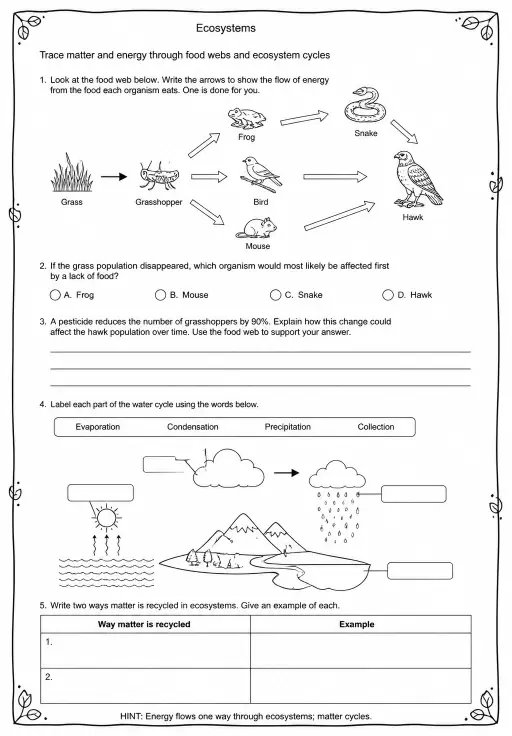
Free printable Life Science science worksheet for "Trace matter and energy through food webs and ecosystem cycles" — practice ecosystems. No-prep, print or assign online.
——
Likes & comments
See what other teachers think and share a helpful note.




 Home
 All solutions
 Pricing
 About us
 KiwiBee for Non-profits
 Events & webinars
 For big organisations
 For schools
 For centers
 For team leaders
 For teachers
 Resources
 Printable worksheets
 Interactive simulations
 Teacher tools
 Ideas and research


