7 Teacher Must-Haves for Kindergarten and Primary Classrooms
Simple classroom essentials for feedback, attention, visual learning, and creativity.
Last updated July 21, 2026
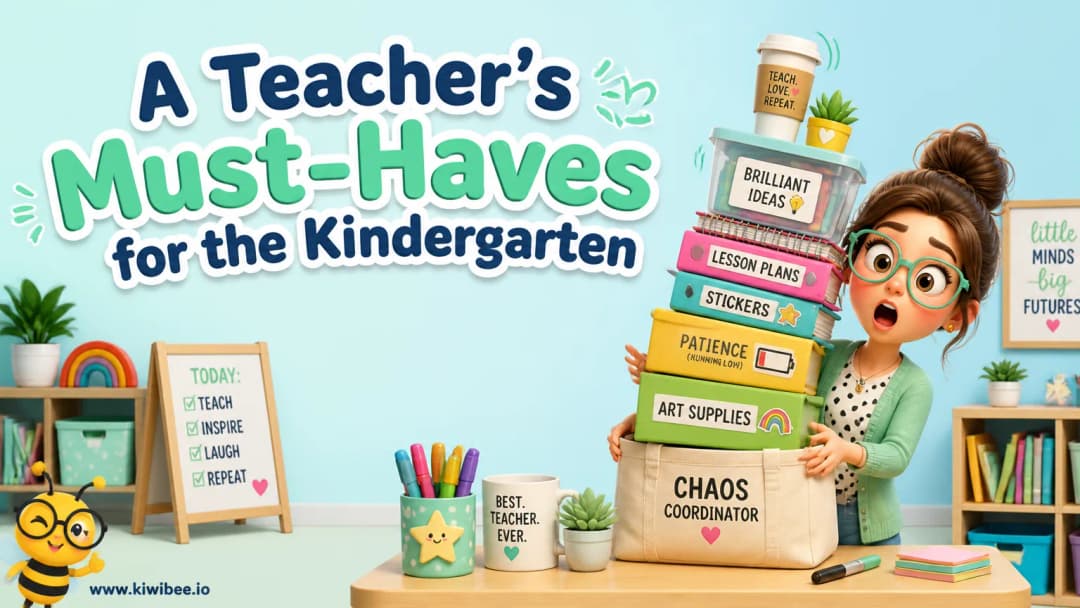
Seven simple classroom essentials
The most useful classroom supplies are often the simplest. These seven items support quick feedback, smoother transitions, visual teaching, hands-on learning, and creative work without adding complicated routines.
1. Stickers
Stickers give children quick, visible encouragement for effort, kindness, careful work, or improvement. Keep several simple designs nearby so feedback takes seconds rather than interrupting the lesson.

2. A bell
A small hand bell gives the class one consistent signal to stop, listen, or change activity. Teach the meaning of the sound first, then use one calm ring instead of raising your voice over the room.

3. A laser pointer
A presentation pointer helps you direct attention to a word, diagram, map, or worked example without standing in front of the screen. Use a low-powered presentation model, follow school rules, and never point a laser toward anyone's face or eyes.

4. Flashcards
Flashcards make retrieval practice fast and flexible. Use them for letters, phonics, vocabulary, number facts, shapes, or discussion prompts, and let children sort, match, explain, or quiz one another in pairs.

5. Magnets
Magnets turn a whiteboard into a reusable display and sorting surface. Attach them to word cards, pictures, labels, number lines, or student work so materials can move during demonstrations. For young children, use large classroom-safe magnets and keep small magnets out of reach.

6. Coloured pencils
Coloured pencils are ideal for detailed drawing, maps, diagrams, labels, editing, and colour-coding. They give older primary students more control than crayons while keeping creative tasks tidy and easy to store.

7. Crayons
Crayons are durable, easy for small hands to grip, and perfect for colouring, rubbings, posters, and early mark-making. Keep them sorted into simple colour tubs so children can find what they need and help tidy up independently.

The takeaway
Choose supplies that children can understand, reach, use, and return with as little adult help as possible. A well-organised set of simple tools often supports learning better than expensive equipment that is difficult to use every day.
Explore the platform
Continue with KiwiBee
Choose the KiwiBee workspace or resource library that fits what you need next.
Get one practical teaching resource in your inbox each week.
Related posts
Top Gadgets to Use in the Classroom for Kindergarten and Primary Teachers
From laser pointers to self-inking stamps, discover five affordable gadgets that help kindergarten and primary teachers manage attention, deliver lessons, and give instant feedback.
Classroom management strategies that actually work in elementary
Five easy classroom management strategies: visual behaviour boards, a behaviour pyramid, digital points, class monitors, and clear rewards and consequences.
 Home
Home All solutions
 Pricing
 About us
 KiwiBee for Non-profits
 Events & webinars
 For big organisations
 For schools
 For centers
 For team leaders
 For teachers
 AI and resources
 Resources
 Printable worksheets
 Lesson Packs
 Interactive simulations
 Teacher tools
 AI studio
 Ideas and research