Story Innovation: Help Kids Write a New Story from a Familiar One
 By KiwiBee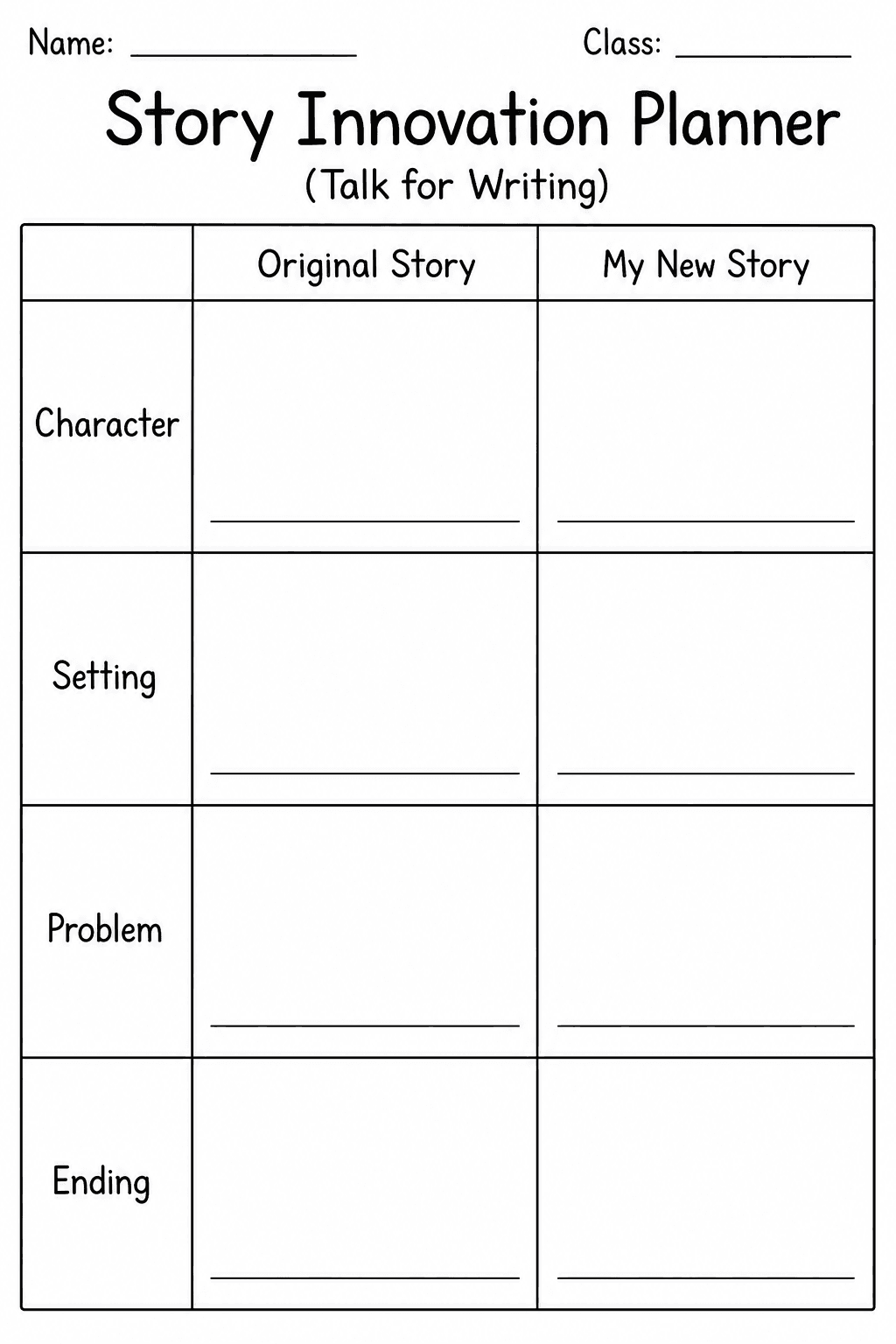
Once children know a story by heart, innovation lets them make it their own without the blank-page panic. They keep the familiar structure and swap out the details — a safe, powerful step toward independent writing.
How to teach story innovation
- Start from a known text. Use the story your class has mapped and retold.
- Identify what can change. Character, setting, problem and ending are the easiest swaps.
- Model one change first. Show how changing the character ripples through the story.
- Plan side by side. Use the innovation planner to compare the original with the new version.
- Rehearse orally before writing, so new vocabulary is ready.
- Write and compare to the original to celebrate what's the same and what's new.
How to use the free innovation planner
The template has two columns — Original Story and My New Story — with rows for character, setting, problem and ending. Children fill the left column from memory, then invent the right. The planning is done before they write a single sentence.
Quick tips
- Limit changes at first (one or two) so the structure holds.
- Keep a word bank of "magpie" phrases to borrow.
Download the free Story Innovation Planner from the Assets box below.
Explore the platform
Continue with KiwiBee
Choose the KiwiBee workspace or resource library that fits what you need next.
 For big organisations
 For schools
 For centers
 For team leaders
 For teachers
 AI and resources
 Printable worksheets
 Interactive simulations
 Teacher tools
 AI studio
 Ideas and research