
Explore an adult male reference body in 3D. Reveal 14 anatomical systems, search thousands of named structures, isolate organs, and pull 2,209 modeled pieces apart to see how the body is organized.
—
KiwiBee 使用 Google Analytics、Google Ads 和 Meta Pixel 的可选 Cookie,用于了解成年访客、统计已完成的注册并改进推广活动。必要 Cookie 始终保持开启。 OpenAI 的 ChatGPT 广告像素还会在您同意广告追踪后衡量页面浏览和已提交的咨询,并可能使用经过哈希处理的联系信息进行匹配。 隐私政策
《赫罗图与星团》将赫茨普龙-罗素图以 3D 形式生动呈现。横轴反向绘制表面温度,从左侧的炽热蓝色 O 型星(40,000 K)到右侧的凉爽红色 M 型星(2,500 K),纵轴绘制对数光度 log(L/L_sun)。学生可以在赫罗平面的任意位置拖拽发光的测试星,或调整其质量滑块,通过斯特藩-玻尔兹曼定律计算其以太阳半径为单位的准确半径。将“星团年龄”滑块从 0.01 调整到 12 Gyr,展示了为什么大质量恒星会迅速燃尽燃料,并从主序星转折点脱离,演化为红巨星、超巨星和白矮星。
历史上,天文学家按照光谱类从 O 到 M(或从蓝到红的色指数 B-V)从左到右绘制恒星。由于 O 星最热而 M 星最冷,因此温度向左递增。
根据斯特藩-玻尔兹曼定律(L = 4πR²σT⁴),凉爽的红星每平方米表面发射的光较少,因此它能以高总光度发光的唯一途径是拥有巨大的表面积——使其成为红巨星或超巨星。
尽管质量是太阳 10 倍的恒星拥有多 10 倍的氢燃料,但其光度却亮了约 3,000 倍(L ∝ M^3.5)。它在短短几千万年内就耗尽了核心燃料,而低质量红矮星则能持续数万亿年。
太阳是位于图表中间附近的光谱类型 G2V 主序星,表面温度为 5,778 K,光度为 1.0 L_sun,半径为 1.0 R_sun。
免费嵌入你的学习平台、博客或班级网站。
<iframe src="https://kiwibee.io/zh-cn/simulations/hr-diagram-3d-star-cluster-3d-simulation/embed" title="赫罗图与星团 | KiwiBee" loading="lazy" allowfullscreen style="width:100%;height:min(70vh,620px);min-height:420px;border:0;border-radius:16px"></iframe>继续探索
Explore an adult male reference body in 3D. Reveal 14 anatomical systems, search thousands of named structures, isolate organs, and pull 2,209 modeled pieces apart to see how the body is organized.
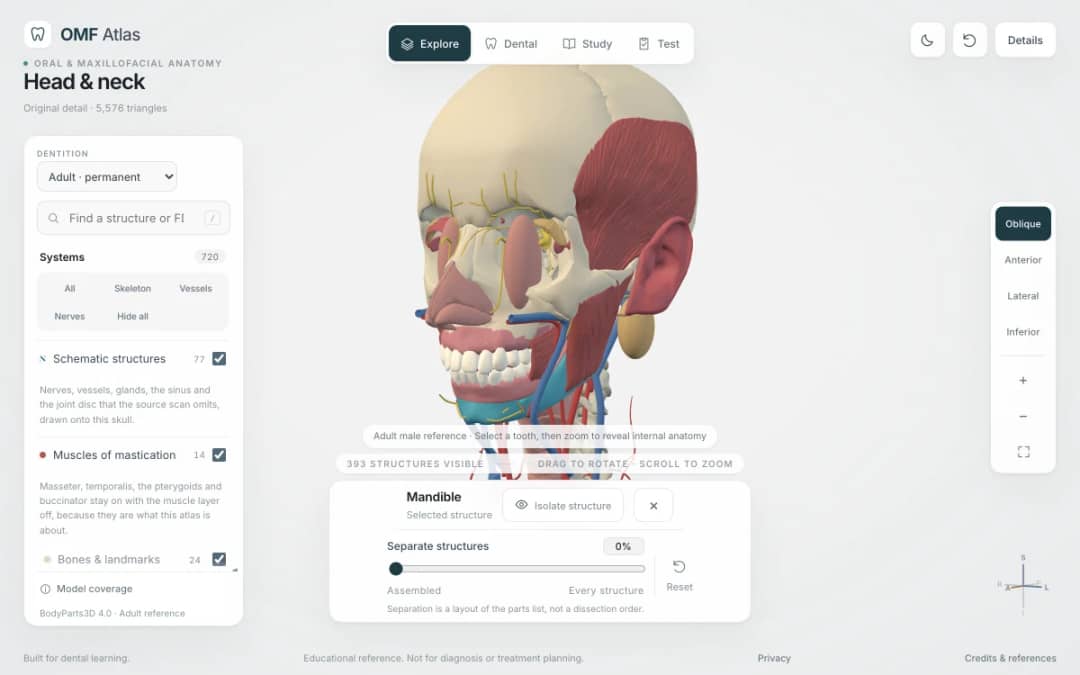
Explore the head and neck in 3D: 643 source meshes across 14 layers, 47 facial and masticatory muscles, and 77 drawn nerves, vessels and glands the source scan omits. Open any tooth onto its own pulp canal, and follow the seven stages of tooth development.

免费的光合作用互动模拟实验。在线动手探索光合作用——适合全班演示,也适合学生自主练习。

免费的物质的状态互动模拟实验。在线动手探索物质的状态——适合全班演示,也适合学生自主练习。

免费的影子互动模拟实验。在线动手探索影子——适合全班演示,也适合学生自主练习。
从模型到记录
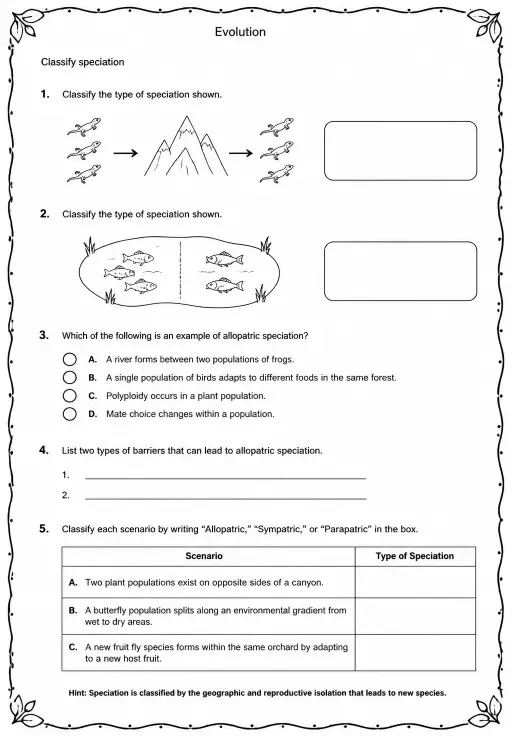
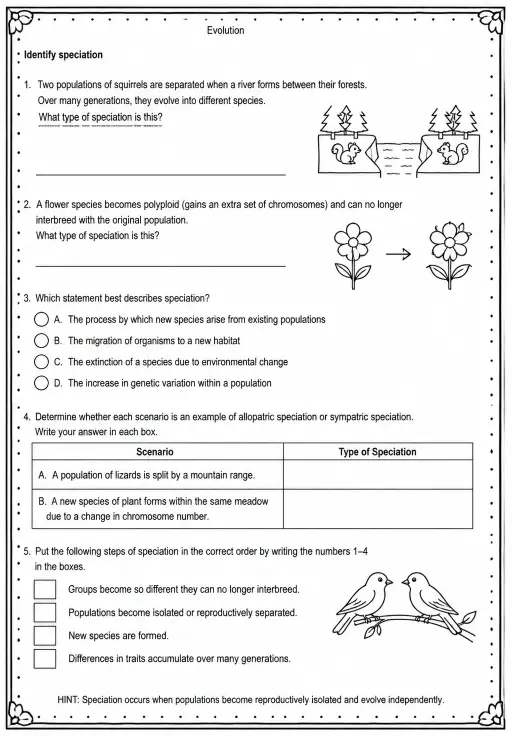
学生探索之后,用工作表记录他们的预测、观察和解释。
KiwiBee 的免费教师工作台把备课、工作表、课堂工具和成绩册集中在一处。
免费开始,创建你的第一个班级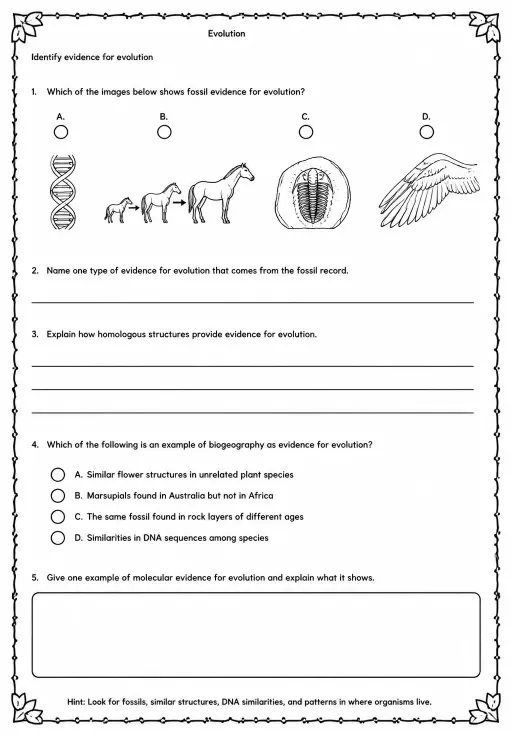
 首页
 全部解决方案
 价格
 关于我们
 KiwiBee 非营利组织计划
 活动与网络研讨会
 面向大型教育集团
 面向学校
 面向教育中心
 面向团队负责人
 面向教师
 AI 与教学资源
 教学资源
 可打印练习单
 课程包
 互动模拟实验
 教师工具
 AI 工作室
 灵感与研究