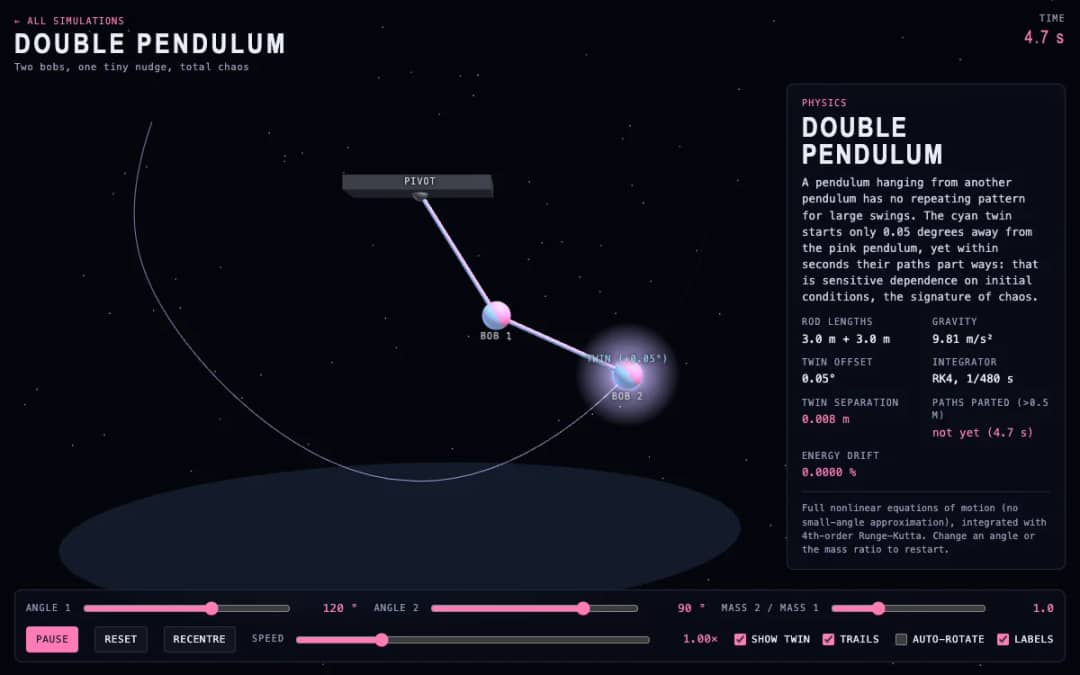
ایک پنڈولم دوسرے پنڈولم کے سرے سے لٹکتا ہے، اور ایک فیروزی جڑواں تقریباً وہیں سے شروع ہوتا ہے جہاں گلابی شروع ہوتا ہے۔ طلبہ زاویے اور کمیت کا تناسب بدلتے ہیں اور دونوں راستوں کو چند سیکنڈ میں الگ ہوتے دیکھتے ہیں۔
—
KiwiBee بالغ وزیٹرز کو سمجھنے، مکمل ہونے والے سائن اپس کی پیمائش کرنے اور مہمات کو بہتر بنانے کے لیے Google Analytics، Google Ads اور Meta Pixel کی اختیاری کوکیز استعمال کرتا ہے۔ ضروری کوکیز ہمیشہ فعال رہتی ہیں۔ OpenAI کا ChatGPT Ads Pixel اشتہارات کی رضامندی کے بعد صفحات کے مشاہدات اور بھیجی گئی درخواستیں بھی ناپتا ہے اور مماثلت کے لیے ہیش کی گئی رابطہ معلومات استعمال کر سکتا ہے۔ رازداری کی پالیسی
اکیلا رقاص دہراتا ہے: وہی آغاز دیجیے اور ہر بار وہی جھولا ملے گا۔ پہلی سلاخ کے سرے پر دوسری سلاخ جوڑ دیجیے تو وہی ثقل کا قانون ایسی حرکت پیدا کر دیتا ہے جو کبھی نہیں دہراتی اور جس کی زیادہ دیر پیش گوئی ممکن نہیں۔ ایک دسویں درجے کے فرق سے چھوڑی گئی دو نقلیں شروع میں ایک دوسرے کے بالکل پیچھے چلتی ہیں؛ پھر اُن کے بیچ کا فرق دُگنا ہوتا ہے، اور پھر دُگنا، ایک ٹھہری ہوئی رفتار سے — یعنی وہ خطی نہیں بلکہ اُسّی طور پر بڑھتا ہے۔ تقریباً دس سیکنڈ میں دونوں رقاص بالکل مختلف کام کر رہے ہوتے ہیں۔ یہاں نہ کچھ اتفاقی تھا، نہ کچھ تخمینی: مساواتیں ٹھیک ٹھیک ہیں اور دونوں راستوں کے الگ ہوتے وقت بھی ہر نقل کی توانائی برقرار رہتی ہے۔ جو ناکام ہوتا ہے وہ پیش گوئی ہے، اور وہ ایسے وقتی نظام کے مطابق ناکام ہوتی ہے جسے آپ خاکے سے براہِ راست پڑھ سکتے ہیں۔ اِس کے برعکس دونوں ابتدائی زاویے چھوٹے رکھیے تو وہی رقاص شریفانہ چلتا ہے، فرق بس ڈولتا رہتا ہے، اور خاکہ ہموار ہو جاتا ہے — یہاں افراتفری اِس بات کی خاصیت ہے کہ آپ نے اُسے کتنے زور سے جھلایا، آلے کی نہیں۔ طلبہ اوپری سلاخ کا ابتدائی زاویہ اور نچلی سلاخ کا ابتدائی زاویہ بدل کر موازنہ کر سکتے ہیں کہ کیا ہوتا ہے۔ اسے ہائی اسکول کے ساتھ ریاضی کی تحقیقی سرگرمی میں استعمال کریں — پروجیکٹر پر یا ہر طالب علم کے آلے پر۔
معیارات: Common Core CCSS.MATH.CONTENT.HSF.IF.B.4, CCSS.MATH.CONTENT.HSF.LE.A.1
جی ہاں۔ دوہرے رقاص کی افراتفری کا سمیولیشن کسی جدید براؤزر میں کھولیں — نہ ڈاؤن لوڈ کی ضرورت، نہ رجسٹریشن کی۔
سمیولیشن میں ہائی اسکول تک پھیلی ہوئی تدریسی سطحیں پہلے سے موجود ہیں۔ اپنی کلاس سے مطابقت رکھنے والی سطح چنیں، پھر اسے پروجیکٹر پر یا طلبہ کے آلات پر چلائیں۔
اسے اپنے ایل ایم ایس، بلاگ یا کلاس کی ویب سائٹ پر لگائیں — مفت۔
<iframe src="https://kiwibee.io/ur/simulations/double-pendulum-chaos-simulation/embed" title="دوہرے رقاص کی افراتفری تعاملی سمیولیشن | KiwiBee" loading="lazy" allowfullscreen style="width:100%;height:min(70vh,620px);min-height:420px;border:0;border-radius:16px"></iframe>دریافت جاری رکھیں
ایک پنڈولم دوسرے پنڈولم کے سرے سے لٹکتا ہے، اور ایک فیروزی جڑواں تقریباً وہیں سے شروع ہوتا ہے جہاں گلابی شروع ہوتا ہے۔ طلبہ زاویے اور کمیت کا تناسب بدلتے ہیں اور دونوں راستوں کو چند سیکنڈ میں الگ ہوتے دیکھتے ہیں۔

کوئی بھی دالہ لکھیے اور فوراً اُس کی شکل دیکھیے۔ موازنے کے لیے تین رنگوں میں بیک وقت تین تک بنائیے، منحنی سے قدر پڑھنے کے لیے سراغ نقطہ کھینچیے، اور دیکھیے کہ ہر ایک صفر کو کہاں کاٹتا ہے۔

چرخی گھمائیے، سکہ اچھالیے یا پانسا پھینکیے، اور ستونوں کے دو گروہ دیکھیے: شکلیں جو امکان بتاتی ہیں، اور جو نتائج آپ کو واقعی ملے۔ دس چکر کچھ ثابت نہیں کرتے؛ چند سو کے بعد دونوں میں فرق کرنا مشکل ہو جاتا ہے۔

m سرکائیے اور خط کو جھکتے دیکھیے؛ b سرکائیے اور اُسے اوپر نیچے پھسلتے دیکھیے۔ یا خط کے دونوں نقطے کھینچیے اور وہ مساوات پڑھیے جو خط آپ کو لکھ کر لوٹاتا ہے۔ 'چڑھائی بٹا چال' والی سیڑھی خط پر چڑھتی ہے، تاکہ ڈھلان ایسی چیز بن جائے جسے آپ گِن سکیں۔
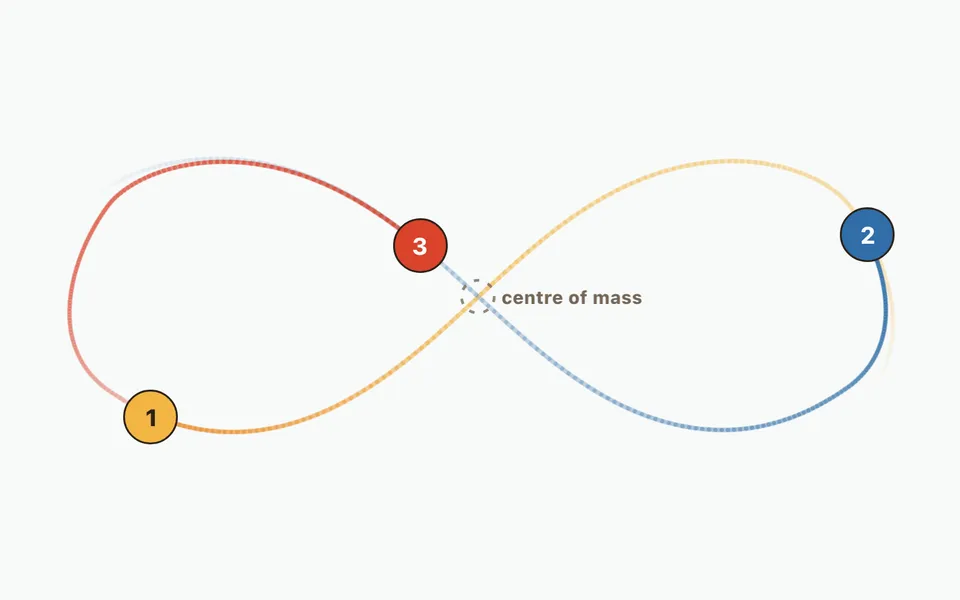
دو اجسام کے مدار کا تین اجسام کی آٹھ نما حرکت سے موازنہ کریں، پھر بارہ تک اجسام شامل کریں۔ ابتدائی کمیت، رفتار اور مقام بدلیں؛ راستے اور توانائی کی عددی خطا دیکھیں۔
ماڈل سے شواہد تک
طلبہ کے دریافت کرنے کے بعد ان کے اندازے، مشاہدات اور وضاحتیں لکھوانے کے لیے ورک شیٹ استعمال کریں۔
KiwiBee کا مفت اساتذہ ورک اسپیس سبق کی منصوبہ بندی، ورک شیٹس، کلاس روم اوزار اور گریڈ بک کو ایک ہی جگہ لے آتا ہے۔
مفت شروع کریں اور اپنی پہلی کلاس بنائیں
 ہوم
ہوم تمام حل
 قیمتیں
 ہمارے بارے میں
 غیر منافع بخش اداروں کے لیے KiwiBee
 تقریبات اور ویبینارز
 بڑے اداروں کے لیے
 اسکولوں کے لیے
 تعلیمی مراکز کے لیے
 ٹیم لیڈرز کے لیے
 اساتذہ کے لیے
 AI اور وسائل
 وسائل
وسائل قابلِ طباعت ورک شیٹس
 سبق پیکس
 تعاملی سمیولیشنز
 اساتذہ کے اوزار
 AI اسٹوڈیو
 خیالات اور تحقیق