
Explore where notable people were born on an interactive world map. Filter culture, science, leadership, and sport, compare regions, and connect biographies with geography. Map by Topi Tjukanov, using research by Morgane Laouenan and colleagues.
—
KiwiBee 使用 Google Analytics、Google Ads 及 Meta Pixel 的可選 Cookie,以了解成年訪客、統計已完成的註冊及改善推廣活動。必要 Cookie 會一直保持啟用。 OpenAI 的 ChatGPT 廣告像素亦會在您同意廣告追蹤後衡量頁面瀏覽及已提交的查詢,並可能使用經雜湊處理的聯絡資料作配對。 私隱政策
KiwiBee’s classroom edition retains Nicky Case’s CC0 network experiments and interactive essay. A guided experiment selector opens network building, simple or complex contagion, bonding/bridging, small-world networks, or the sandbox. Prediction prompts, keyboard button handling, restart controls and sound initially off support classroom use. Creator and collaborator credits remain in the original Credits section. Allow about 30 minutes for the full lesson. The illustrated agents follow simplified rules, not predictions of actual people.
Nicky Case. Original source license: CC0-1.0. Source: https://github.com/ncase/crowds. KiwiBee improves the classroom controls and experiments, retaining source credits and licenses.
The cartoon network models simplify human behavior. They are tools for discussion rather than evidence that a real group will behave in the same way.
Use the activity controls inside the frame, or open fullscreen for a larger workspace. Ask students to predict a result, test it, and explain what changed. The embedded application starts in English; available upstream language controls are part of the original activity.
免費嵌入你的學習平台、網誌或班級網頁。
<iframe src="https://kiwibee.io/zh/simulations/wisdom-madness-crowds-simulation/embed" title="Wisdom and Madness of Crowds | KiwiBee" loading="lazy" allowfullscreen style="width:100%;height:min(70vh,620px);min-height:420px;border:0;border-radius:16px"></iframe>繼續探索
Explore where notable people were born on an interactive world map. Filter culture, science, leadership, and sport, compare regions, and connect biographies with geography. Map by Topi Tjukanov, using research by Morgane Laouenan and colleagues.
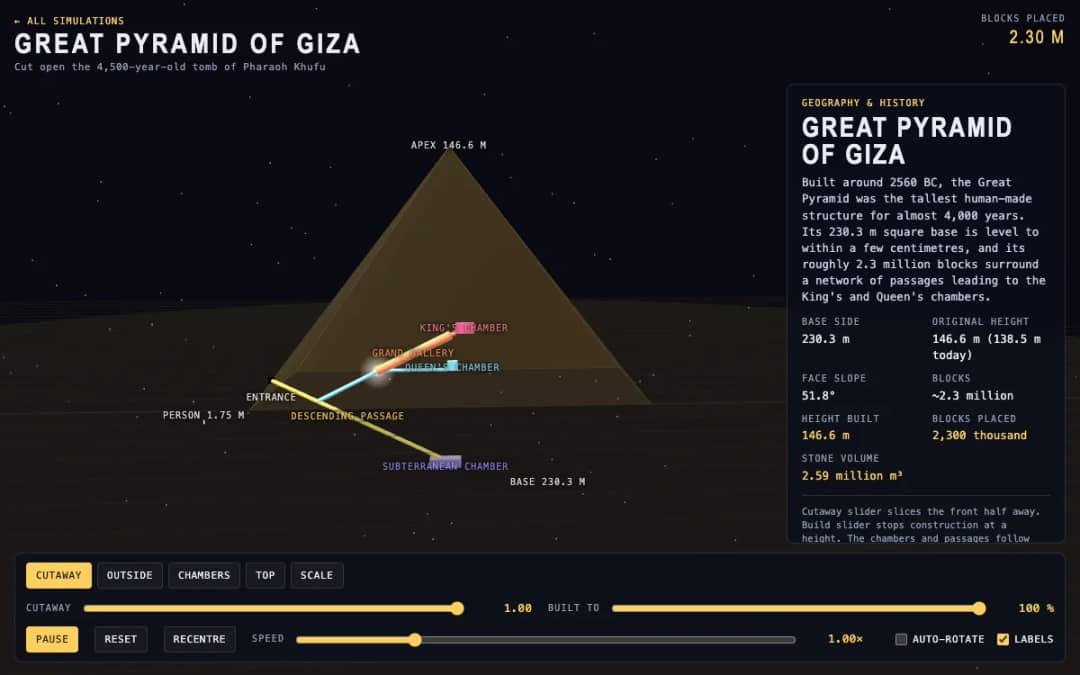
The Great Pyramid of Giza is shown in 3D with a cutaway slider that slices the front away and a build slider that stops construction at any height. Readouts show the height built, blocks placed and stone volume.
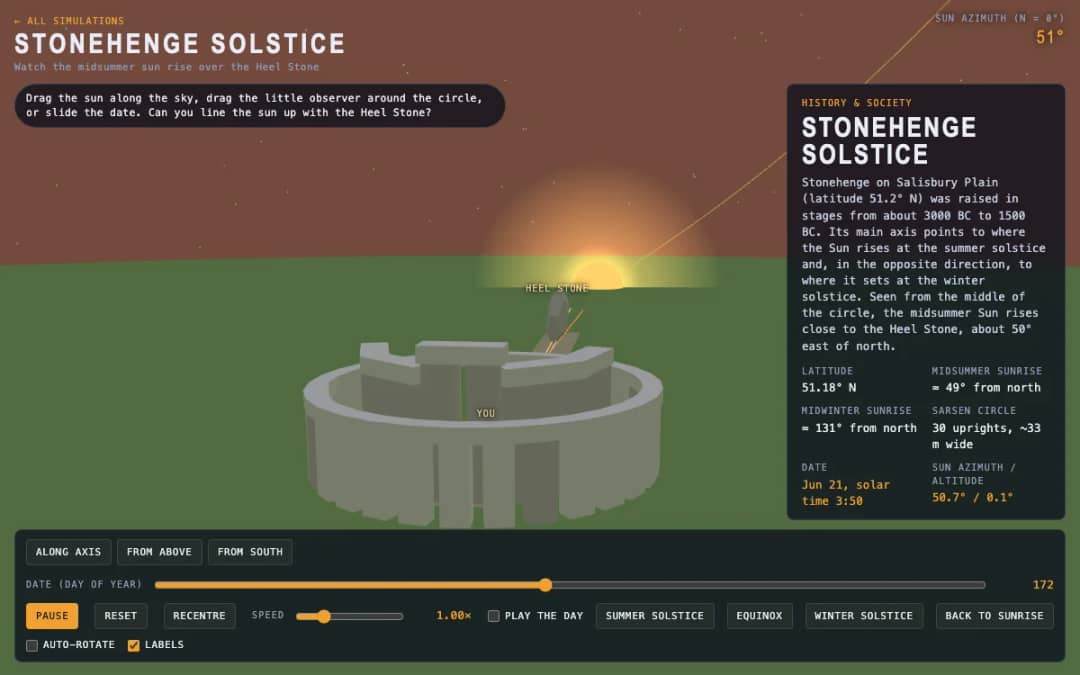
A 3D stone circle under a moving sun. Students drag the sun, move an observer around the circle or slide the date to test whether sunrise lines up with the Heel Stone.
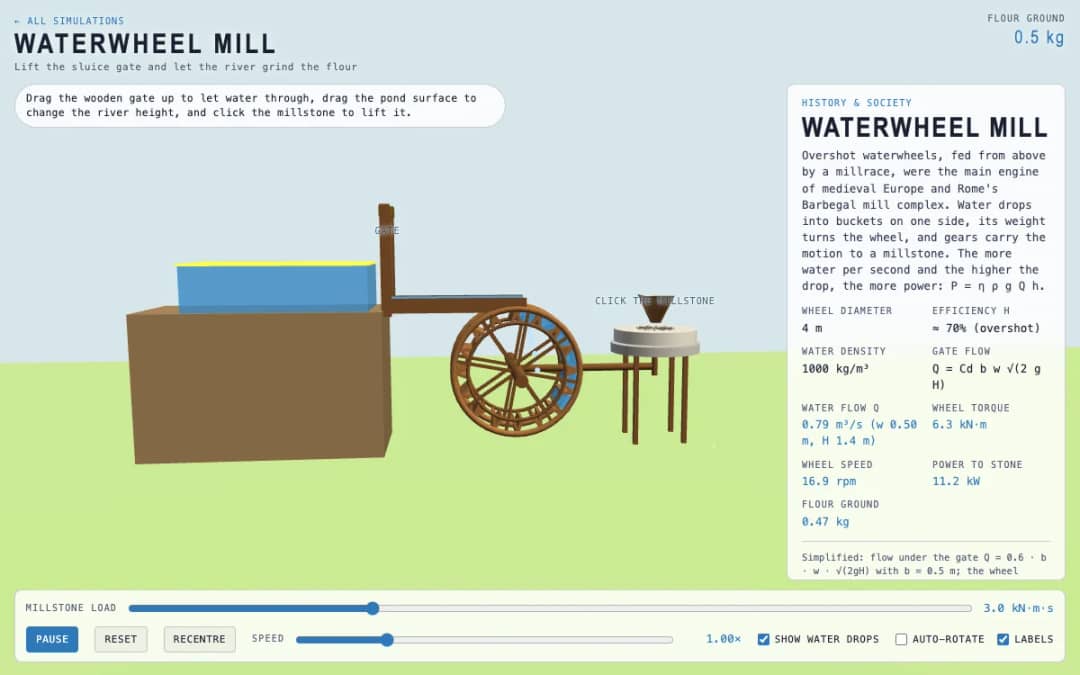
An overshot waterwheel driving a millstone. Students lift the wooden gate, change the pond level and click the millstone, then watch flow, torque, wheel speed and flour output.
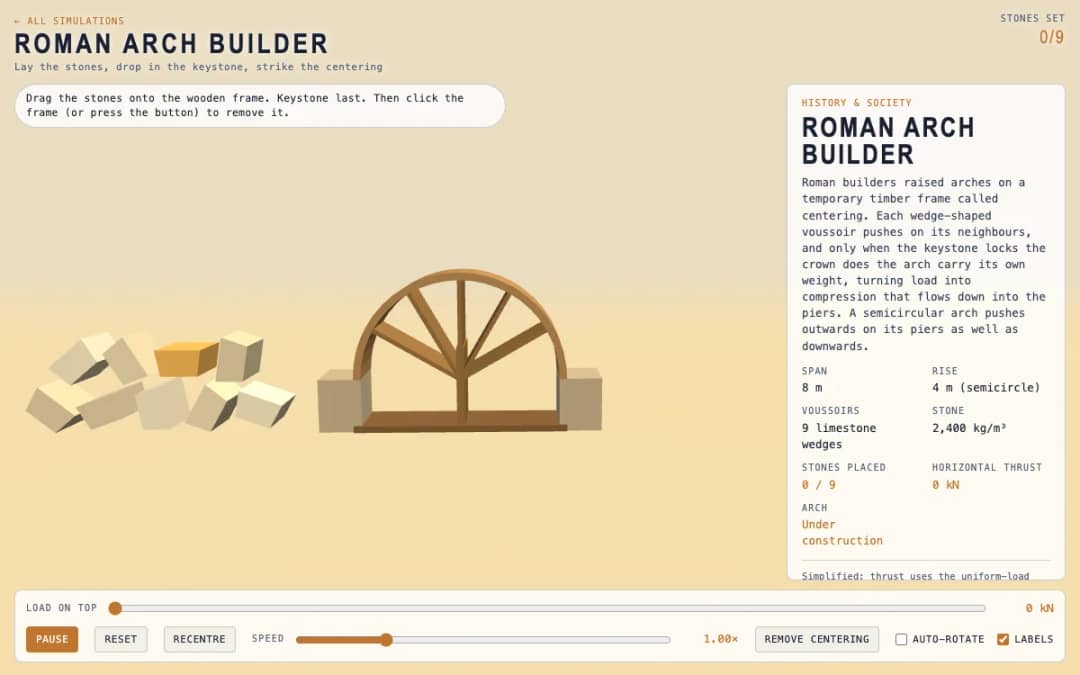
A wooden frame and nine limestone wedges. Students drag the stones into place, add the keystone last, then remove the frame and test the arch with extra weight on top.
KiwiBee 的免費教師工作空間,把備課、工作紙、課堂工具和成績冊集中在同一處。
免費開始,建立你的第一個班別 首頁
 所有解決方案
 價格
 關於我們
 KiwiBee 非牟利機構計劃
 活動及網上研討會
 適合大型教育機構
 適合學校
 適合教育中心
 適合團隊主管
 適合教師
 AI 和教學資源
 教學資源
 可列印工作紙
 課程包
 互動模擬
 教師工具
 AI 工作室
 教學構思與研究