
Explore where notable people were born on an interactive world map. Filter culture, science, leadership, and sport, compare regions, and connect biographies with geography. Map by Topi Tjukanov, using research by Morgane Laouenan and colleagues.
—
KiwiBee 使用 Google Analytics、Google Ads 及 Meta Pixel 的可選 Cookie,以了解成年訪客、統計已完成的註冊及改善推廣活動。必要 Cookie 會一直保持啟用。 OpenAI 的 ChatGPT 廣告像素亦會在您同意廣告追蹤後衡量頁面瀏覽及已提交的查詢,並可能使用經雜湊處理的聯絡資料作配對。 私隱政策
Students drag the sun along the sky, drag a small observer around the circle, or slide the date from day 1 to 365. Buttons jump to the summer solstice, equinox, winter solstice or back to sunrise, and a toggle plays the day. Readouts show the date, sun azimuth and altitude, the direction to the Heel Stone from the observer and the alignment verdict. It shows how the sun's rising point shifts through the year at latitude 51 degrees north, and how prehistoric builders may have marked it.
Yes, it costs nothing and there is no account to create. Stonehenge Solstice works in the browser on laptops, Chromebooks, whiteboards, tablets and phones.
It was raised in stages from about 3000 BC to 1500 BC on Salisbury Plain in England, at a latitude of about 51.2 degrees north.
It is a large stone outside the main circle. Seen from the center, the midsummer sun rises close to it, which is why the site is linked to the summer solstice.
Slide the Date, drag the sun or the observer, and use the solstice and equinox buttons. Press Back to sunrise to reset the view to dawn.
免費嵌入你的學習平台、網誌或班級網頁。
<iframe src="https://kiwibee.io/zh/simulations/stonehenge-solstice-3d-simulation/embed" title="Stonehenge Solstice | KiwiBee" loading="lazy" allowfullscreen style="width:100%;height:min(70vh,620px);min-height:420px;border:0;border-radius:16px"></iframe>繼續探索
Explore where notable people were born on an interactive world map. Filter culture, science, leadership, and sport, compare regions, and connect biographies with geography. Map by Topi Tjukanov, using research by Morgane Laouenan and colleagues.

Explore how ideas spread through social networks in an interactive lesson. Draw connections, compare network structures, and investigate collective behavior.
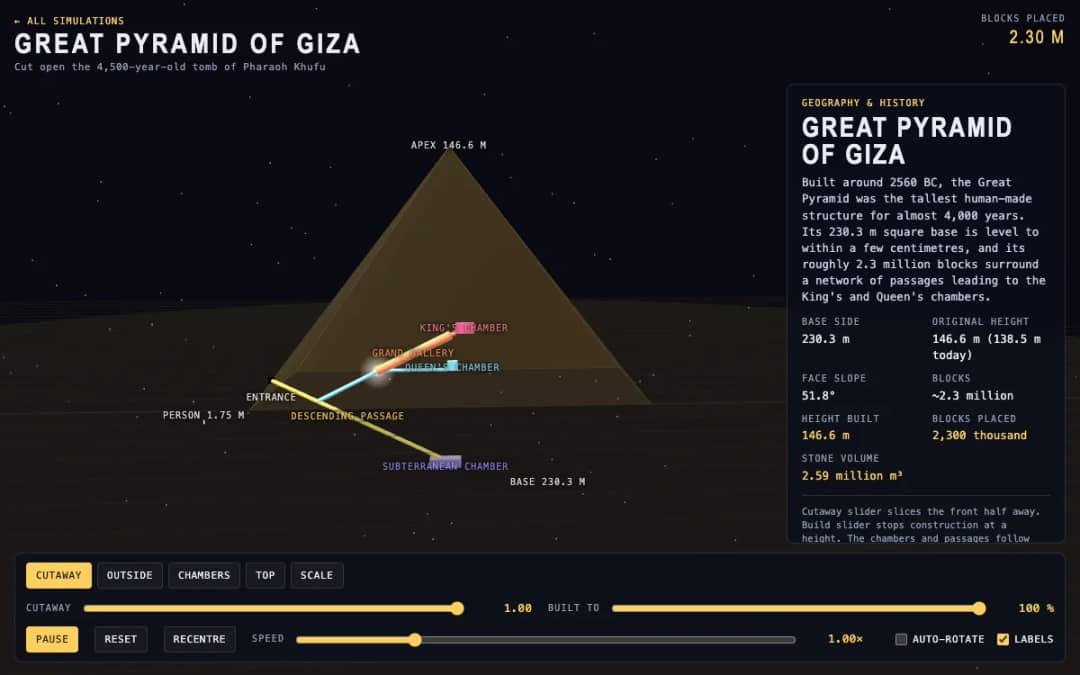
The Great Pyramid of Giza is shown in 3D with a cutaway slider that slices the front away and a build slider that stops construction at any height. Readouts show the height built, blocks placed and stone volume.
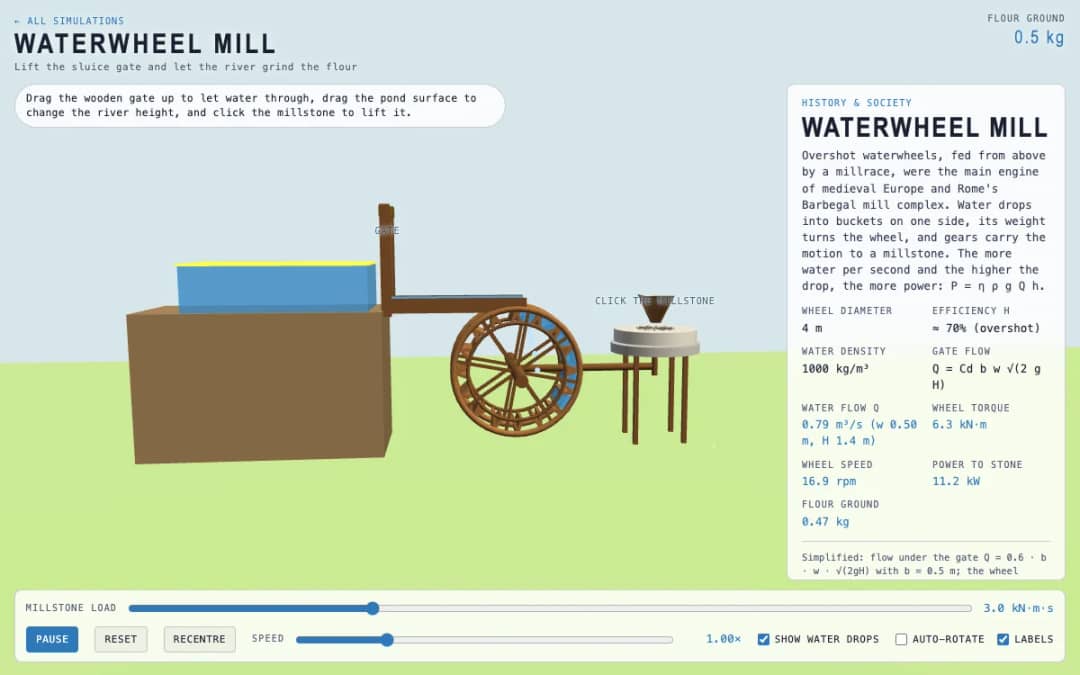
An overshot waterwheel driving a millstone. Students lift the wooden gate, change the pond level and click the millstone, then watch flow, torque, wheel speed and flour output.
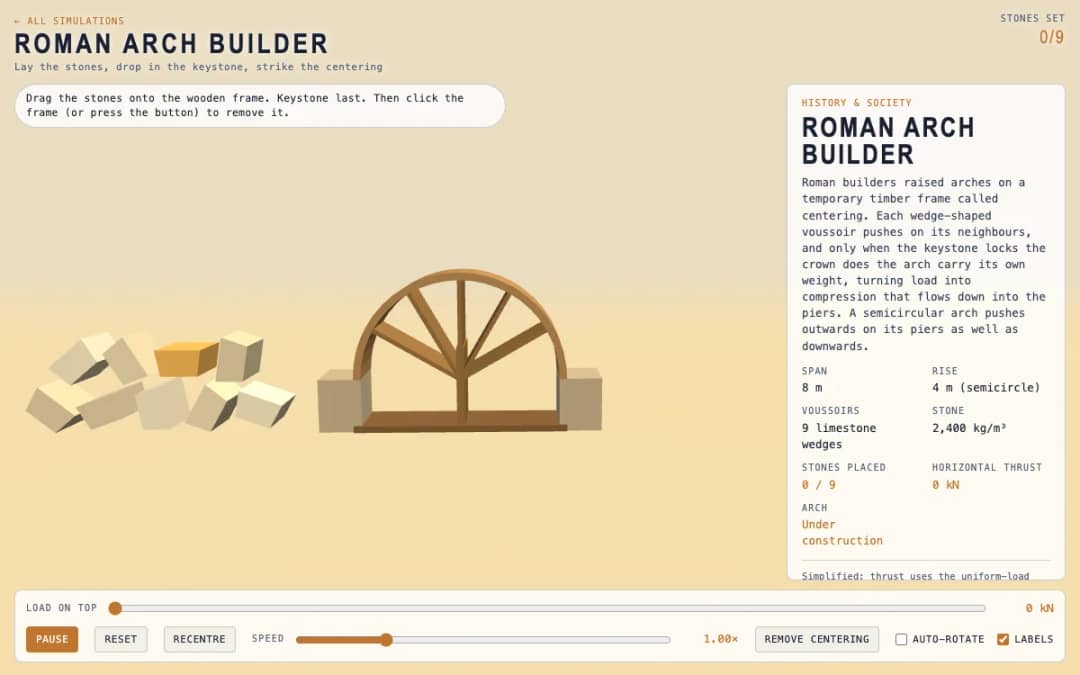
A wooden frame and nine limestone wedges. Students drag the stones into place, add the keystone last, then remove the frame and test the arch with extra weight on top.
KiwiBee 的免費教師工作空間,把備課、工作紙、課堂工具和成績冊集中在同一處。
免費開始,建立你的第一個班別 首頁
 所有解決方案
 價格
 關於我們
 KiwiBee 非牟利機構計劃
 活動及網上研討會
 適合大型教育機構
 適合學校
 適合教育中心
 適合團隊主管
 適合教師
 AI 和教學資源
 教學資源
 可列印工作紙
 課程包
 互動模擬
 教師工具
 AI 工作室
 教學構思與研究