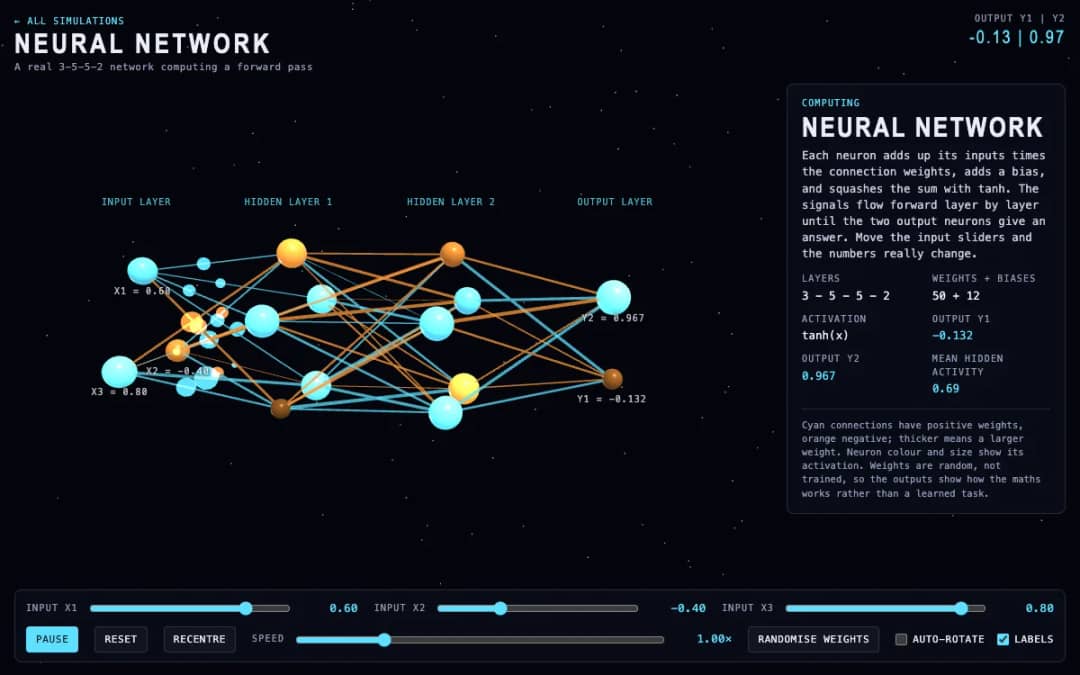
一个小型神经网络以 3D 形式绘制:三个输入、两个各含五个神经元的隐藏层,以及两个输出。学生移动输入滑块,观察神经元颜色、连接权重和两个输出的变化。
—
KiwiBee 使用 Google Analytics、Google Ads 和 Meta Pixel 的可选 Cookie,用于了解成年访客、统计已完成的注册并改进推广活动。必要 Cookie 始终保持开启。 OpenAI 的 ChatGPT 广告像素还会在您同意广告追踪后衡量页面浏览和已提交的咨询,并可能使用经过哈希处理的联系信息进行匹配。 隐私政策
本模型展示神经冲动沿轴突传播的过程,并按膜电位着色:静息时为蓝色,达到阈值时为青色,峰值时为黄色。学生可以按下“刺激”或保持“自动触发”开启,开关髓鞘,并将轴突直径在 1 至 20 微米之间调节。读数会显示探针处的电压、动作电位所处的时相、传导速度以及信号何时到达末梢。该模型有助于讲解静息电位、去极化和复极化,以及为什么有髓鞘纤维的神经冲动传导快得多。
是的。它免费使用,可在任何现代浏览器中运行,包括互动白板和平板电脑。无需注册,也无需安装。
它是神经元膜两侧电压的短暂反转,从约 -70 mV 变为约 +40 mV,再恢复原状。先是钠通道打开,随后钾通道使静息电压恢复。
髓鞘使轴突绝缘,因此神经冲动只在称为郎飞结的间隙处再生,并有效地在各结之间跳跃。这种跳跃式传导在粗纤维中可达 60 至 120 m/s。
不是。动画减慢了约 40 倍,郎飞结间距也做了夸大。读数中的速度来自有髓鞘和无髓鞘轴突的标准近似值。
免费嵌入你的学习平台、博客或班级网站。
<iframe src="https://kiwibee.io/zh-cn/simulations/neuron-signal-3d-simulation/embed" title="神经元信号 | KiwiBee" loading="lazy" allowfullscreen style="width:100%;height:min(70vh,620px);min-height:420px;border:0;border-radius:16px"></iframe>继续探索
一个小型神经网络以 3D 形式绘制:三个输入、两个各含五个神经元的隐藏层,以及两个输出。学生移动输入滑块,观察神经元颜色、连接权重和两个输出的变化。
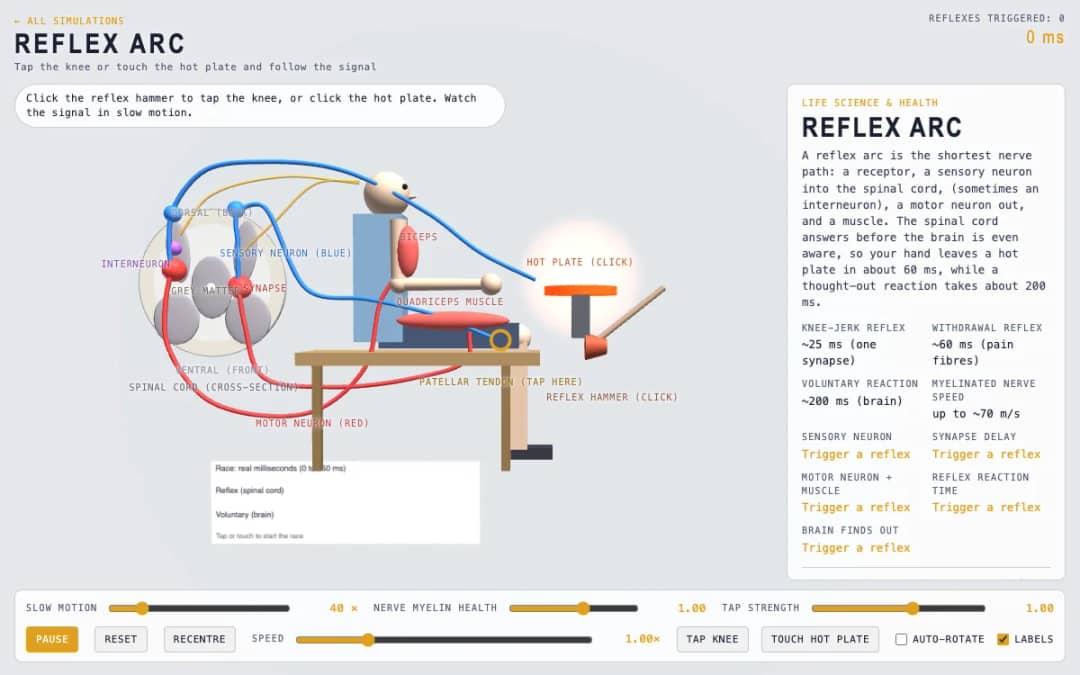
A leg and a hand show the path of a reflex. Students click the hammer or the hot plate and watch the signal travel through neurons and the spinal cord in slow motion.

Explore an adult male reference body in 3D. Reveal 14 anatomical systems, search thousands of named structures, isolate organs, and pull 2,209 modeled pieces apart to see how the body is organized.

Explore the head and neck in 3D: 643 source meshes across 14 layers, 47 facial and masticatory muscles, and 77 drawn nerves, vessels and glands the source scan omits. Open any tooth onto its own pulp canal, and follow the seven stages of tooth development.

免费的光合作用互动模拟实验。在线动手探索光合作用——适合全班演示,也适合学生自主练习。
KiwiBee 的免费教师工作台把备课、工作表、课堂工具和成绩册集中在一处。
免费开始,创建你的第一个班级 首页
 全部解决方案
 价格
 关于我们
 KiwiBee 非营利组织计划
 活动与网络研讨会
 面向大型教育集团
 面向学校
 面向教育中心
 面向团队负责人
 面向教师
 AI 与教学资源
 教学资源
 可打印练习单
 课程包
 互动模拟实验
 教师工具
 AI 工作室
 灵感与研究