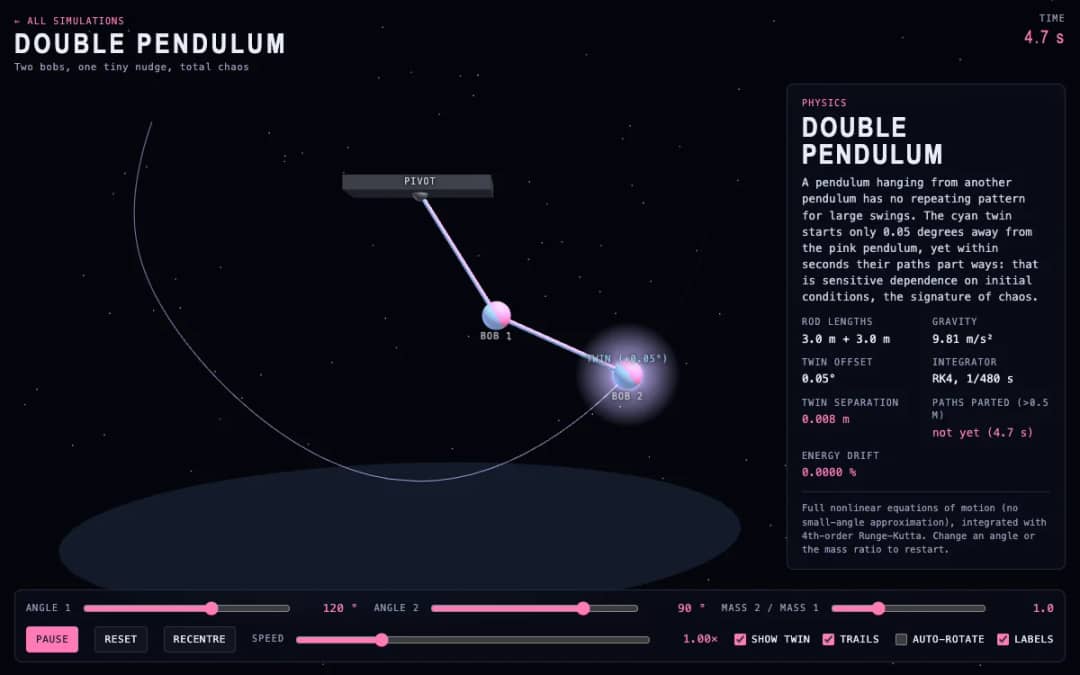
A pendulum hangs from the end of another pendulum, and a cyan twin starts almost exactly where the pink one does. Students change the angles and the mass ratio and watch the two paths separate within seconds.
—
KiwiBee uses optional Google Analytics, Google Ads, and Meta Pixel cookies to understand adult visitors, measure completed sign-ups, and improve campaigns. Essential cookies always stay on. OpenAI’s ChatGPT Ads Pixel also measures page views and completed enquiries after advertising consent, and may use hashed contact details for matching. Privacy policy
A single pendulum repeats: give it the same start and you get the same swing, every time. Join a second rod to the bottom of the first and the same law of gravity produces motion that never repeats and cannot be predicted for long. Two copies released a tenth of a degree apart track each other perfectly at first, then the difference between them doubles, and doubles again, at a steady rate — so it grows exponentially rather than linearly. Within about ten seconds the two pendulums are doing completely different things. Nothing was random and nothing was approximated: the equations are exact and the energy of each copy holds steady while the two paths come apart. What fails is prediction, and it fails on a schedule you can read straight off the graph. Set both start angles small instead and the same pendulum behaves itself, the gap merely wobbles, and the graph goes flat — chaos here is a property of how hard you swing it, not of the apparatus. Students can change upper start angle and lower start angle and compare what happens. Use it for math inquiry with High School on a projector or student device.
ស្តង់ដារ៖ Common Core CCSS.MATH.CONTENT.HSF.IF.B.4, CCSS.MATH.CONTENT.HSF.LE.A.1
Yes. Open the Double Pendulum Chaos simulation in a modern browser with no download or sign-up required.
The simulation includes learning-level presets spanning High School. Choose the level that matches your class, then use it on a projector or student devices.
ដាក់វាចូលទៅក្នុង LMS ប្លក់ ឬគេហទំព័រថ្នាក់រៀនរបស់អ្នក — ឥតគិតថ្លៃ។
<iframe src="https://kiwibee.io/km/simulations/double-pendulum-chaos-simulation/embed" title="Double Pendulum Chaos Simulation | KiwiBee" loading="lazy" allowfullscreen style="width:100%;height:min(70vh,620px);min-height:420px;border:0;border-radius:16px"></iframe>បន្តស្វែងរក
A pendulum hangs from the end of another pendulum, and a cyan twin starts almost exactly where the pink one does. Students change the angles and the mass ratio and watch the two paths separate within seconds.

Type any function and see its shape straight away. Plot up to three at once in three colours to compare them, drag the trace point to read a value off a curve, and see where each one crosses zero.

Spin a spinner, flip a coin or roll a die and watch two sets of bars: the chances the shapes predict, and the results you actually got. Ten spins prove nothing; a few hundred and the two are hard to tell apart.

Move m and watch the line tilt; move b and watch it slide. Or drag the two points on the line and read the equation it writes back. A rise-over-run staircase climbs the line so slope becomes something you can count.
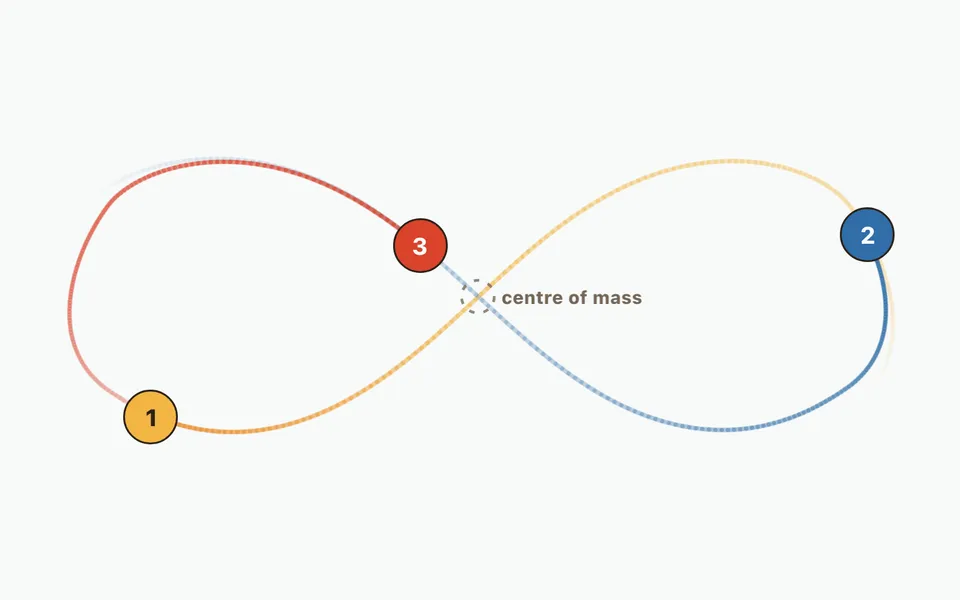
Compare a two-body orbit with three-body figure-eight motion, then add up to twelve bodies. Change initial masses, velocities and positions; watch orbit trails and numerical energy error.
ពីម៉ូដែលទៅភស្តុតាង
ប្រើសន្លឹកកិច្ចការដើម្បីកត់ត្រាការព្យាករណ៍ ការសង្កេត និងការពន្យល់ បន្ទាប់ពីសិស្សបានស្វែងយល់។
ទីតាំងការងារសម្រាប់គ្រូដោយឥតគិតថ្លៃ KiwiBee នាំមកនូវការរៀបចំមេរៀន សន្លឹកកិច្ចការ ឧបករណ៍ក្នុងថ្នាក់ និងសៀវភៅពិន្ទុ ទាំងអស់នៅកន្លែងតែមួយ។
ចាប់ផ្តើមឥតគិតថ្លៃ និងបង្កើតថ្នាក់ដំបូងរបស់អ្នក
 ទំព័រដើម
 ដំណោះស្រាយទាំងអស់
 តម្លៃ
 អំពីយើង
 KiwiBee សម្រាប់អង្គការមិនស្វែងរកប្រាក់ចំណេញ
 ព្រឹត្តិការណ៍ និងសិក្ខាសាលាអនឡាញ
 សម្រាប់អង្គភាពធំ
 សម្រាប់សាលារៀន
 សម្រាប់មជ្ឈមណ្ឌល
 សម្រាប់ប្រធានក្រុម
 សម្រាប់គ្រូ
 AI និងធនធាន
 ធនធាន
 សន្លឹកកិច្ចការសម្រាប់បោះពុម្ព
 កញ្ចប់មេរៀន
 ការពិសោធន៍និម្មិតអន្តរកម្ម
 ឧបករណ៍គ្រូ
 ស្ទូឌីយ៉ូ AI
 គំនិត និងការស្រាវជ្រាវ