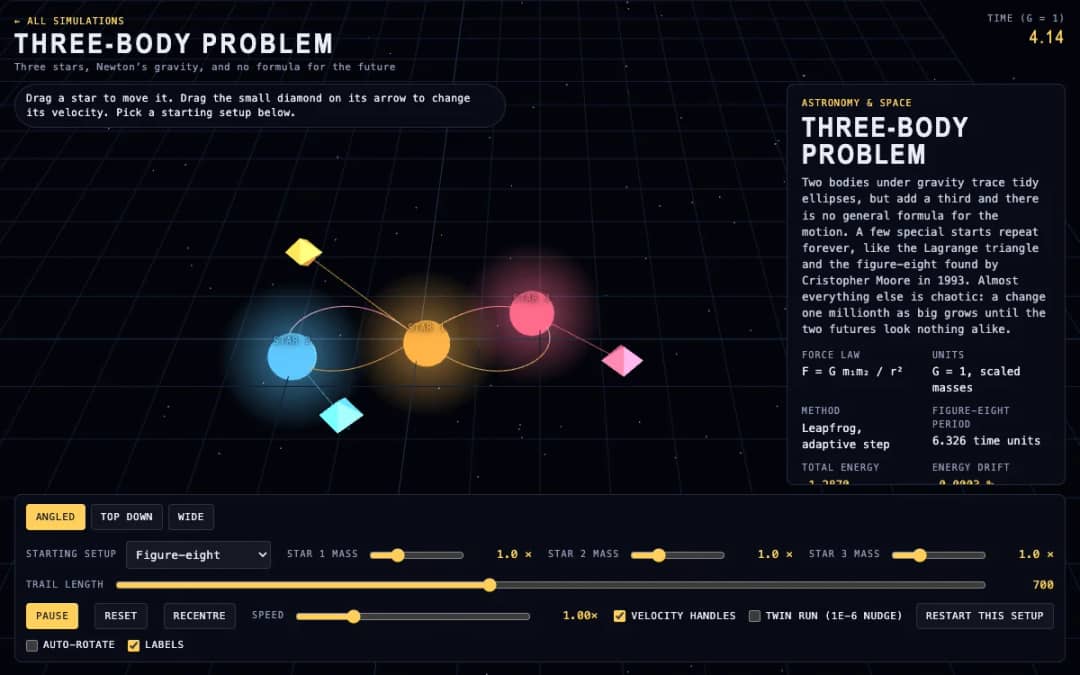
Three stars pull on each other with Newton's law of gravity. Drag the stars and their velocity arrows, choose famous starting setups such as the figure-eight, and run a twin copy with a one-millionth nudge to watch chaos grow.
—
KiwiBee uses optional Google Analytics, Google Ads, and Meta Pixel cookies to understand adult visitors, measure completed sign-ups, and improve campaigns. Essential cookies always stay on. OpenAI’s ChatGPT Ads Pixel also measures page views and completed enquiries after advertising consent, and may use hashed contact details for matching. Privacy policy
Two isolated Newtonian point masses have conic-section relative orbits: bound ellipses or unbound parabolic and hyperbolic paths. Three or more bodies generally require numerical integration. Special periodic solutions exist; not every three-body system is chaotic. No. This is a planar educational model in dimensionless units, using velocity Verlet and softened gravity. The figure-eight is an approximation of a special Newtonian orbit. It omits collisions, relativity and real planetary data.
ស្តង់ដារ៖ Common Core CCSS.MATH.CONTENT.HSF.IF.B.4, CCSS.MATH.CONTENT.HSF.IF.C.7
Two isolated Newtonian point masses have conic-section relative orbits: bound ellipses or unbound parabolic and hyperbolic paths. Three or more bodies generally require numerical integration. Special periodic solutions exist; not every three-body system is chaotic.
Raise Number of bodies from 2 to 12. Select a body, change its mass multiplier or initial velocity, or drag its numbered marker. Each edit starts a new experiment; Reset experiment restores the original two-body setup.
No. This is a planar educational model in dimensionless units, using velocity Verlet and softened gravity. The figure-eight is an approximation of a special Newtonian orbit. It omits collisions, relativity and real planetary data.
ដាក់វាចូលទៅក្នុង LMS ប្លក់ ឬគេហទំព័រថ្នាក់រៀនរបស់អ្នក — ឥតគិតថ្លៃ។
<iframe src="https://kiwibee.io/km/simulations/three-body-problem-simulation/embed" title="Three-Body Problem Simulation | KiwiBee" loading="lazy" allowfullscreen style="width:100%;height:min(70vh,620px);min-height:420px;border:0;border-radius:16px"></iframe>បន្តស្វែងរក
Three stars pull on each other with Newton's law of gravity. Drag the stars and their velocity arrows, choose famous starting setups such as the figure-eight, and run a twin copy with a one-millionth nudge to watch chaos grow.

Type any function and see its shape straight away. Plot up to three at once in three colours to compare them, drag the trace point to read a value off a curve, and see where each one crosses zero.

Spin a spinner, flip a coin or roll a die and watch two sets of bars: the chances the shapes predict, and the results you actually got. Ten spins prove nothing; a few hundred and the two are hard to tell apart.

Move m and watch the line tilt; move b and watch it slide. Or drag the two points on the line and read the equation it writes back. A rise-over-run staircase climbs the line so slope becomes something you can count.

Approximate the area under a curve with strips and choose how each takes its height: left edge, right edge, middle, or a sloping top. Push the strip count up and watch the error fall, with the running total plotted as its own curve.
ពីម៉ូដែលទៅភស្តុតាង
ប្រើសន្លឹកកិច្ចការដើម្បីកត់ត្រាការព្យាករណ៍ ការសង្កេត និងការពន្យល់ បន្ទាប់ពីសិស្សបានស្វែងយល់។

ទីតាំងការងារសម្រាប់គ្រូដោយឥតគិតថ្លៃ KiwiBee នាំមកនូវការរៀបចំមេរៀន សន្លឹកកិច្ចការ ឧបករណ៍ក្នុងថ្នាក់ និងសៀវភៅពិន្ទុ ទាំងអស់នៅកន្លែងតែមួយ។
ចាប់ផ្តើមឥតគិតថ្លៃ និងបង្កើតថ្នាក់ដំបូងរបស់អ្នក ទំព័រដើម
 ដំណោះស្រាយទាំងអស់
 តម្លៃ
 អំពីយើង
 KiwiBee សម្រាប់អង្គការមិនស្វែងរកប្រាក់ចំណេញ
 ព្រឹត្តិការណ៍ និងសិក្ខាសាលាអនឡាញ
 សម្រាប់អង្គភាពធំ
 សម្រាប់សាលារៀន
 សម្រាប់មជ្ឈមណ្ឌល
 សម្រាប់ប្រធានក្រុម
 សម្រាប់គ្រូ
 AI និងធនធាន
 ធនធាន
 សន្លឹកកិច្ចការសម្រាប់បោះពុម្ព
 កញ្ចប់មេរៀន
 ការពិសោធន៍និម្មិតអន្តរកម្ម
 ឧបករណ៍គ្រូ
 ស្ទូឌីយ៉ូ AI
 គំនិត និងការស្រាវជ្រាវ