
Type any function and see its shape straight away. Plot up to three at once in three colours to compare them, drag the trace point to read a value off a curve, and see where each one crosses zero.
—
KiwiBee uses optional Google Analytics, Google Ads, and Meta Pixel cookies to understand adult visitors, measure completed sign-ups, and improve campaigns. Essential cookies always stay on. OpenAI’s ChatGPT Ads Pixel also measures page views and completed enquiries after advertising consent, and may use hashed contact details for matching. Privacy policy
Base-Ten Blocks 3D is a hands-on manipulatives table for exploring decimal place value, expanded notation, and regrouping (carrying and borrowing). The 3D classroom mat is organized into four color-coded columns: purple Thousands cubes (10×10×10 = 1,000), red Hundreds flats (10×10 = 100), green Tens rods (1×10 = 10), and blue Ones unit cubes (1). Students can click any column pad or adjust the sliders to place up to 15 blocks in a column, creating non-standard groupings such as 14 tens or 12 ones. Pressing Regroup / Bundle 10 (or clicking the gold Regroup Orb) bundles each group of 10 blocks into 1 block in the next column to the left while keeping the total number unchanged.
Base-ten blocks (also called Dienes blocks) give students a physical, proportional model of our decimal number system. Because a ten-rod is literally 10 unit cubes tall and a hundred-flat is 100 cubes in area, students can see why each digit's position multiplies its value by 10.
In standard base-ten notation, each digit position holds at most 9 units. When a column reaches 10 or more blocks—such as 12 ones—we bundle 10 of those ones into 1 ten-rod and move it to the Tens column, leaving 2 ones behind.
Trading 10 ones for 1 ten (or 10 tens for 1 hundred) is an equal exchange: 10 × 1 = 10 and 10 × 10 = 100. The blocks are reorganized into standard place-value form without adding or removing any unit cubes.
Expanded form writes a number as the sum of the values of each of its digits—for example, writing 1,352 as 1,000 + 300 + 50 + 2, which directly matches the value of the blocks in each place-value column.
آن را در LMS، وبلاگ یا وبسایت کلاس خود قرار دهید — رایگان.
<iframe src="https://kiwibee.io/fa/simulations/place-value-base-ten-blocks-3d-3d-simulation/embed" title="Base-Ten Blocks 3D | KiwiBee" loading="lazy" allowfullscreen style="width:100%;height:min(70vh,620px);min-height:420px;border:0;border-radius:16px"></iframe>کاوش را ادامه دهید
Type any function and see its shape straight away. Plot up to three at once in three colours to compare them, drag the trace point to read a value off a curve, and see where each one crosses zero.

Spin a spinner, flip a coin or roll a die and watch two sets of bars: the chances the shapes predict, and the results you actually got. Ten spins prove nothing; a few hundred and the two are hard to tell apart.

Move m and watch the line tilt; move b and watch it slide. Or drag the two points on the line and read the equation it writes back. A rise-over-run staircase climbs the line so slope becomes something you can count.
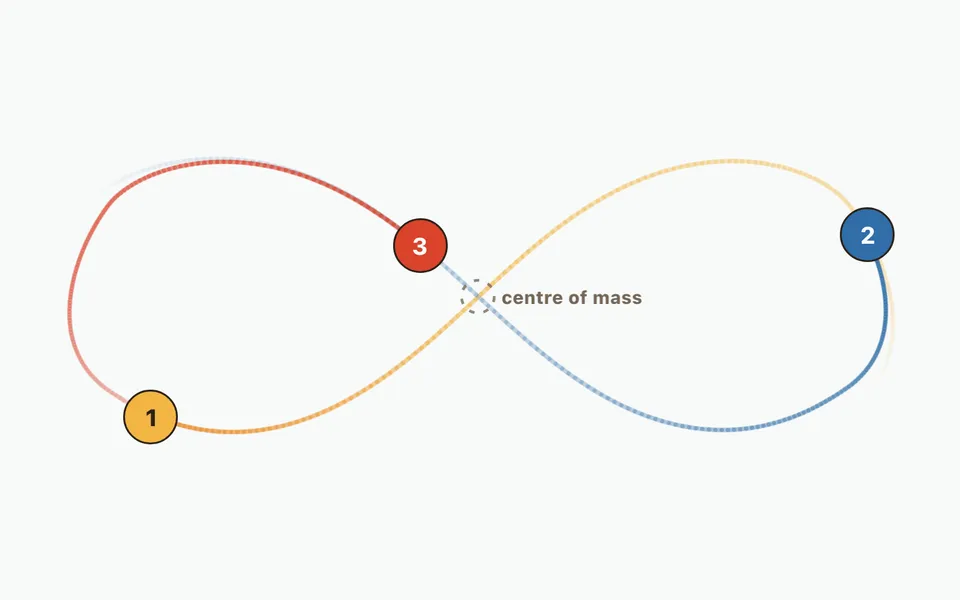
Compare a two-body orbit with three-body figure-eight motion, then add up to twelve bodies. Change initial masses, velocities and positions; watch orbit trails and numerical energy error.

Approximate the area under a curve with strips and choose how each takes its height: left edge, right edge, middle, or a sloping top. Push the strip count up and watch the error fall, with the running total plotted as its own curve.
از مدل تا شواهد
پس از کاوش دانشآموزان، از یک کاربرگ برای ثبت پیشبینیها، مشاهدات و توضیحها استفاده کنید.
فضای کاری رایگان معلمان KiwiBee برنامهریزی درس، کاربرگها، ابزارهای کلاسی و دفتر نمره را یکجا گرد هم میآورد.
رایگان شروع کنید و اولین کلاس خود را بسازید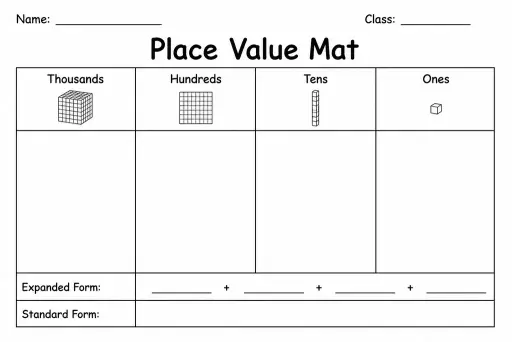
 خانه
 همهٔ راهکارها
 قیمتگذاری
 درباره ما
 KiwiBee برای سازمانهای غیرانتفاعی
 رویدادها و وبینارها
 برای سازمانهای بزرگ
 برای مدرسهها
 برای مراکز
 برای سرپرستان تیم
 برای معلمان
 هوش مصنوعی و منابع
 منابع
 کاربرگهای قابل چاپ
 بستههای درس
 شبیهسازیهای تعاملی
 ابزارهای معلم
 استودیوی هوش مصنوعی
 ایدهها و پژوهش