
Food Chain Builder
- Biología
Comentarios
Relacionado con esta simulación
Elegidos por su significado entre juegos, fichas, simulaciones, herramientas para docentes y vídeos.
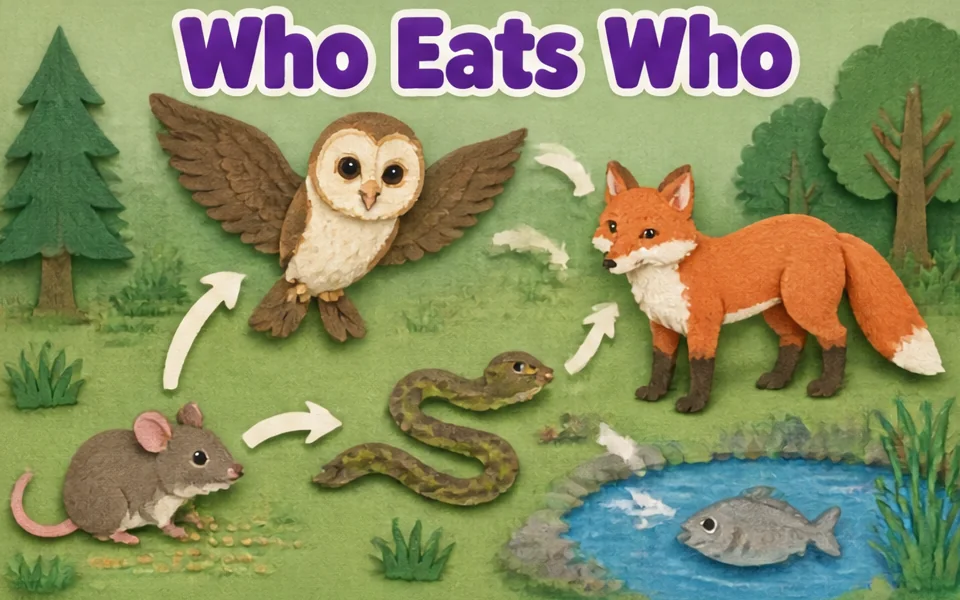 SimulaciónExplorador de redes tróficas
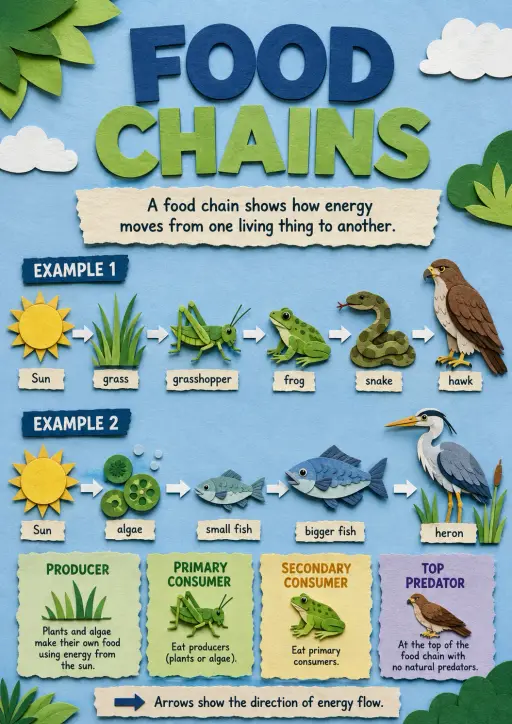 FichaFood Chains Ecosystems Infographic
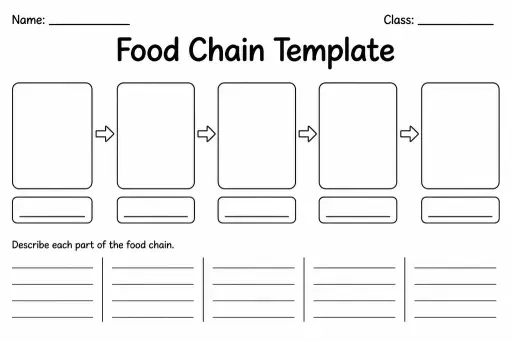 FichaFood Chain Template
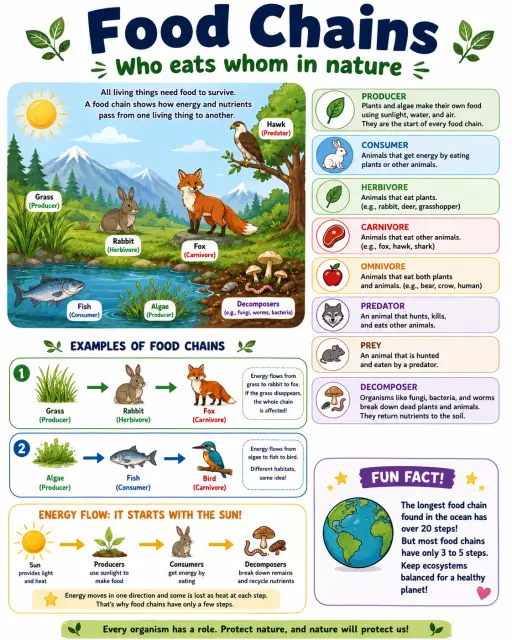 FichaFood Chains Infographic
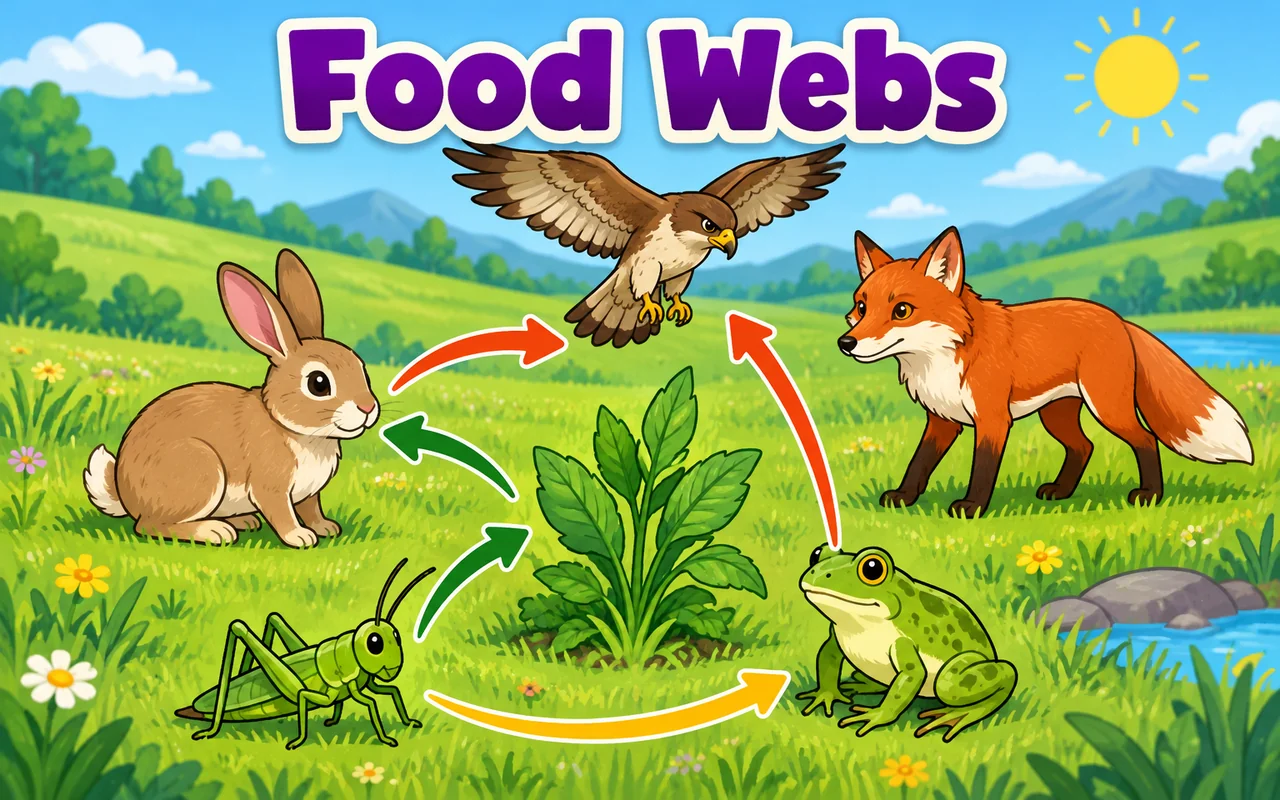 SimulaciónSimulación interactiva de Redes tróficas
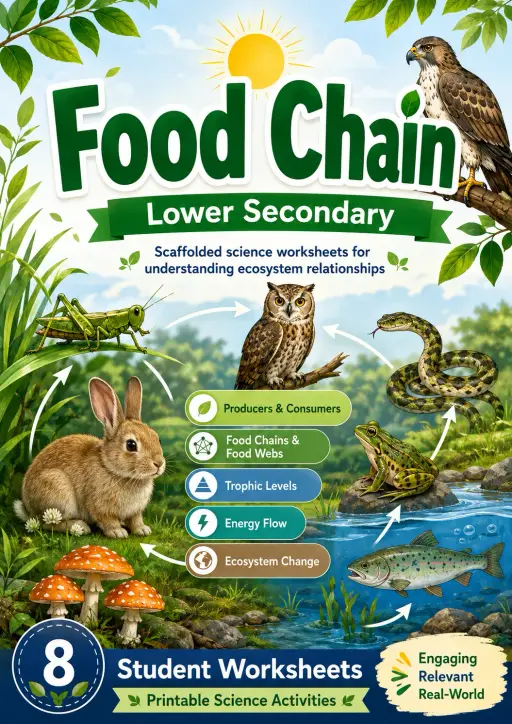 FichaFood Chain Worksheet Bundle
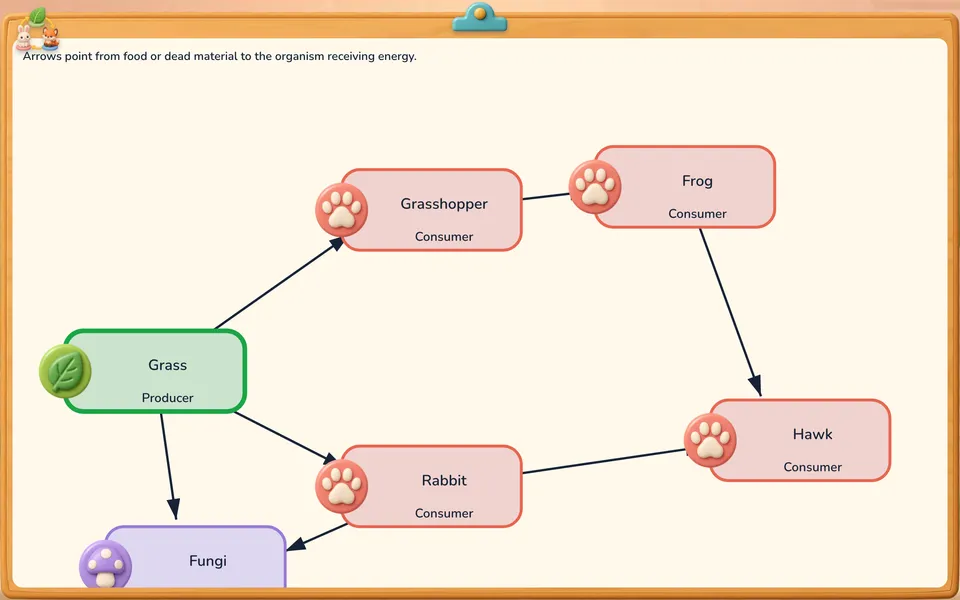 Herramienta para docentesCreador de redes alimentarias
 JuegoCadenas alimentarias en la naturaleza
Sobre esta simulación
Food Chain Builder asks students to drag organisms into slots in order, from producers up to the top predator, with mushrooms going in a ring for decomposers. After pressing Check chain, readouts report how many eating links are correct and whether the chain is complete. An energy slider sets the sunlight captured by grass, and energy bars show roughly 10 percent passing to each next level, so top predators receive little. Shuffle reshuffles the organisms. It teaches who eats whom, the direction of energy flow and why food chains are short.
Qué pueden explorar los alumnos
- Drag each organism to a slot and press Check chain to see how many eating links are correct.
- Place the mushroom in the decomposer ring and explain its role.
- Change the Energy captured by grass slider and read the Energy at each level readout.
- Turn Energy bars on and compare the bars from producer to top consumer.
- Press Shuffle organisms and build a different chain from scratch.
Objetivos de aprendizaje
- 1Order producers, consumers and decomposers in a food chain.
- 2Explain that arrows show the direction of energy flow, not who eats whom backward.
- 3Describe the roughly 10 percent energy transfer between levels.
- 4Predict why there are fewer top predators than plant eaters.
Preguntas frecuentes de los docentes
Is it free?
Yes, it costs nothing and needs no account. Open it in any current browser on a whiteboard, tablet, Chromebook or phone and it just works.
What do the arrows in a food chain mean?
They show the way energy flows, from the thing eaten to the thing that eats it. So an arrow goes from grass to the grasshopper that eats it.
Why are food chains short?
Only about 10 percent of energy passes to the next level, since the rest is used for life processes or lost as heat. After a few steps too little energy is left to support another level.
How do I check my chain?
Drag every organism into a slot and press Check chain. The Eating links correct readout tells you how many links are right, and the Chain readout says whether it is complete.
Insertar esta simulación
Colócala en tu LMS, blog o sitio de clase, gratis.
<iframe src="https://kiwibee.io/es/simulations/food-chain-builder-3d-simulation/embed" title="Food Chain Builder | KiwiBee" loading="lazy" allowfullscreen style="width:100%;height:min(70vh,620px);min-height:420px;border:0;border-radius:16px"></iframe>Estándares curriculares
Cambridge
- 4Be.03Describe food chains as being made of producers and consumers, and classify consumers as herbivores, omnivores, carnivores, predators and/or preyCambridge Primary Science (0097) — Stage 4 › Biology › Ecosystems
Learning objectives © UCLES (Cambridge University Press & Assessment), quoted with attribution.
Lleva la ciencia interactiva a tu aula
El espacio de trabajo gratuito para docentes de KiwiBee reúne en un solo lugar la planificación de clases, las fichas, las herramientas de aula y el libro de calificaciones.
Empieza gratis y crea tu primera claseMira KiwiBee en YouTube
Vídeos cortos de KiwiBee para docentes y centros. Suscríbete o sigue a KiwiBee donde estés.
 Inicio
 Todas las soluciones
 Precios
 Quiénes somos
 KiwiBee para organizaciones sin fines de lucro
 Eventos y seminarios web
 Para grandes organizaciones
 Para escuelas
 Para centros de aprendizaje
 Para líderes de equipo
 Para docentes
 Recursos
 Hojas de trabajo imprimibles
 Simulaciones interactivas
 Herramientas para docentes
 Ideas e investigación


