
Cognitive & Fluid Intelligence Assessment 1 · Ages 11–16
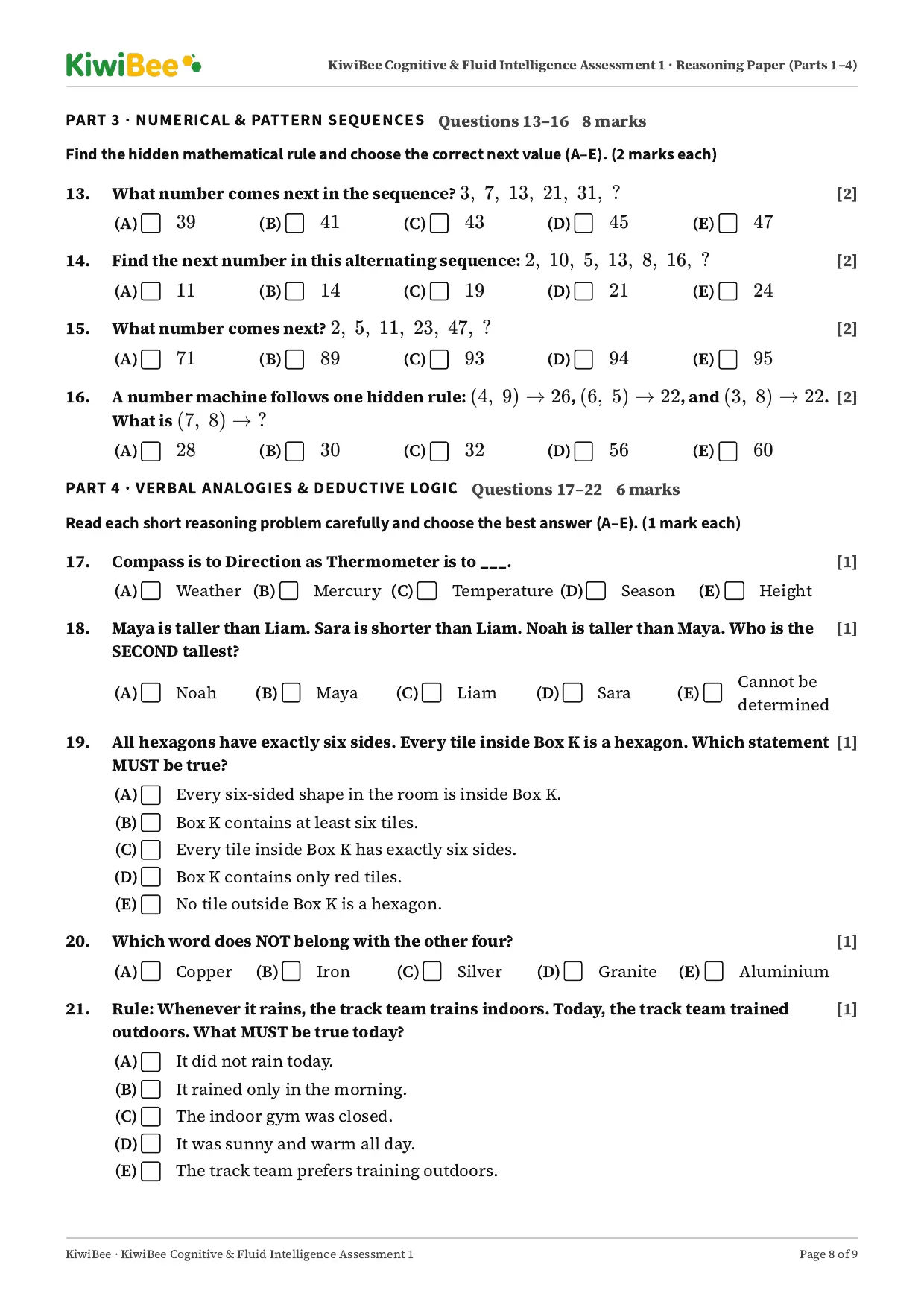
內容
每份試卷的部分、題數及時間。
Reasoning Paper (Parts 1–4)
- 部分
- 4
- 題數
- 22
- 時間
- 35 minutes
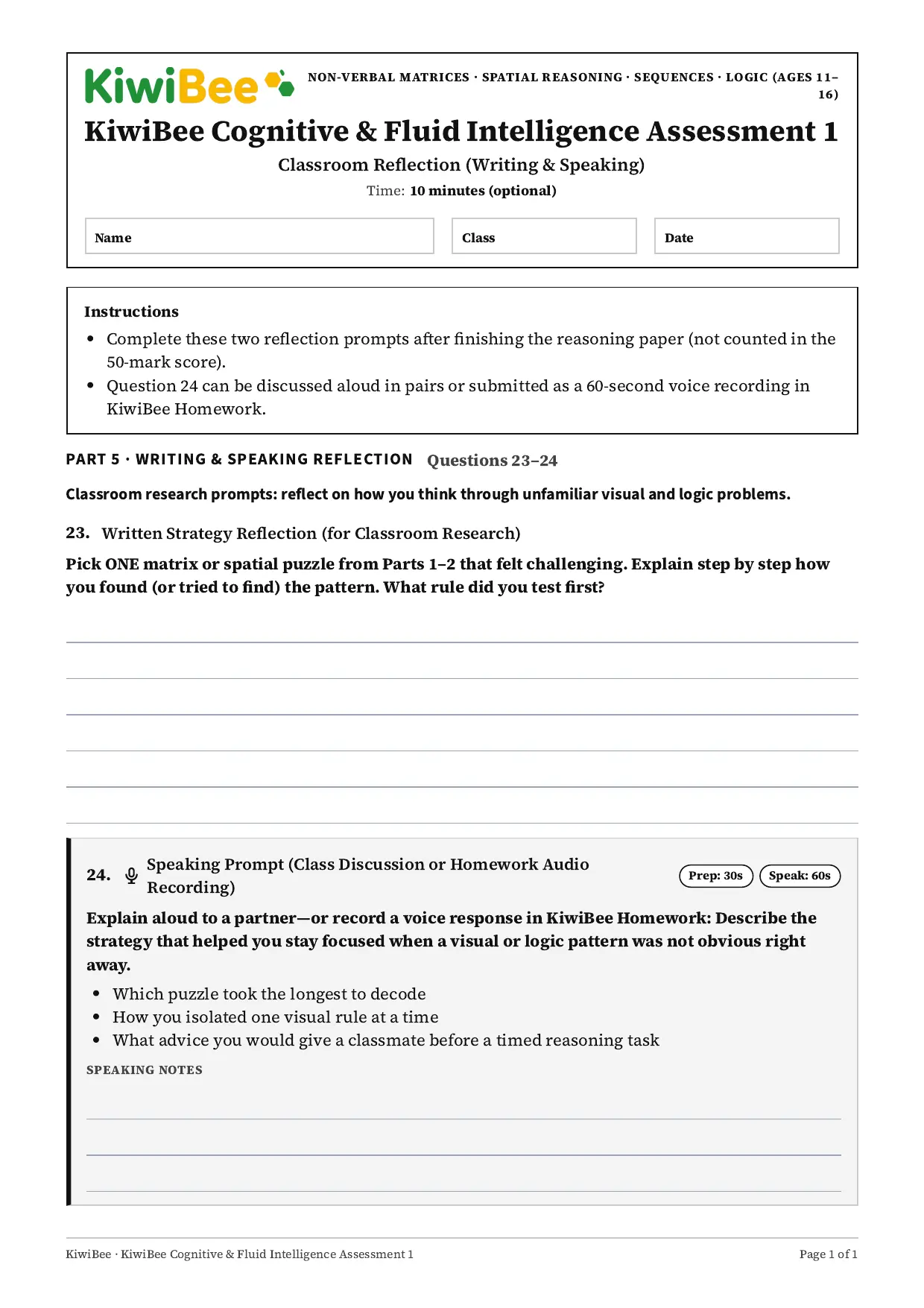
Classroom Reflection (Writing & Speaking)
- 部分
- 1
- 題數
- 2
- 時間
- 10 minutes (optional)
關於此模擬測驗
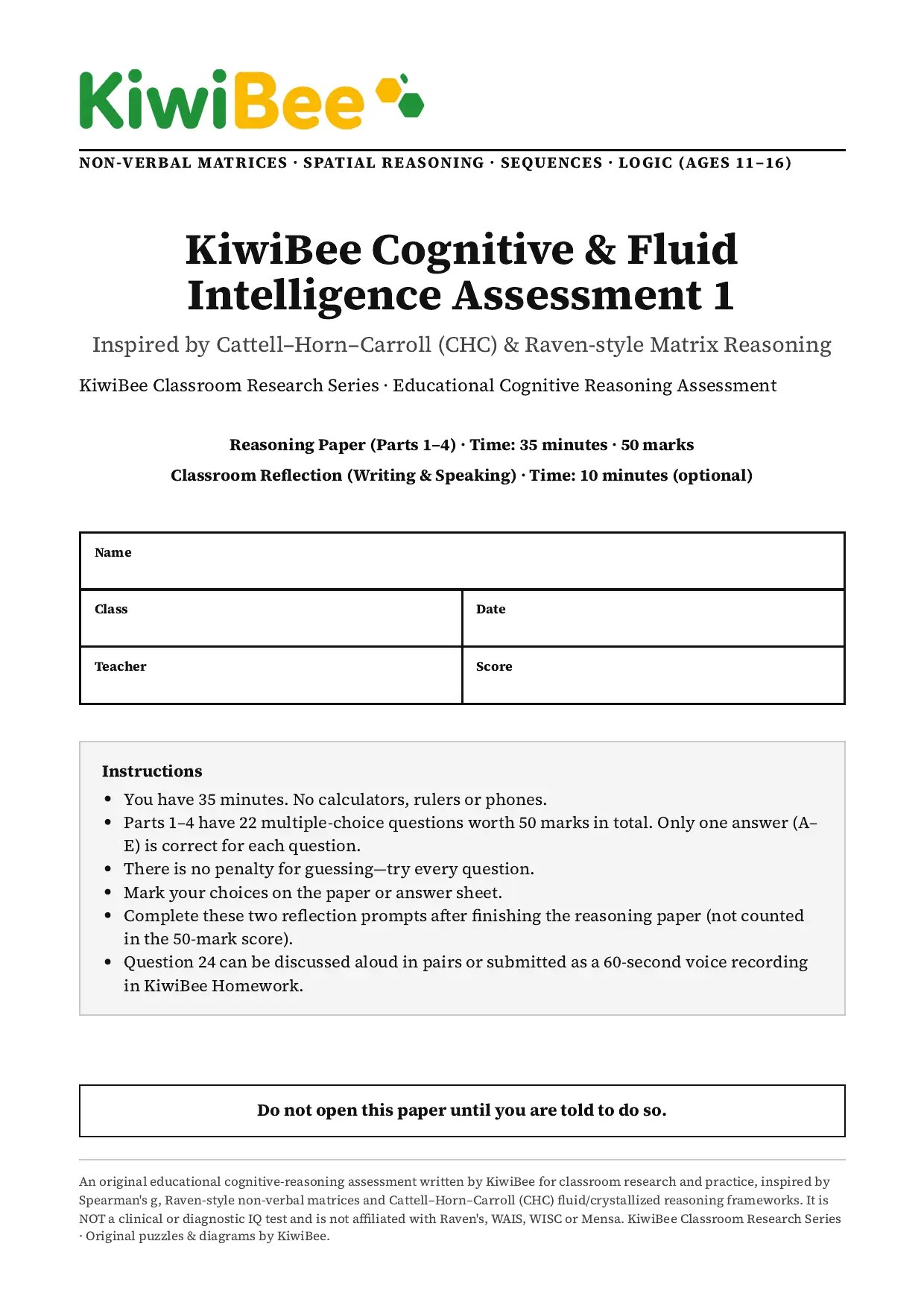
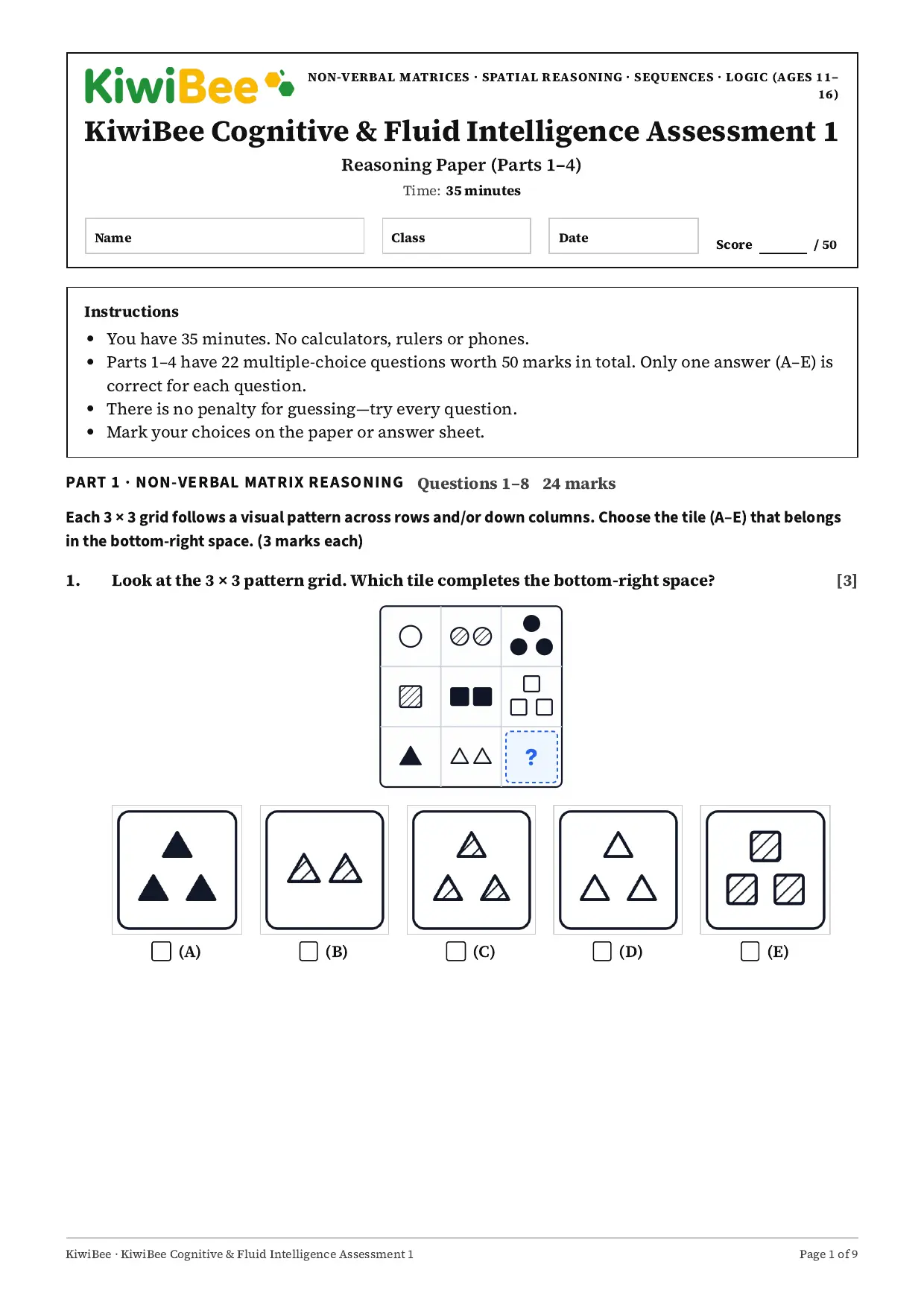
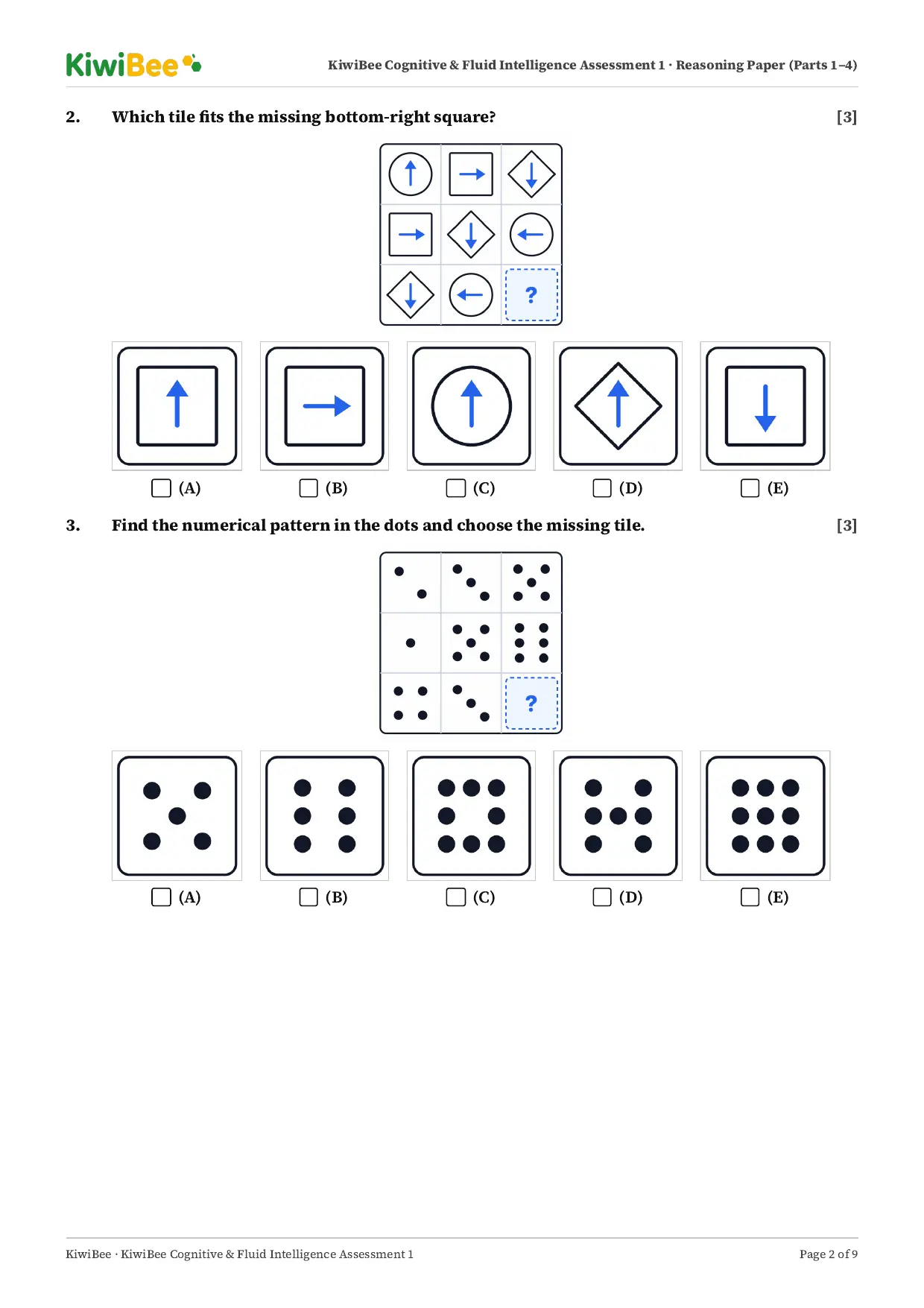
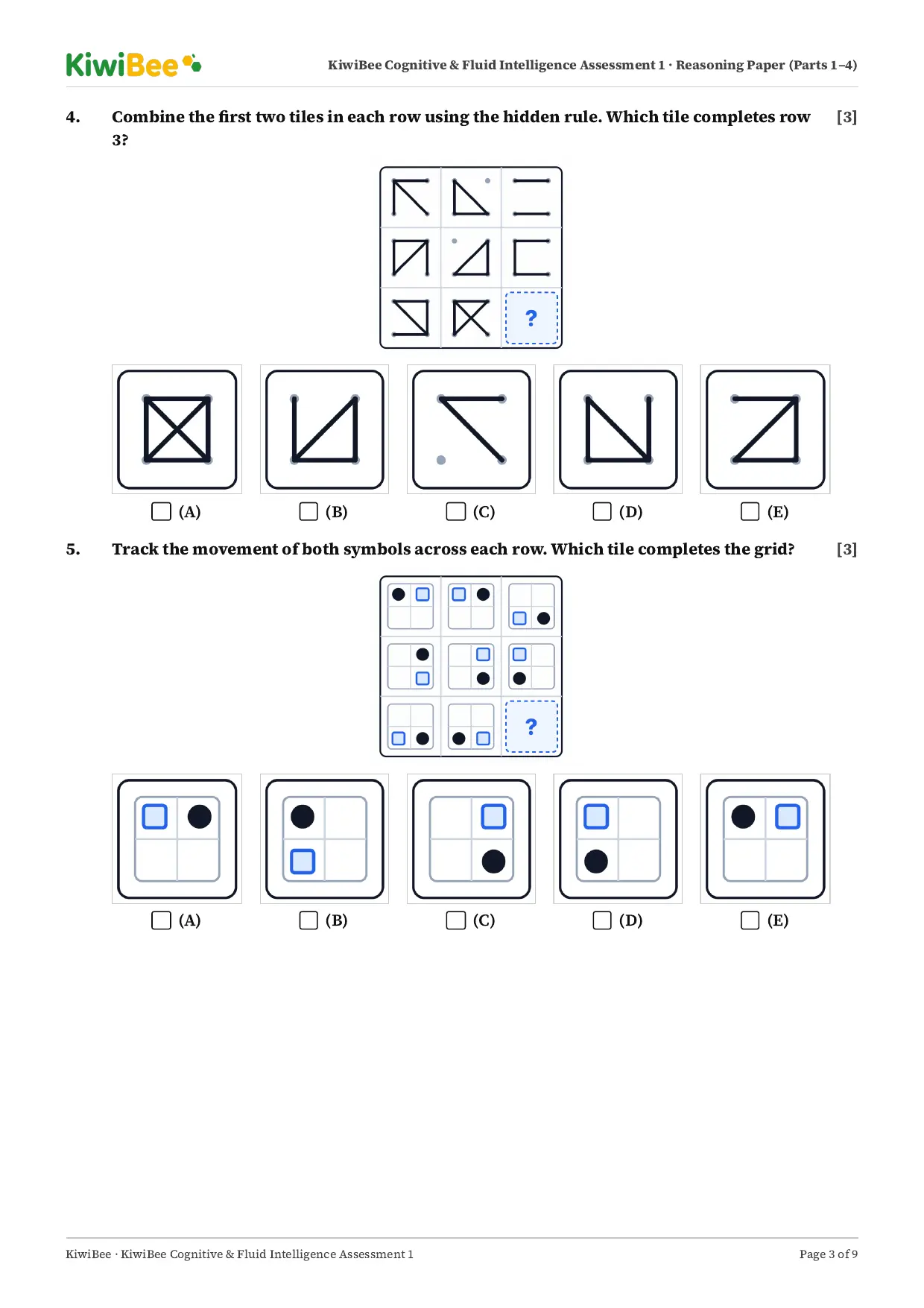
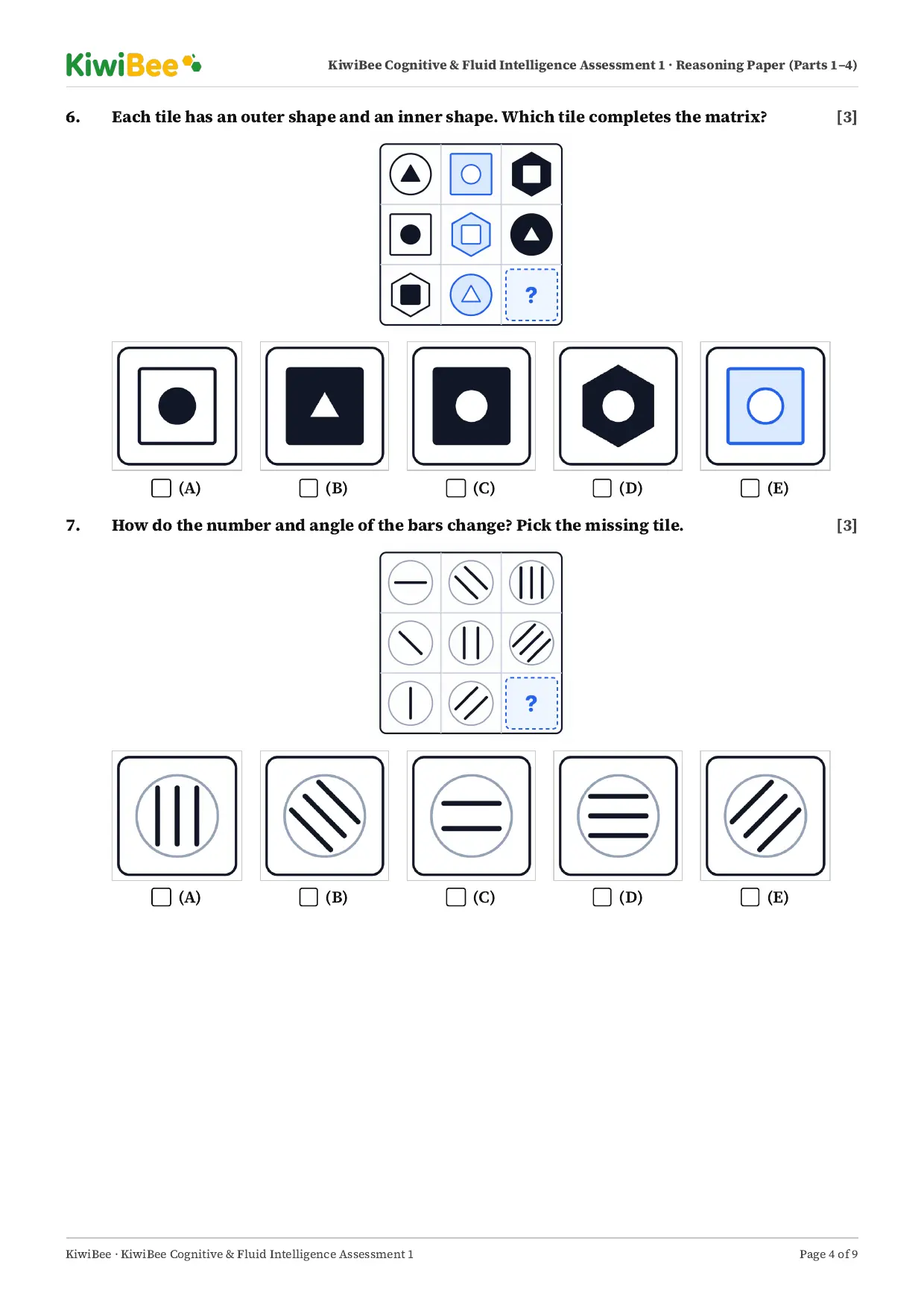
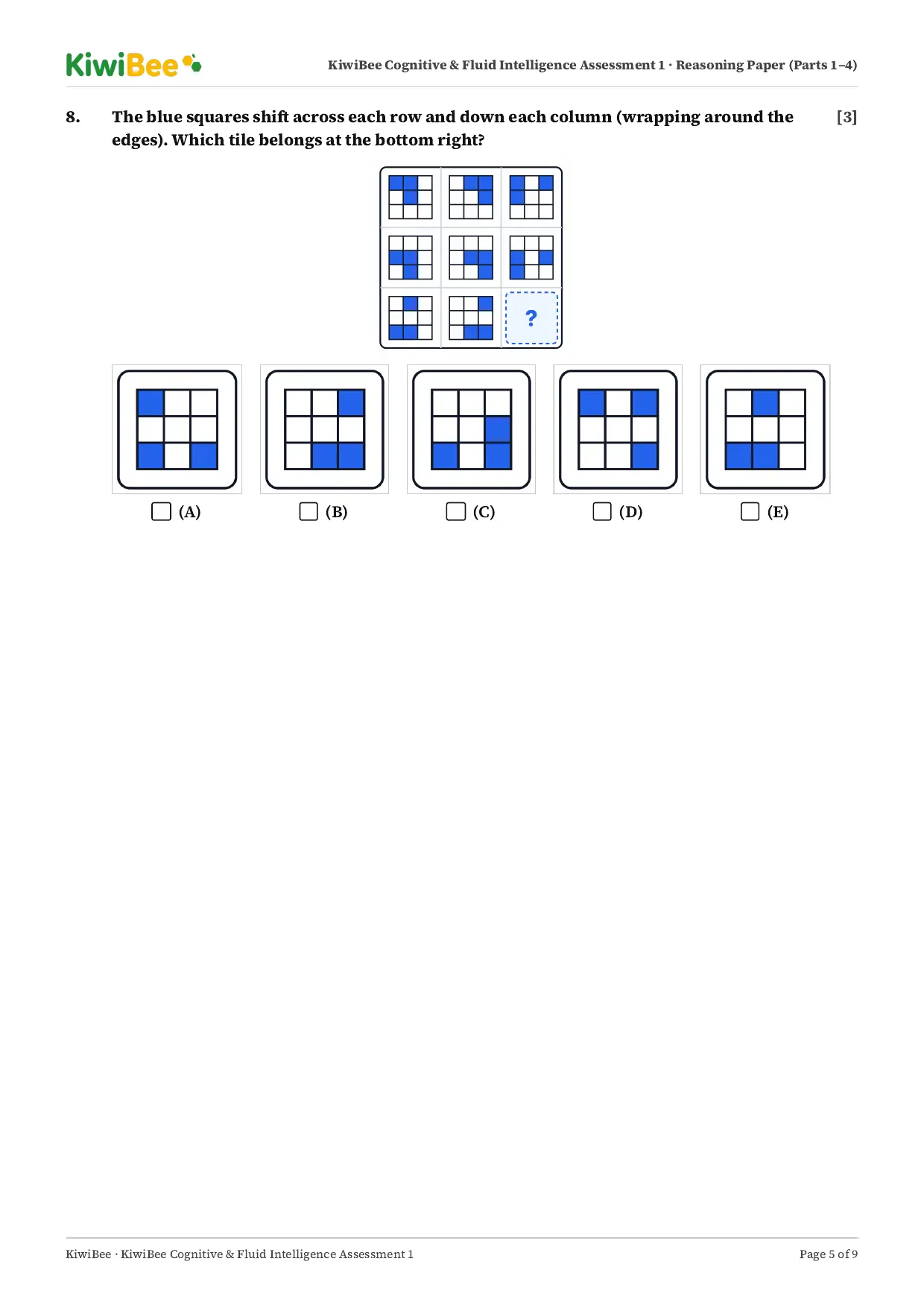
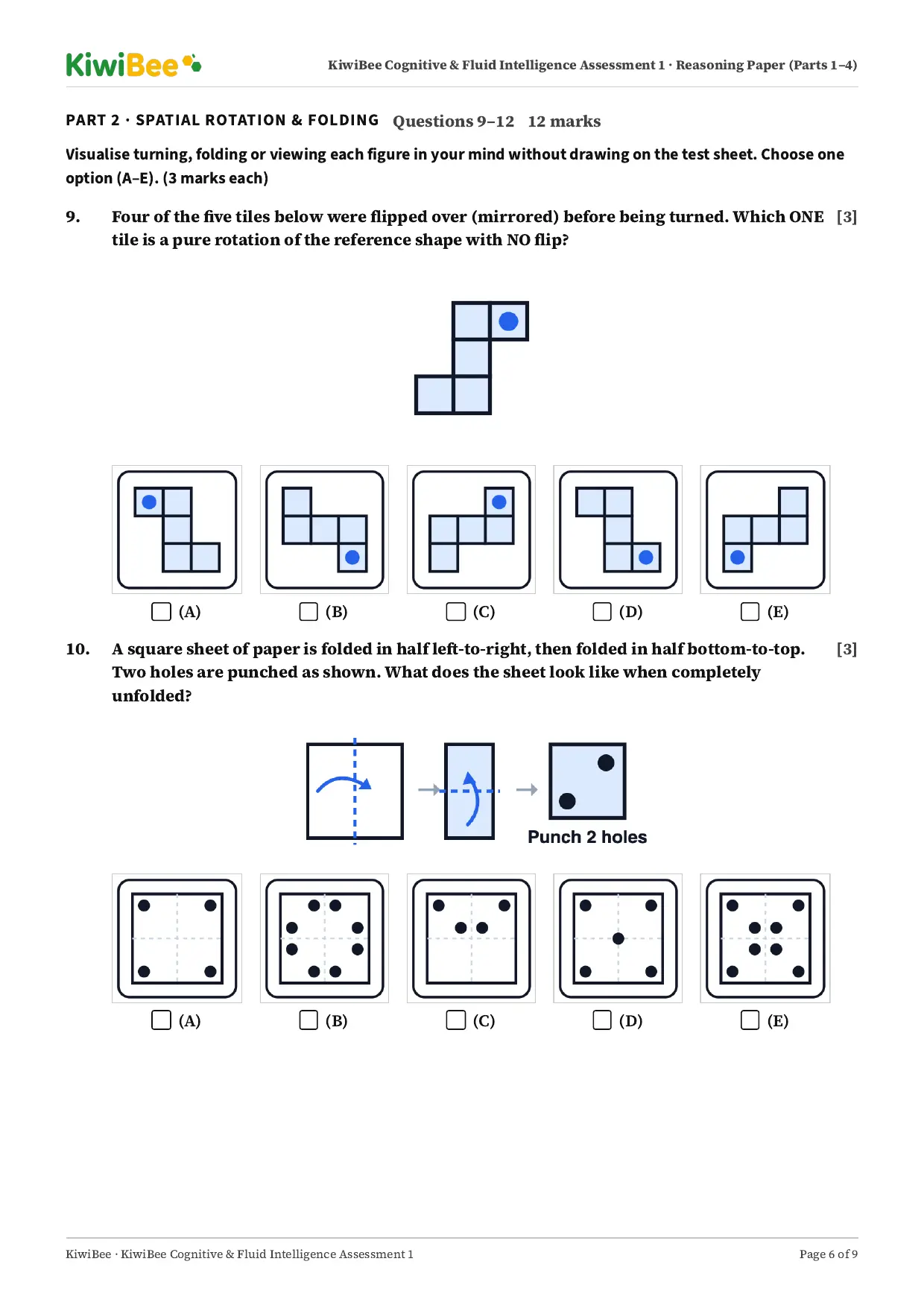
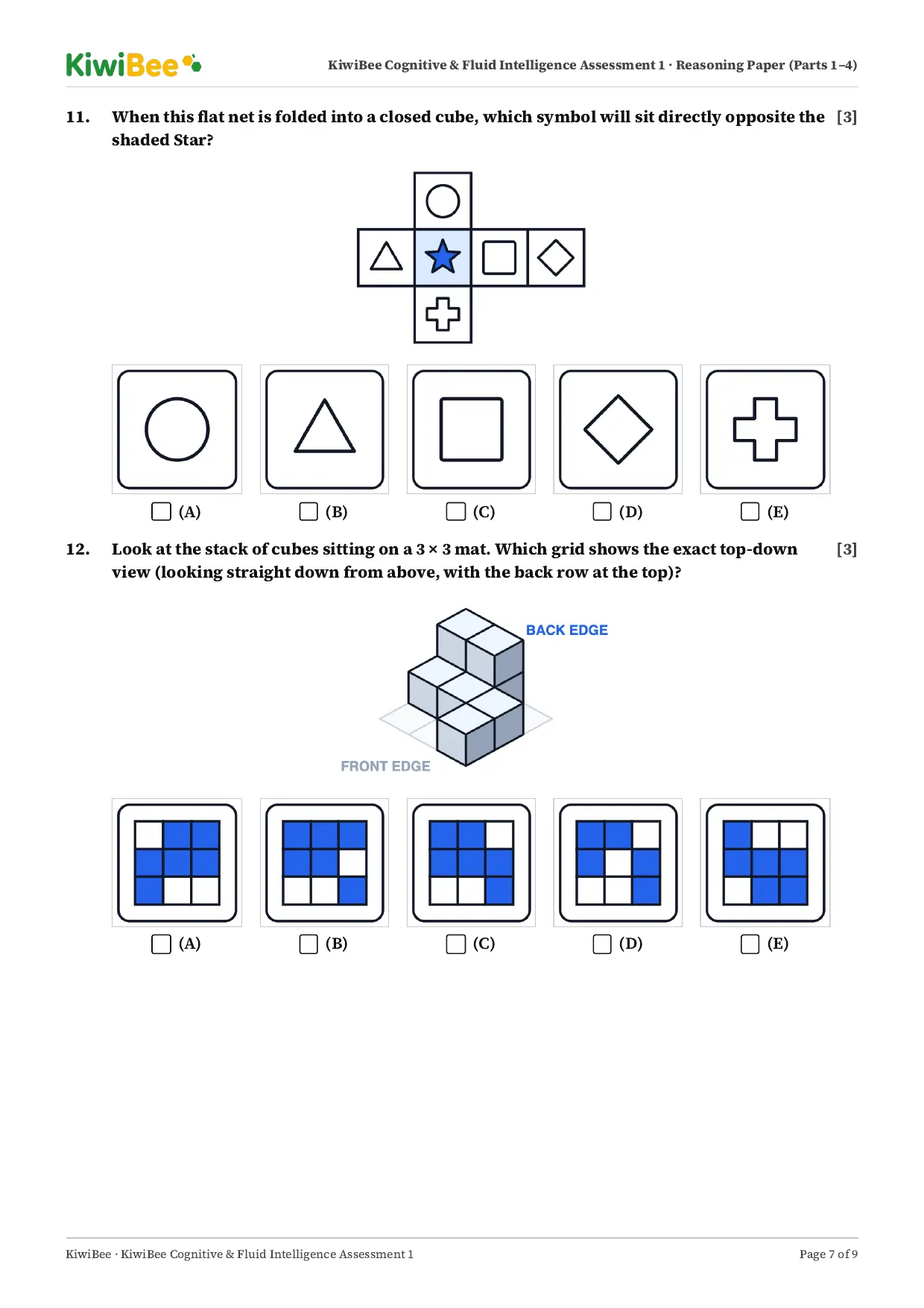
Original KiwiBee cognitive reasoning & IQ practice test for middle and high school classroom research: 8 visual 3×3 pattern matrices, 4 spatial rotation & folding puzzles, 4 numerical sequences, 6 verbal logic problems, plus writing and speaking metacognitive reflection prompts. Customise, co-brand with your school logo, print or assign in KiwiBee.
常見問題
Is this an official clinical IQ test?
No. This is an original educational cognitive-reasoning assessment written by KiwiBee for classroom research and practice. It provides domain subscores and performance bands rather than a clinical IQ diagnosis.
What cognitive skills does it measure?
It assesses four reasoning domains: non-verbal 3×3 matrix reasoning, 2D/3D spatial visualisation, numerical pattern sequences, and verbal/deductive logic, plus optional writing and speaking reflection prompts.
Can teachers print it with their own school logo?
Yes. Open the test in KiwiBee Worksheet Print & Edit Studio to pick from 12 designs, add your school's logo (co-branding on paid and school plans), edit any question, and print student copies plus the worked answer key.
Is it suitable for multilingual classrooms?
Yes. Parts 1 and 2 (36 of the 50 marks) are visual non-verbal puzzles designed to reduce language bias when teachers compare abstract reasoning across multilingual learners.
 首頁
 所有解決方案
 價格
 關於我們
 KiwiBee 非牟利機構計劃
 活動及網上研討會
 適合大型教育機構
 適合學校
 適合教育中心
 適合團隊主管
 適合教師
 教學資源
 可列印工作紙
 互動模擬
 教師工具
 教學構思與研究


留言