
Food Chain Builder
- Biologia
Comentários
Relacionados a esta simulação
Escolhidos pelo significado entre jogos, atividades, simulações, ferramentas para professores e vídeos.
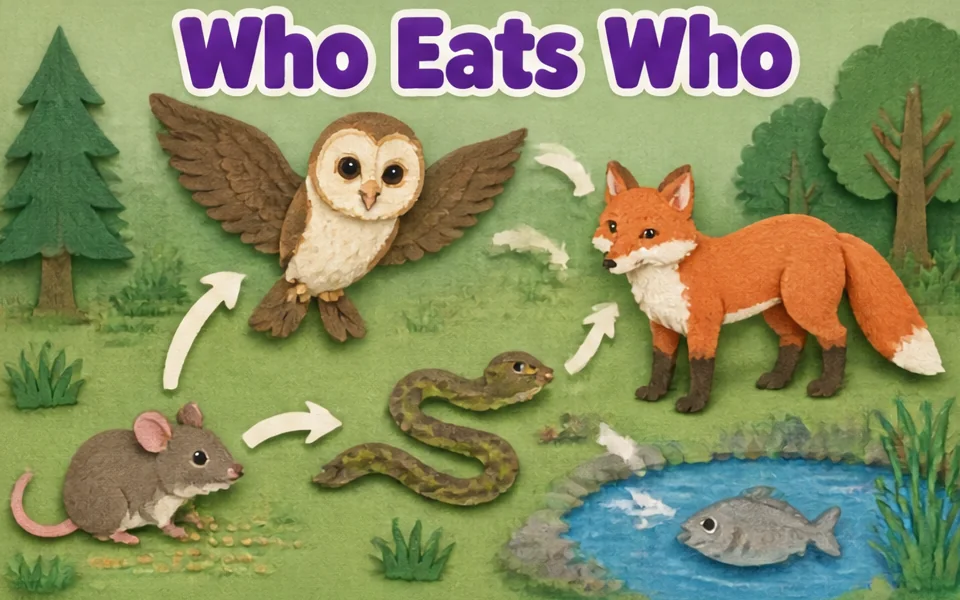 SimulaçãoExplorador de teias alimentares
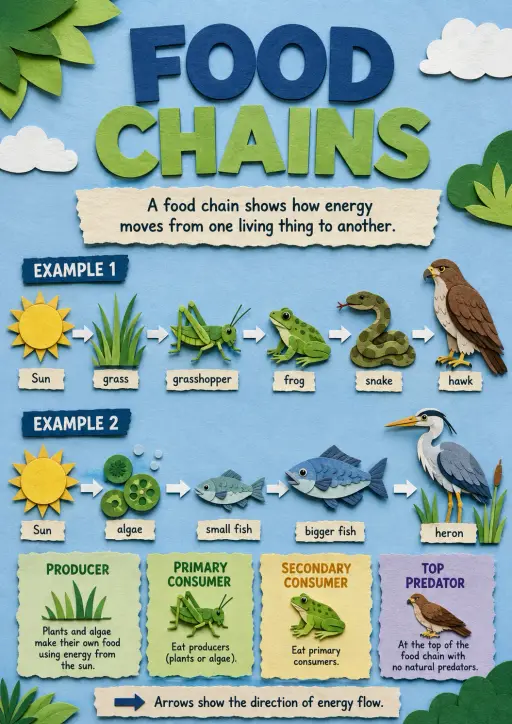 AtividadeFood Chains Ecosystems Infographic
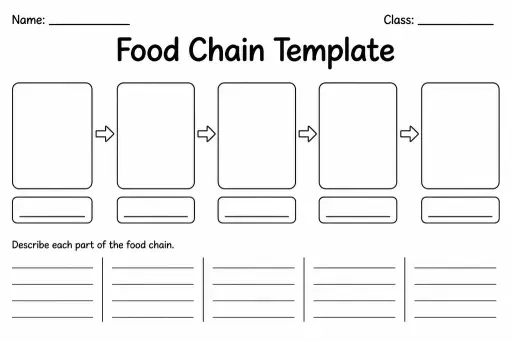 AtividadeFood Chain Template
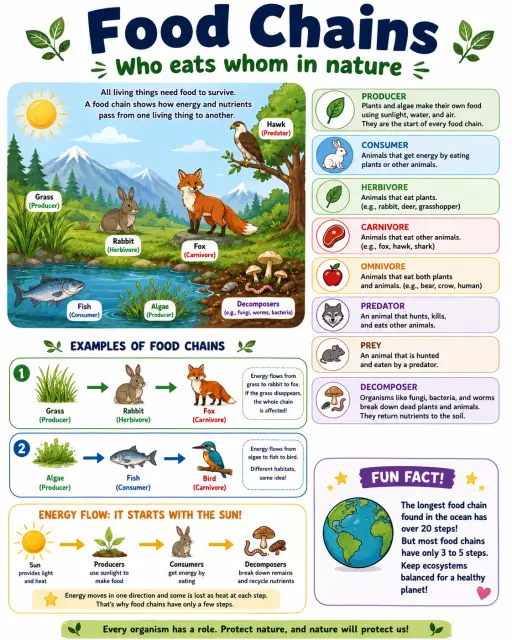 AtividadeFood Chains Infographic
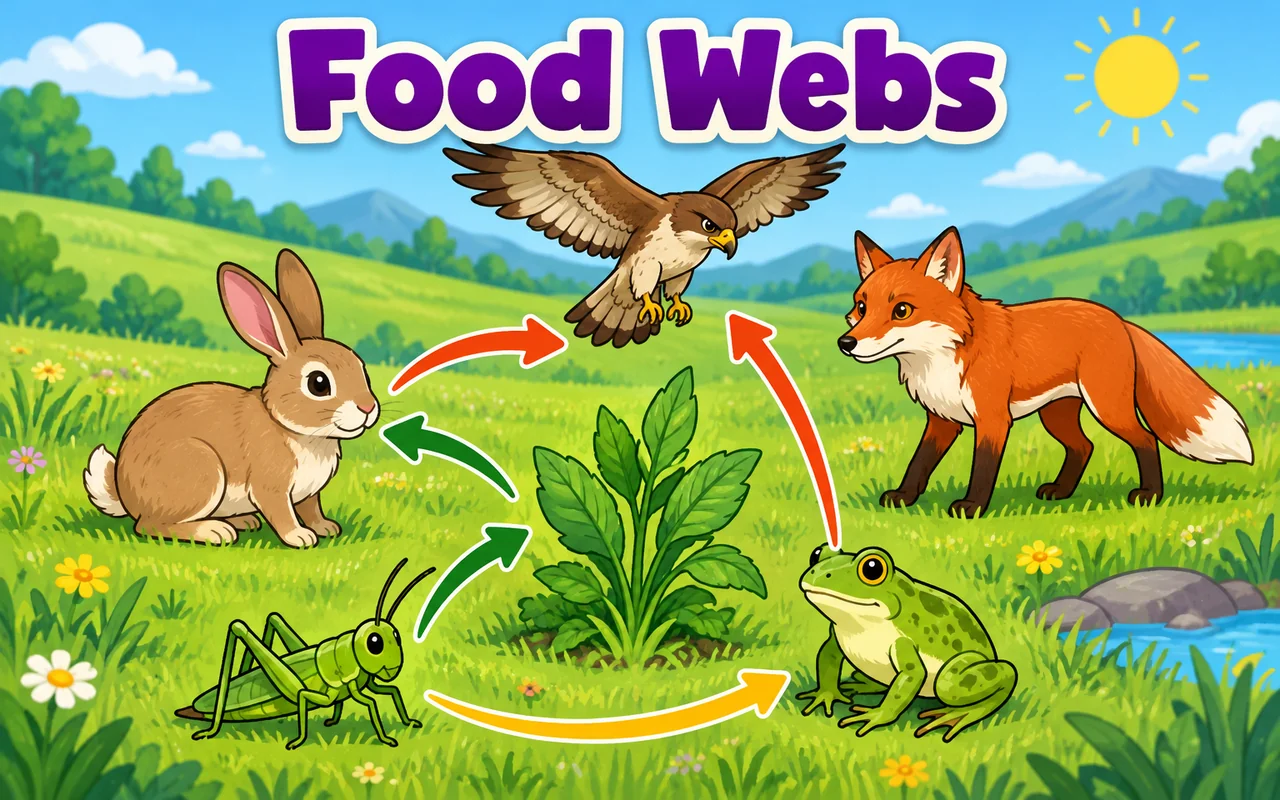 SimulaçãoSimulação interativa de Teias alimentares
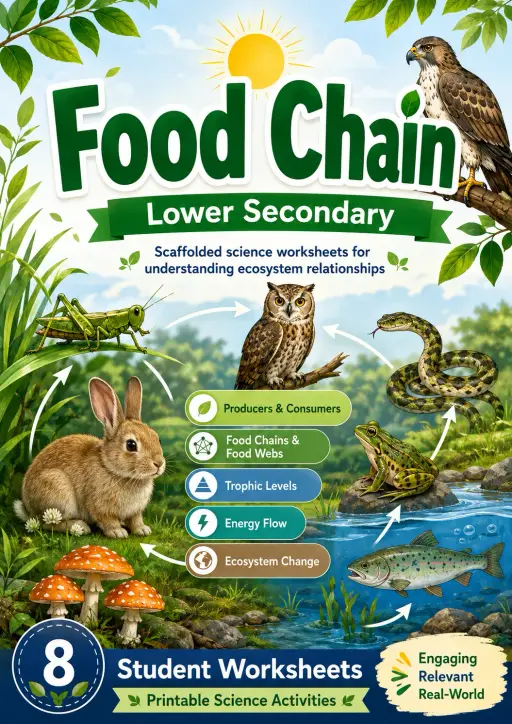 AtividadeFood Chain Worksheet Bundle
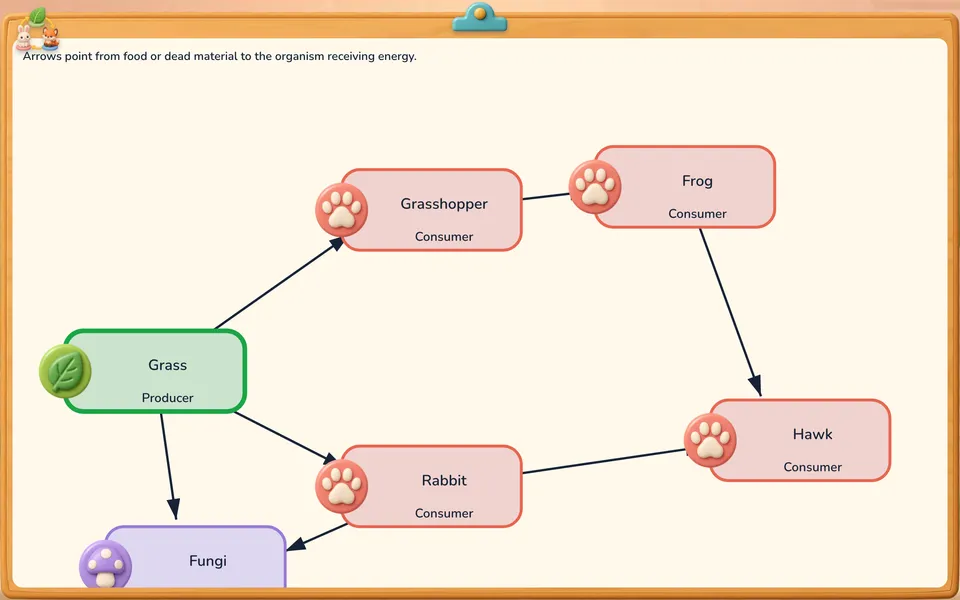 Ferramenta para professoresCriador de teias alimentares
 JogoCadeias alimentares na natureza
Sobre esta simulação
Food Chain Builder asks students to drag organisms into slots in order, from producers up to the top predator, with mushrooms going in a ring for decomposers. After pressing Check chain, readouts report how many eating links are correct and whether the chain is complete. An energy slider sets the sunlight captured by grass, and energy bars show roughly 10 percent passing to each next level, so top predators receive little. Shuffle reshuffles the organisms. It teaches who eats whom, the direction of energy flow and why food chains are short.
O que os alunos podem explorar
- Drag each organism to a slot and press Check chain to see how many eating links are correct.
- Place the mushroom in the decomposer ring and explain its role.
- Change the Energy captured by grass slider and read the Energy at each level readout.
- Turn Energy bars on and compare the bars from producer to top consumer.
- Press Shuffle organisms and build a different chain from scratch.
Objetivos de aprendizagem
- 1Order producers, consumers and decomposers in a food chain.
- 2Explain that arrows show the direction of energy flow, not who eats whom backward.
- 3Describe the roughly 10 percent energy transfer between levels.
- 4Predict why there are fewer top predators than plant eaters.
Perguntas frequentes dos professores
Is it free?
Yes, it costs nothing and needs no account. Open it in any current browser on a whiteboard, tablet, Chromebook or phone and it just works.
What do the arrows in a food chain mean?
They show the way energy flows, from the thing eaten to the thing that eats it. So an arrow goes from grass to the grasshopper that eats it.
Why are food chains short?
Only about 10 percent of energy passes to the next level, since the rest is used for life processes or lost as heat. After a few steps too little energy is left to support another level.
How do I check my chain?
Drag every organism into a slot and press Check chain. The Eating links correct readout tells you how many links are right, and the Chain readout says whether it is complete.
Incorporar esta simulação
Coloque no seu AVA, blog ou site da turma — de graça.
<iframe src="https://kiwibee.io/pt/simulations/food-chain-builder-3d-simulation/embed" title="Food Chain Builder | KiwiBee" loading="lazy" allowfullscreen style="width:100%;height:min(70vh,620px);min-height:420px;border:0;border-radius:16px"></iframe>Padrões curriculares
Cambridge
- 4Be.03Describe food chains as being made of producers and consumers, and classify consumers as herbivores, omnivores, carnivores, predators and/or preyCambridge Primary Science (0097) — Stage 4 › Biology › Ecosystems
Learning objectives © UCLES (Cambridge University Press & Assessment), quoted with attribution.
Leve a ciência interativa para a sua sala de aula
O espaço gratuito do professor da KiwiBee reúne em um só lugar o planejamento de aulas, as atividades, as ferramentas de sala e o diário de classe.
Comece grátis e crie sua primeira turmaAssista ao KiwiBee no YouTube
Vídeos curtos do KiwiBee para professores e escolas. Inscreva-se ou siga o KiwiBee onde você estiver.
 Início
 Todas as soluções
 Preços
 Sobre nós
 KiwiBee para organizações sem fins lucrativos
 Eventos e webinars
 Para grandes redes de ensino
 Para escolas
 Para centros educacionais
 Para líderes de equipe
 Para professores
 Recursos
 Atividades para imprimir
 Simulações interativas
 Ferramentas para professores
 Ideias e pesquisa


