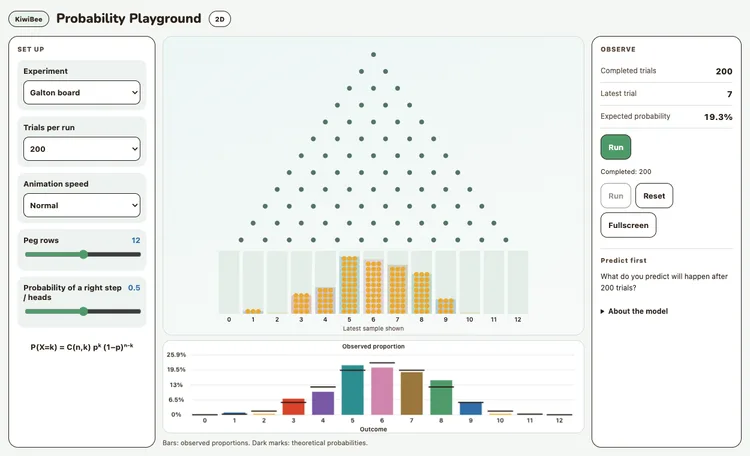
Explore a Galton board, coin flips, dice and spinners in one place. Run a few trials or thousands, then compare observed results with theoretical probabilities.
—
KiwiBee uses optional Google Analytics, Google Ads, and Meta Pixel cookies to understand adult visitors, measure completed sign-ups, and improve campaigns. Essential cookies always stay on. OpenAI’s ChatGPT Ads Pixel also measures page views and completed enquiries after advertising consent, and may use hashed contact details for matching. Privacy policy
این شبیهسازی توپها را از یک مثلث میخها رها میکند. هر میخ یک پرتاب سکه است، پس خانهای که توپ در آن میافتد برابر تعداد پرشهای راست آن است؛ یعنی توزیع دوجملهای. دانشآموزان ردیفها را از 4 تا 14 و سوگیری به سمت راست را از 0.2 تا 0.8 تنظیم میکنند، «100 توپ بیندازید» را میزنند، خانهها را خالی میکنند و منحنی نرمال طلایی را نشان یا پنهان میکنند. نمایشگرها توپهای داخل خانهها، میانگین نظری و انحراف معیار را نشان میدهند. معلمان میتوانند با آن احتمال، توزیع دوجملهای و قضیهٔ حد مرکزی را معرفی کنند.
بله. کاملاً رایگان است و در هر مرورگر وب مدرن، از جمله تختههای هوشمند، تبلتها، Chromebook و تلفنها اجرا میشود. چیزی برای نصب لازم نیست و نیازی به ثبتنام یا حساب کاربری نیست.
خانهٔ نهایی هر توپ، مجموع پرشهای مستقل بسیاری به چپ یا راست است. مجموع انتخابهای تصادفی بسیار از الگوی دوجملهای پیروی میکند که شبیه منحنی نرمال است، همانطور که قضیهٔ حد مرکزی پیشبینی میکند.
برای n ردیف و احتمال p پرش به راست، میانگین برابر n ضربدر p و انحراف معیار برابر جذر n ضربدر p ضربدر (1 منهای p) است. شبیهسازی هر دو را نشان میدهد.
ردیفها و سوگیری را انتخاب کنید، چند بار «100 توپ بیندازید» را بزنید و انباشت را با منحنی طلایی مقایسه کنید. سپس یک تنظیم را تغییر دهید و دوباره بیندازید.
آن را در LMS، وبلاگ یا وبسایت کلاس خود قرار دهید — رایگان.
<iframe src="https://kiwibee.io/fa/simulations/galton-board-3d-simulation/embed" title="صفحهٔ گالتون | KiwiBee" loading="lazy" allowfullscreen style="width:100%;height:min(70vh,620px);min-height:420px;border:0;border-radius:16px"></iframe>کاوش را ادامه دهید
Explore a Galton board, coin flips, dice and spinners in one place. Run a few trials or thousands, then compare observed results with theoretical probabilities.

Type any function and see its shape straight away. Plot up to three at once in three colours to compare them, drag the trace point to read a value off a curve, and see where each one crosses zero.

Spin a spinner, flip a coin or roll a die and watch two sets of bars: the chances the shapes predict, and the results you actually got. Ten spins prove nothing; a few hundred and the two are hard to tell apart.

Move m and watch the line tilt; move b and watch it slide. Or drag the two points on the line and read the equation it writes back. A rise-over-run staircase climbs the line so slope becomes something you can count.
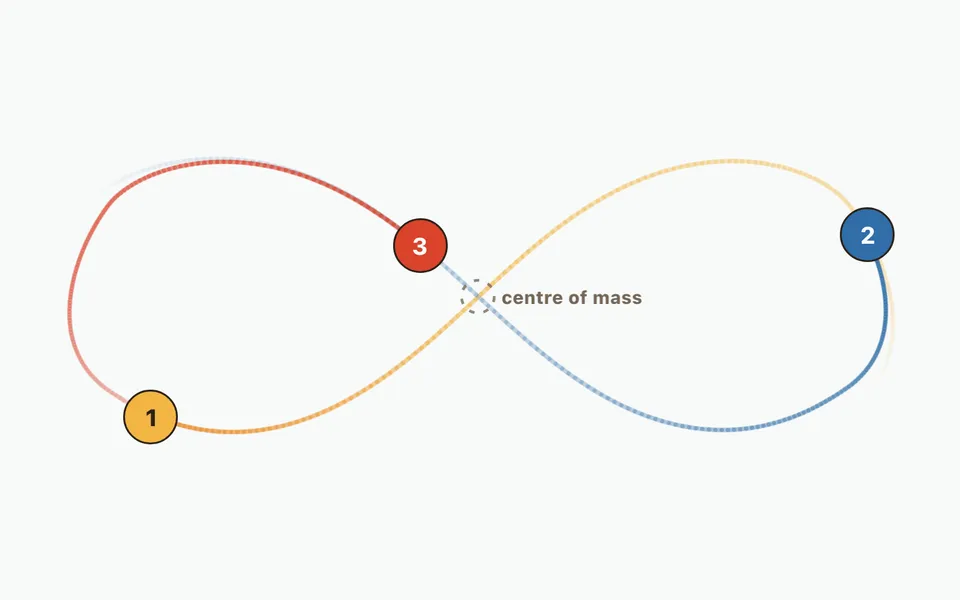
Two bodies under gravity trace an ellipse forever and you can write the formula down. Add a third and no such formula exists. Run the figure-eight orbit, nudge one mass, and watch a stable pattern become unpredictable while the total energy stays put.
فضای کاری رایگان معلمان KiwiBee برنامهریزی درس، کاربرگها، ابزارهای کلاسی و دفتر نمره را یکجا گرد هم میآورد.
رایگان شروع کنید و اولین کلاس خود را بسازید خانه
 همهٔ راهکارها
 قیمتگذاری
 درباره ما
 KiwiBee برای سازمانهای غیرانتفاعی
 رویدادها و وبینارها
 برای سازمانهای بزرگ
 برای مدرسهها
 برای مراکز
 برای سرپرستان تیم
 برای معلمان
 هوش مصنوعی و منابع
 منابع
 کاربرگهای قابل چاپ
 بستههای درس
 شبیهسازیهای تعاملی
 ابزارهای معلم
 استودیوی هوش مصنوعی
 ایدهها و پژوهش