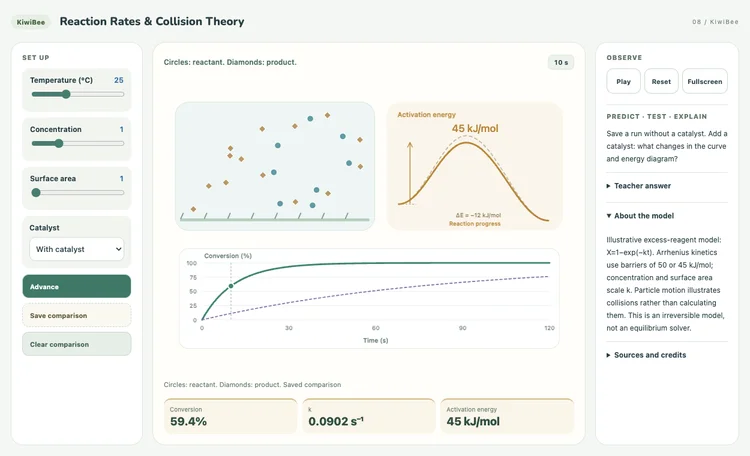
Run a particle experiment, change temperature, concentration, surface area and catalyst, and compare conversion curves.
—
KiwiBee uses optional Google Analytics, Google Ads, and Meta Pixel cookies to understand adult visitors, measure completed sign-ups, and improve campaigns. Essential cookies always stay on. OpenAI’s ChatGPT Ads Pixel also measures page views and completed enquiries after advertising consent, and may use hashed contact details for matching. Privacy policy
این شبیهسازی نظریهٔ برخورد را برای واکنش A + B که C + D میدهد نشان میدهد. ذرههای کرهای سخت در جعبه با سرعتهایی برمیجهند که از توزیع ماکسول-بولتزمن برای دمای انتخابشده پیروی میکنند. برخوردی فقط در صورتی واکنش میدهد که انرژی آن در امتداد خط مرکزها به انرژی فعالسازی برسد. دانشآموزان دما، انرژی فعالسازی و غلظت را تغییر میدهند و اجرا را از نو شروع میکنند. نمایشگرها واکنشهای تاکنون، سرعت واکنش، برخوردهای مؤثر و عامل بولتزمن را نشان میدهند. این شبیهسازی توضیح میدهد که چرا گرما، غلظت و سد انرژی پایینتر همگی واکنش را تندتر میکنند.
بله. رایگان است، در هر مرورگر مدرنی از جمله تختههای هوشمند و تبلتها اجرا میشود و نیازی به ثبتنام ندارد.
ذرهها تندتر حرکت میکنند و سهم بیشتری از آنها انرژی کافی برای عبور از سد فعالسازی دارند. کسر برخوردهای پرانرژی تقریباً مانند e به توان منفی Ea بر RT رشد میکند، پس افزایش تند است.
بسیاری از برخوردها انرژی کمتری از انرژی فعالسازی دارند، پس ذرهها فقط از هم دور میشوند. فقط برخوردهایی که در امتداد خط بین مرکزها انرژی کافی دارند مؤثرند.
نوارهای «دما»، «انرژی فعالسازی» و «غلظت» را به کار ببرید و برای اجرای تازه «شروع دوباره» را بزنید. هر بار «سرعت واکنش» را بخوانید و از دانشآموزان بخواهید پیشبینی کنند کدام تغییر بیشترین اثر را خواهد داشت.
آن را در LMS، وبلاگ یا وبسایت کلاس خود قرار دهید — رایگان.
<iframe src="https://kiwibee.io/fa/simulations/collision-theory-3d-simulation/embed" title="نظریهٔ برخورد | KiwiBee" loading="lazy" allowfullscreen style="width:100%;height:min(70vh,620px);min-height:420px;border:0;border-radius:16px"></iframe>کاوش را ادامه دهید
Run a particle experiment, change temperature, concentration, surface area and catalyst, and compare conversion curves.

Explore an adult male reference body in 3D. Reveal 14 anatomical systems, search thousands of named structures, isolate organs, and pull 2,209 modeled pieces apart to see how the body is organized.

Explore the head and neck in 3D: 643 source meshes across 14 layers, 47 facial and masticatory muscles, and 77 drawn nerves, vessels and glands the source scan omits. Open any tooth onto its own pulp canal, and follow the seven stages of tooth development.

Free interactive photosynthesis simulation. Explore photosynthesis hands-on online — great for whole-class or independent practice.

Free interactive states of matter simulation. Explore states of matter hands-on online — great for whole-class or independent practice.
از مدل تا شواهد
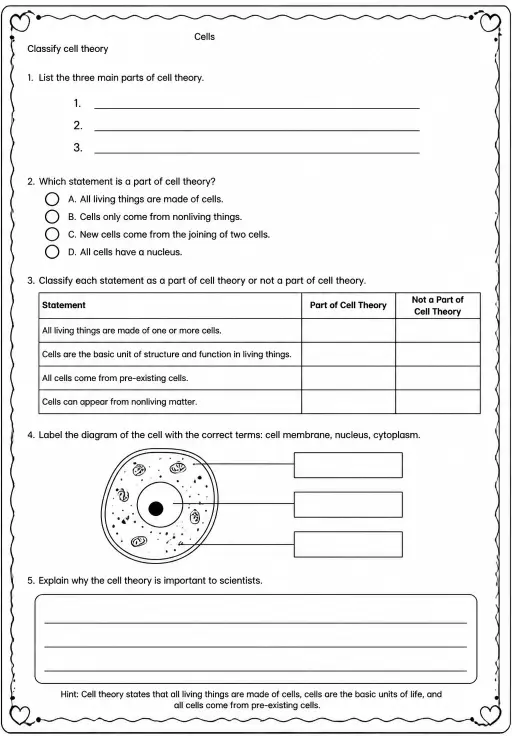
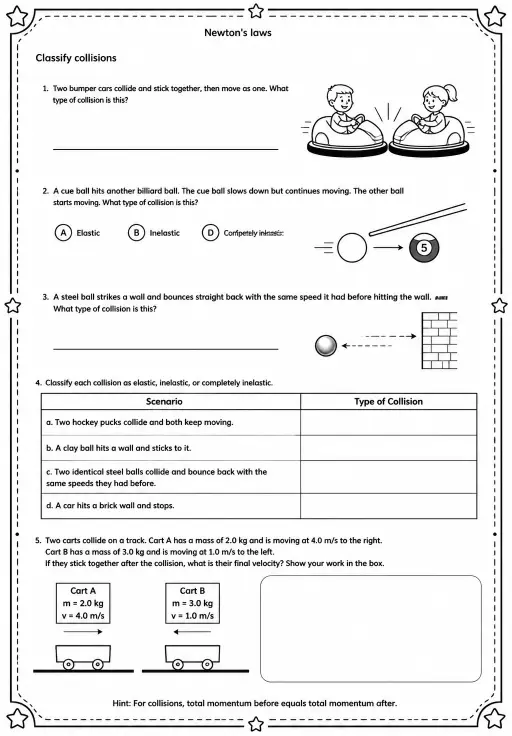
پس از کاوش دانشآموزان، از یک کاربرگ برای ثبت پیشبینیها، مشاهدات و توضیحها استفاده کنید.
فضای کاری رایگان معلمان KiwiBee برنامهریزی درس، کاربرگها، ابزارهای کلاسی و دفتر نمره را یکجا گرد هم میآورد.
رایگان شروع کنید و اولین کلاس خود را بسازید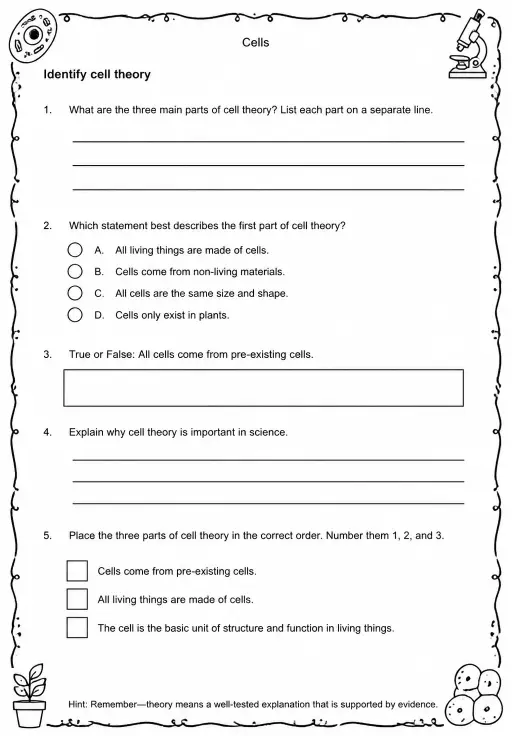

 خانه
 همهٔ راهکارها
 قیمتگذاری
 درباره ما
 KiwiBee برای سازمانهای غیرانتفاعی
 رویدادها و وبینارها
 برای سازمانهای بزرگ
 برای مدرسهها
 برای مراکز
 برای سرپرستان تیم
 برای معلمان
 هوش مصنوعی و منابع
 منابع
 کاربرگهای قابل چاپ
 بستههای درس
 شبیهسازیهای تعاملی
 ابزارهای معلم
 استودیوی هوش مصنوعی
 ایدهها و پژوهش