
Lemon Battery
- 化学
评论
与此模拟实验相关
按含义从游戏、练习册、模拟实验、教师工具和视频中挑选。

关于这个模拟实验
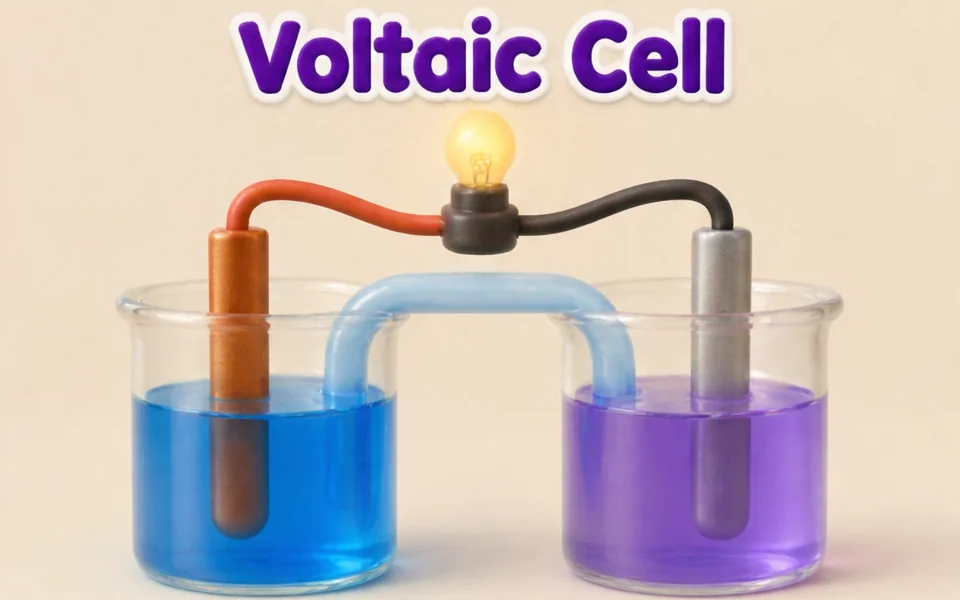
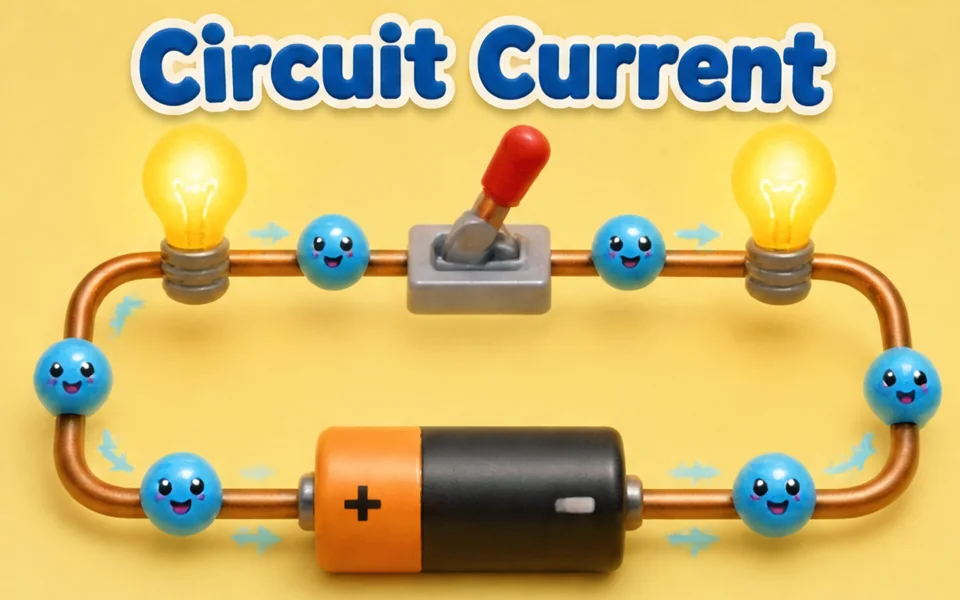
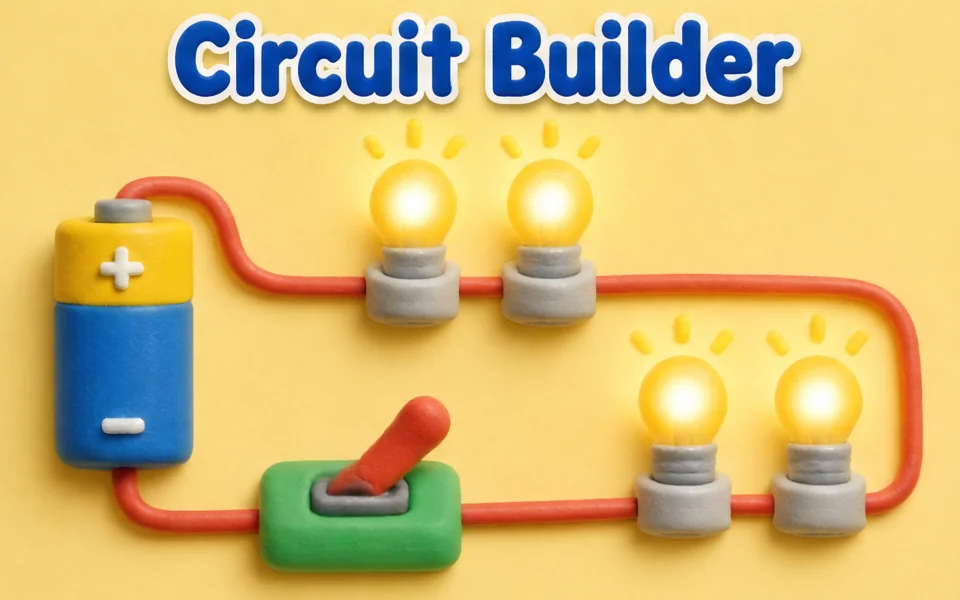
Students drag zinc nails and copper coins into lemons, then drag from one clip to another to make a wire, and click a wire to remove it. Readouts show how many lemons are ready, the voltmeter reading, whether the LED is on and the current, plus a hint for the next step. Each lemon gives about 0.9 V, so a red LED needing about 1.8 V needs lemons joined in series. Moving dots show electrons travelling through the wire. Teachers can use it to connect chemistry with electricity and to show why batteries are connected in series.
学生可以探索什么
- Drag a zinc nail and a copper coin into one lemon and read the Voltmeter value.
- Wire the copper clip of one lemon to the zinc clip of the next to build a series chain.
- Connect enough lemons to the LED and watch the LED and Current readouts.
- Click a wire to remove it, then try joining lemons the wrong way and see the voltage drop.
- Press Build it for me to see a working circuit, then Remove wires and rebuild it yourself.
学习目标
- 1Explain that a lemon cell converts chemical energy into electrical energy.
- 2Predict how connecting cells in series adds their voltages.
- 3Build a closed circuit that lights an LED.
- 4Describe the direction electrons travel from the zinc side to the copper side.
教师常问的问题
Is it free to use?
Yes. It is completely free, needs no sign-up, and runs in any modern browser, including classroom whiteboards, tablets and phones. Just open the page and start.
Why does one lemon not light the LED?
A single lemon cell gives only about 0.9 V, while a red LED needs about 1.8 V to turn on. Connecting two or more lemons in series adds their voltages so the LED can light.
How do I connect the parts?
Drag nails and coins into the lemons, then drag from one clip to another to create a wire. Link the copper clip of one lemon to the zinc clip of the next. Click a wire to remove it.
How does a lemon make electricity?
Zinc gives up electrons more readily than copper, and the acid juice lets ions carry charge between the metals. Electrons flow through the wire from the zinc side to the copper side.
嵌入这个模拟实验
免费嵌入你的学习平台、博客或班级网站。
<iframe src="https://kiwibee.io/zh-cn/simulations/lemon-battery-3d-simulation/embed" title="Lemon Battery | KiwiBee" loading="lazy" allowfullscreen style="width:100%;height:min(70vh,620px);min-height:420px;border:0;border-radius:16px"></iframe>课程标准
Cambridge
- 7Pe.01Use a simple model to describe electricity as a flow of electrons around a circuit.Cambridge Lower Secondary Science (0893) — Stage 7 › Physics › Electricity and magnetism
Learning objectives © UCLES (Cambridge University Press & Assessment), quoted with attribution.
把互动科学带进你的课堂
KiwiBee 的免费教师工作台把备课、工作表、课堂工具和成绩册集中在一处。
免费开始,创建你的第一个班级在 YouTube 上观看 KiwiBee
面向教师和学校的 KiwiBee 短视频。订阅频道,或在你常用的平台上关注 KiwiBee。
 首页
 全部解决方案
 价格
 关于我们
 KiwiBee 非营利组织计划
 活动与网络研讨会
 面向大型教育集团
 面向学校
 面向教育中心
 面向团队负责人
 面向教师
 教学资源
 可打印练习单
 互动模拟实验
 教师工具
 灵感与研究


