
Gradient & Tangent Plane 3D
- 数学
评论
与此模拟实验相关
按含义从游戏、练习册、模拟实验、教师工具和视频中挑选。
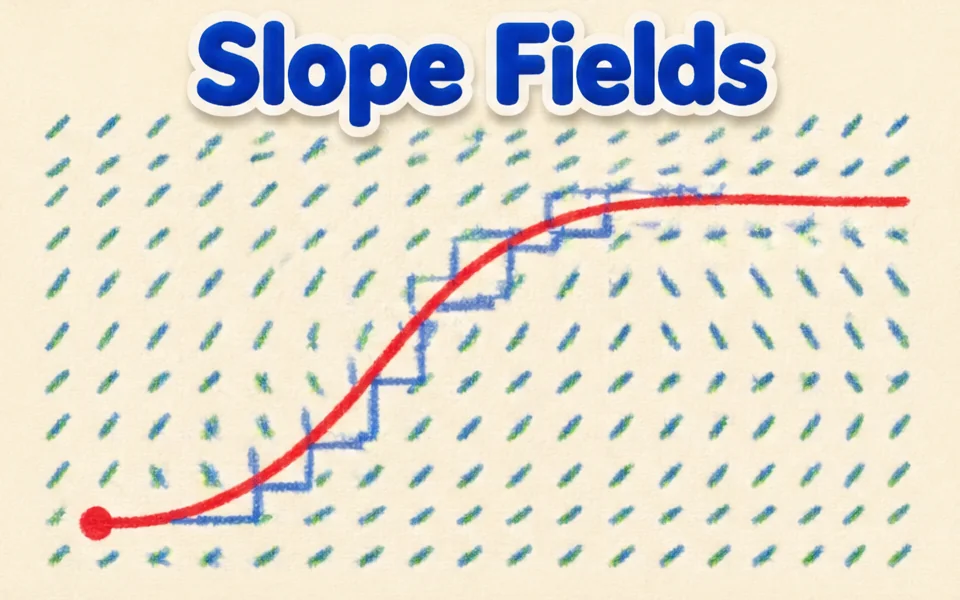
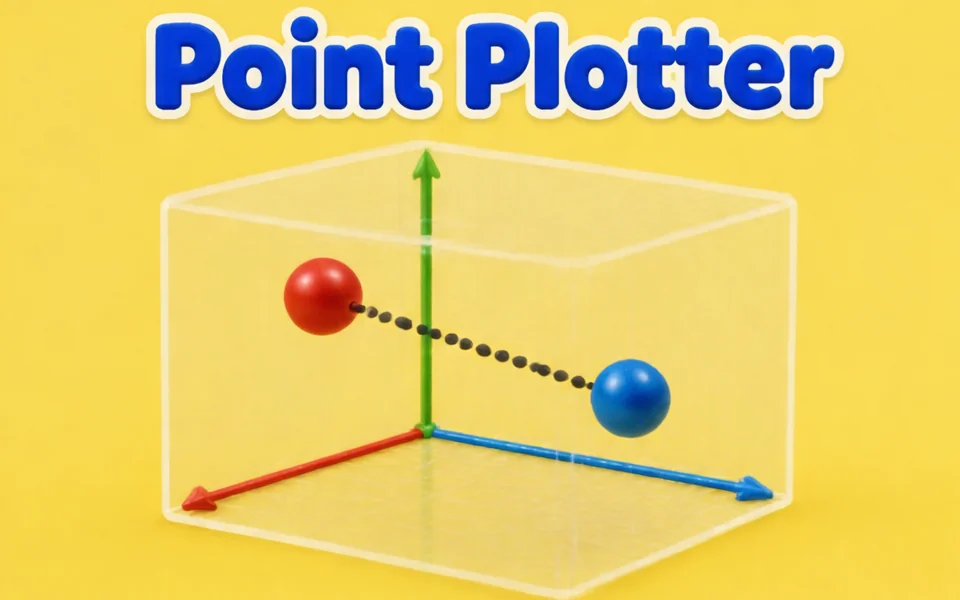
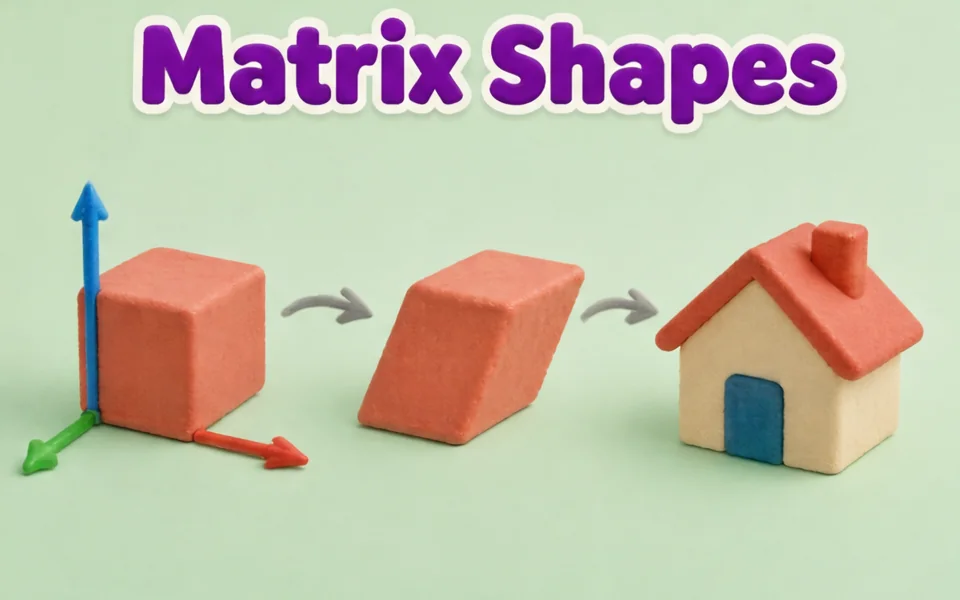
关于这个模拟实验
Gradient & Tangent Plane 3D brings the core geometry of multivariable differential calculus to life. As students drag the glowing probe sphere across the 3D terrain z = f(x, y), the simulation updates the translucent tangent plane and projects the gradient vector ∇f = ⟨∂f/∂x, ∂f/∂y⟩ onto the topographic contour map below. Red and green tangent arrows show the partial slopes along the x and y axes, while a rotatable cyan arrow shows the directional derivative D_u f = ∇f · û at any chosen angle θ. Clicking the probe releases a gradient-descent ball that rolls downhill along −∇f, tracing how optimization algorithms find local minima.
学生可以探索什么
- Drag the red probe sphere around the mountain peak and verify that the tangent plane becomes completely horizontal at the summit where ∇f = ⟨0, 0⟩.
- Rotate the Direction angle θ slider from 0° to 360° and find the angle where the Directional derivative D_u f equals the full Gradient magnitude ‖∇f‖.
- Switch to the Top Contour Map camera view and observe that the gold gradient arrow ∇f always points perpendicular to the level contour rings.
- Click Drop descent ball or click the probe sphere in the scene to release the green ball and watch it roll downhill along −∇f.
- Increase Surface steepness and observe how the tangent plane tilt and gradient arrow length scale proportionally.
学习目标
- 1Calculate and visualize partial derivatives ∂f/∂x and ∂f/∂y as slopes of traces parallel to the coordinate axes.
- 2Explain why the gradient vector ∇f points in the direction of steepest ascent and is orthogonal to contour lines.
- 3Relate the directional derivative D_u f = ∇f · û to the angle between the direction vector û and the gradient ∇f.
- 4Describe how the tangent plane provides a local linear approximation to a differentiable surface z = f(x, y).
教师常问的问题
What does the gradient vector ∇f represent geometrically?
The gradient ∇f = ⟨∂f/∂x, ∂f/∂y⟩ is a 2D vector in the domain plane whose direction points toward the steepest uphill climb on the surface z = f(x, y), and whose length ‖∇f‖ equals that maximum slope.
Why is the gradient always perpendicular to contour lines?
Along any contour curve, the surface height z = f(x, y) is constant, so the directional derivative tangent to the contour is zero. Because D_u f = ∇f · û = 0 along the contour tangent, the gradient vector ∇f must be perpendicular to the contour.
How is the directional derivative related to the partial derivatives?
For a unit direction vector û = ⟨cos θ, sin θ⟩, the directional derivative is the dot product D_u f = (∂f/∂x) cos θ + (∂f/∂y) sin θ, blending both partial slopes.
What is gradient descent and how is it shown here?
Gradient descent is an optimization algorithm that takes steps in the direction of −∇f (steepest descent) to minimize a function. In this simulation, the green ball follows −∇f downhill until it reaches a local valley.
嵌入这个模拟实验
免费嵌入你的学习平台、博客或班级网站。
<iframe src="https://kiwibee.io/zh-cn/simulations/gradient-directional-derivative-3d-3d-simulation/embed" title="Gradient & Tangent Plane 3D | KiwiBee" loading="lazy" allowfullscreen style="width:100%;height:min(70vh,620px);min-height:420px;border:0;border-radius:16px"></iframe>把互动科学带进你的课堂
KiwiBee 的免费教师工作台把备课、工作表、课堂工具和成绩册集中在一处。
免费开始,创建你的第一个班级在 YouTube 上观看 KiwiBee
面向教师和学校的 KiwiBee 短视频。订阅频道,或在你常用的平台上关注 KiwiBee。
 首页
 全部解决方案
 价格
 关于我们
 KiwiBee 非营利组织计划
 活动与网络研讨会
 面向大型教育集团
 面向学校
 面向教育中心
 面向团队负责人
 面向教师
 教学资源
 可打印练习单
 互动模拟实验
 教师工具
 灵感与研究


