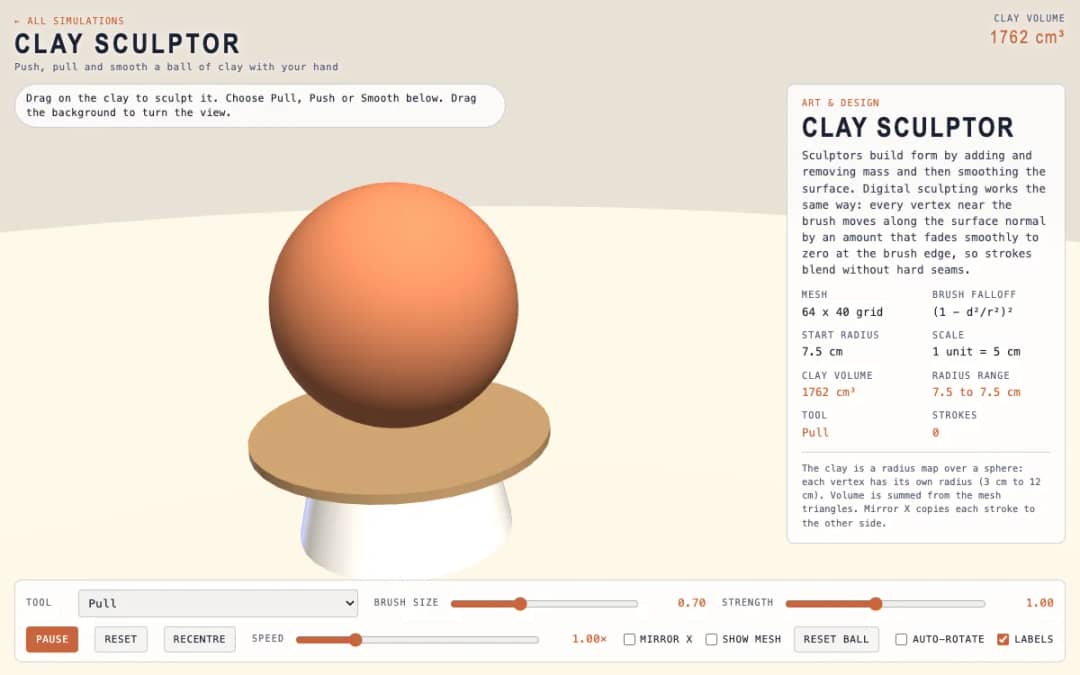
A virtual ball of clay that students sculpt by dragging. Pull, Push and Smooth tools, brush size, strength and a mirror option let them shape it, while a readout shows the clay volume.
—
KiwiBee uses optional Google Analytics, Google Ads, and Meta Pixel cookies to understand adult visitors, measure completed sign-ups, and improve campaigns. Essential cookies always stay on. OpenAI’s ChatGPT Ads Pixel also measures page views and completed enquiries after advertising consent, and may use hashed contact details for matching. Privacy policy
This simulation shows how a potter shapes a vase on a wheel. The vase spins about a vertical axis, and a smooth curve through seven handles sets its radius at each height. Students drag the handles left and right to widen or narrow the vase, and the top handle up to make it taller. Presets turn it into a bowl or a cylinder, a glaze selector colors it and a slider changes the wheel speed. Clicking the vase plays a tone. Readouts give the height, the widest point and how much it holds in liters, found from the integral of pi times radius squared. It links art with geometry, solids of revolution and volume.
Yes. Pottery Wheel is free, needs no sign-up and runs in any modern browser, including whiteboards, tablets and phones.
Drag the round handles along the vase profile sideways to change the width at that height. Drag the top handle upward to raise the vase.
The simulation adds up thin circular slices, using the volume formula pi times radius squared times height for each slice, and uses the inside radius so the wall thickness is left out.
A wheel turns clay around one vertical axis, so every slice is a circle. The profile curve alone describes the whole vase.
ដាក់វាចូលទៅក្នុង LMS ប្លក់ ឬគេហទំព័រថ្នាក់រៀនរបស់អ្នក — ឥតគិតថ្លៃ។
<iframe src="https://kiwibee.io/km/simulations/pottery-wheel-3d-simulation/embed" title="Pottery Wheel | KiwiBee" loading="lazy" allowfullscreen style="width:100%;height:min(70vh,620px);min-height:420px;border:0;border-radius:16px"></iframe>បន្តស្វែងរក
A virtual ball of clay that students sculpt by dragging. Pull, Push and Smooth tools, brush size, strength and a mirror option let them shape it, while a readout shows the clay volume.
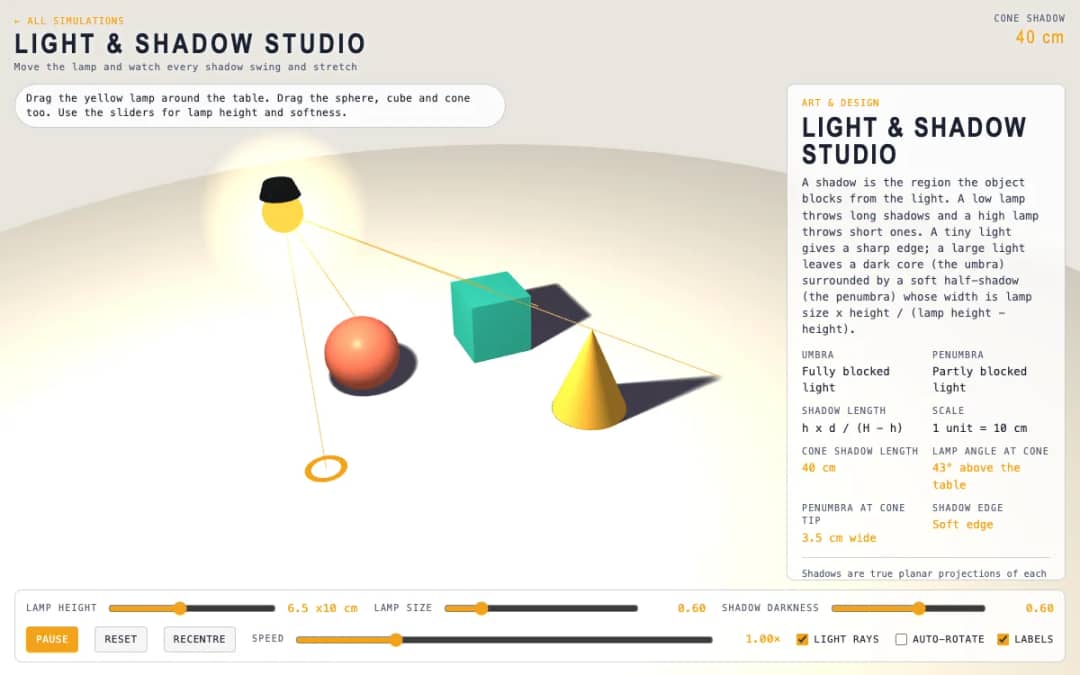
A tabletop scene with a lamp and a sphere, cube and cone. Students drag the lamp and the objects, change lamp height and size, and watch shadows swing, stretch and develop soft edges.
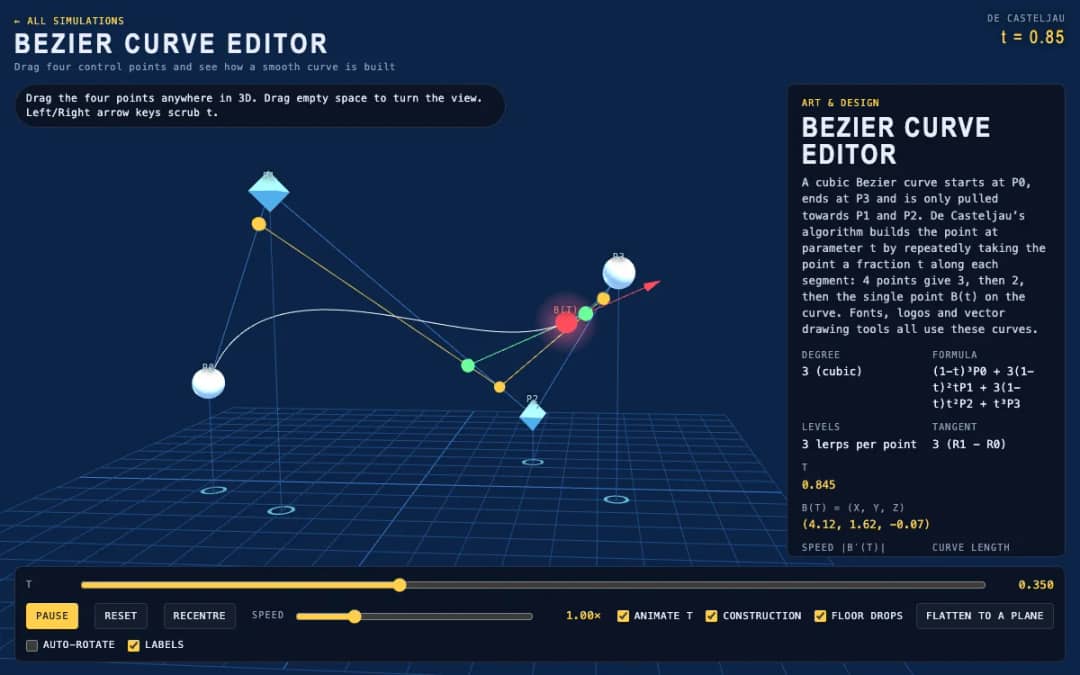
Four draggable control points shape a cubic Bezier curve in 3D. Students move the points, scrub or animate the parameter t, and see the construction lines that build the point on the curve.
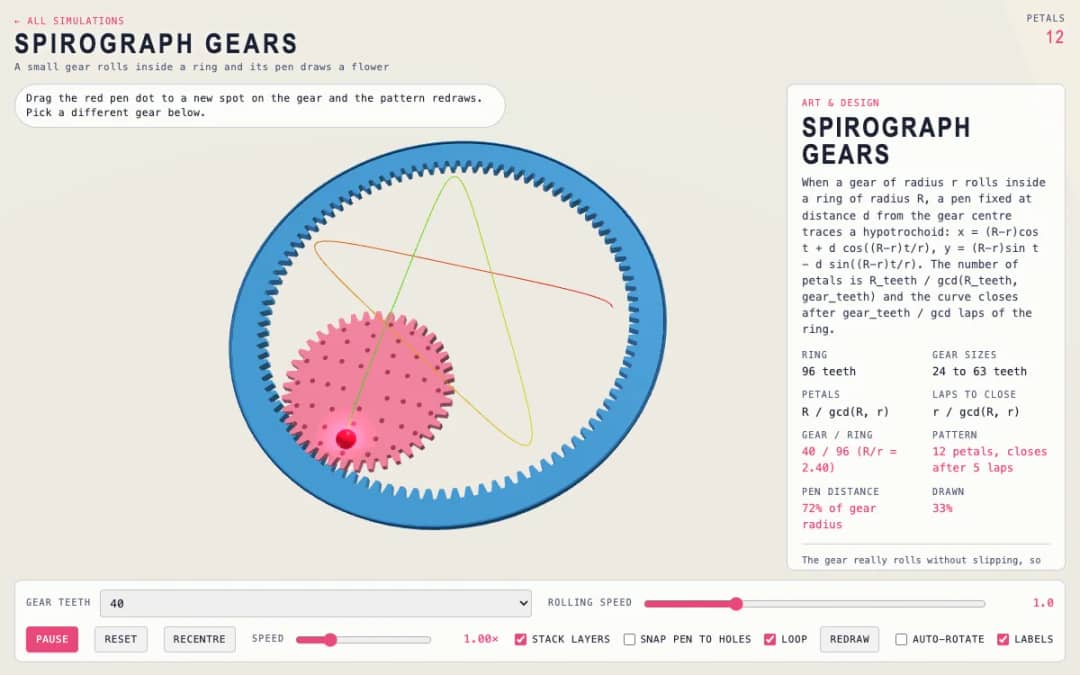
A small gear rolls inside a ring while a pen draws a flower pattern. Students choose the gear size, drag the pen dot to a new spot and see the number of petals and the drawing change.
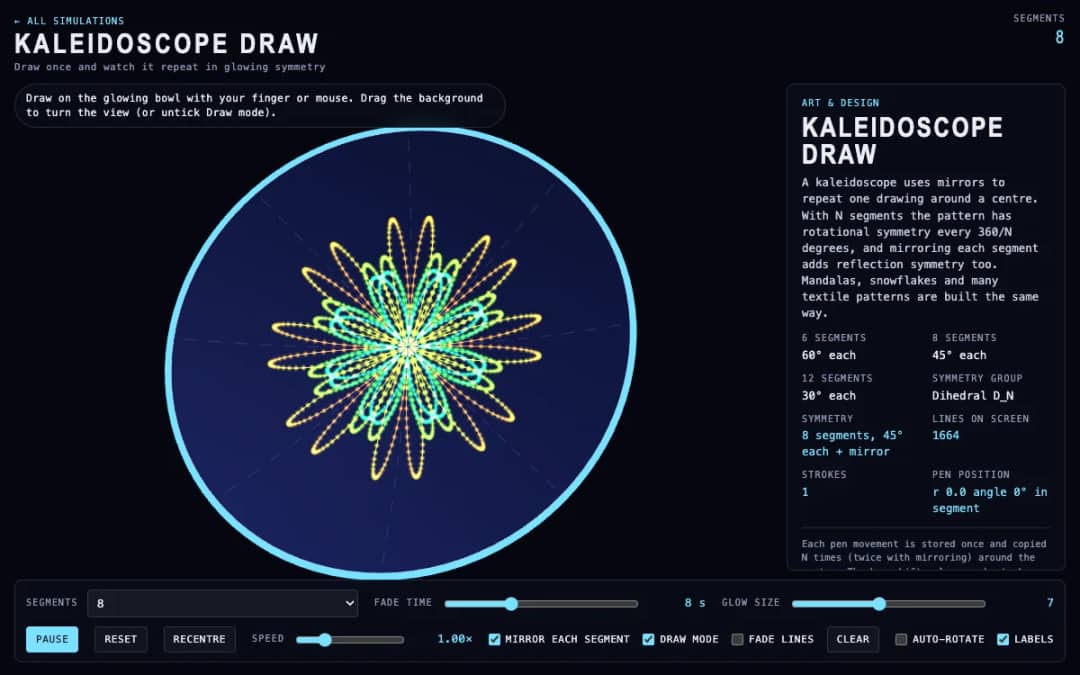
Students draw on a glowing 3D bowl and every stroke is copied around the center as a symmetrical pattern. They pick 6, 8 or 12 segments, turn mirroring on, fade lines out and change glow size.
ពីម៉ូដែលទៅភស្តុតាង
ប្រើសន្លឹកកិច្ចការដើម្បីកត់ត្រាការព្យាករណ៍ ការសង្កេត និងការពន្យល់ បន្ទាប់ពីសិស្សបានស្វែងយល់។
ទីតាំងការងារសម្រាប់គ្រូដោយឥតគិតថ្លៃ KiwiBee នាំមកនូវការរៀបចំមេរៀន សន្លឹកកិច្ចការ ឧបករណ៍ក្នុងថ្នាក់ និងសៀវភៅពិន្ទុ ទាំងអស់នៅកន្លែងតែមួយ។
ចាប់ផ្តើមឥតគិតថ្លៃ និងបង្កើតថ្នាក់ដំបូងរបស់អ្នក
 ទំព័រដើម
 ដំណោះស្រាយទាំងអស់
 តម្លៃ
 អំពីយើង
 KiwiBee សម្រាប់អង្គការមិនស្វែងរកប្រាក់ចំណេញ
 ព្រឹត្តិការណ៍ និងសិក្ខាសាលាអនឡាញ
 សម្រាប់អង្គភាពធំ
 សម្រាប់សាលារៀន
 សម្រាប់មជ្ឈមណ្ឌល
 សម្រាប់ប្រធានក្រុម
 សម្រាប់គ្រូ
 AI និងធនធាន
 ធនធាន
 សន្លឹកកិច្ចការសម្រាប់បោះពុម្ព
 កញ្ចប់មេរៀន
 ការពិសោធន៍និម្មិតអន្តរកម្ម
 ឧបករណ៍គ្រូ
 ស្ទូឌីយ៉ូ AI
 គំនិត និងការស្រាវជ្រាវ