
Explore an adult male reference body in 3D. Reveal 14 anatomical systems, search thousands of named structures, isolate organs, and pull 2,209 modeled pieces apart to see how the body is organized.
—
KiwiBee वयस्क विज़िटर्स को समझने, पूरे हुए साइन-अप मापने और अभियानों को बेहतर बनाने के लिए Google Analytics, Google Ads और Meta Pixel की वैकल्पिक कुकीज़ का उपयोग करता है। ज़रूरी कुकीज़ हमेशा चालू रहती हैं। OpenAI का ChatGPT Ads Pixel विज्ञापन की सहमति के बाद पेज व्यू और भेजी गई पूछताछ भी मापता है और मिलान के लिए हैश किए गए संपर्क विवरण का उपयोग कर सकता है। गोपनीयता नीति
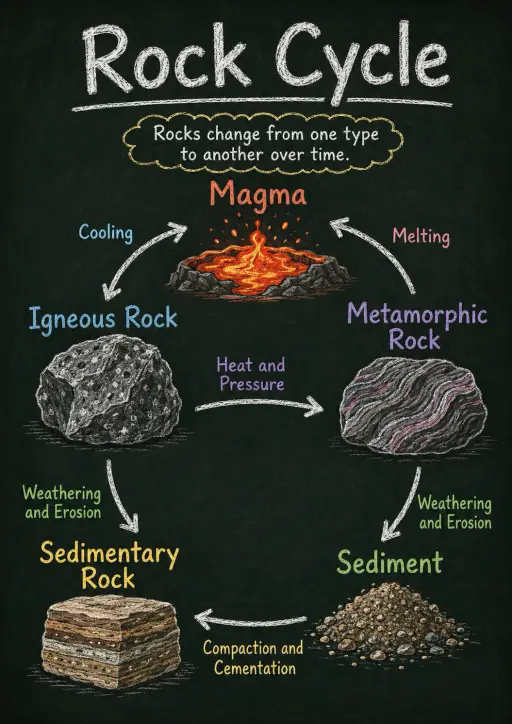
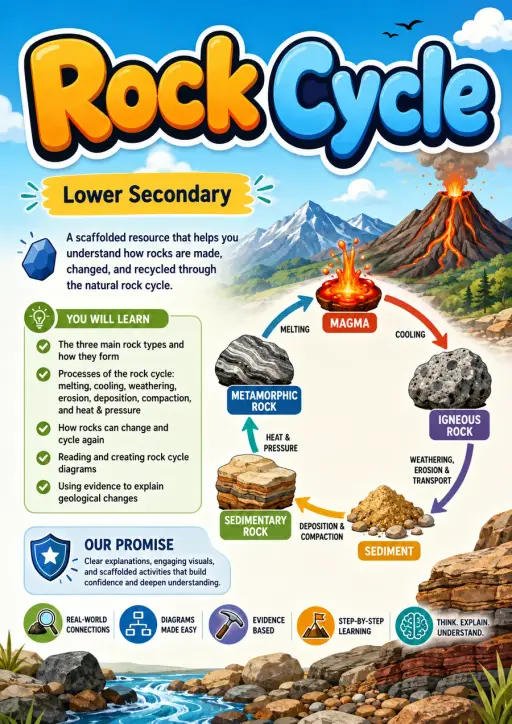
The Rock Cycle 3D Lab links large-scale tectonic and surface processes in Earth's crust to the microscopic mineral textures of rocks. On the left, a 3D geological cross-section features a glowing underground magma pluton, an erupting volcano cone, a layered sedimentary basin, and a deep metamorphic heat-and-pressure zone. On the right, a rotating 3D rock specimen inside a magnifier ring displays procedural mineral textures for coarse intrusive Granite, fine extrusive Basalt, layered clastic Sandstone, and banded foliated Gneiss. Students drag the specimen marker between crust stations or adjust depth and cooling/pressure sliders to see real-time changes in temperature, pressure, and crystal texture.
Granite forms from magma trapped deep underground where surrounding rock insulates it, allowing crystals thousands of years to grow large. Basalt forms from lava extruded onto Earth's surface that chills rapidly before large crystals can form.
Yes. Igneous, sedimentary, or metamorphic rocks uplifted to the surface can weather into sediment to become sedimentary rock, be buried and heated into metamorphic rock, or melt completely into magma to cool into new igneous rock.
Metamorphic rocks recrystallise and align their minerals in the solid state under high heat and directed pressure without melting. Once a rock melts completely into magma or lava, any rock that solidifies from it is classified as igneous.
इसे अपने एलएमएस, ब्लॉग या कक्षा की वेबसाइट पर लगाएँ — मुफ़्त।
<iframe src="https://kiwibee.io/hi/simulations/rock-cycle-minerals-3d-3d-simulation/embed" title="The Rock Cycle 3D Lab | KiwiBee" loading="lazy" allowfullscreen style="width:100%;height:min(70vh,620px);min-height:420px;border:0;border-radius:16px"></iframe>खोज जारी रखें
Explore an adult male reference body in 3D. Reveal 14 anatomical systems, search thousands of named structures, isolate organs, and pull 2,209 modeled pieces apart to see how the body is organized.

Explore the head and neck in 3D: 643 source meshes across 14 layers, 47 facial and masticatory muscles, and 77 drawn nerves, vessels and glands the source scan omits. Open any tooth onto its own pulp canal, and follow the seven stages of tooth development.

Free interactive photosynthesis simulation. Explore photosynthesis hands-on online — great for whole-class or independent practice.

Free interactive states of matter simulation. Explore states of matter hands-on online — great for whole-class or independent practice.

Free interactive shadows simulation. Explore shadows hands-on online — great for whole-class or independent practice.
मॉडल से प्रमाण तक
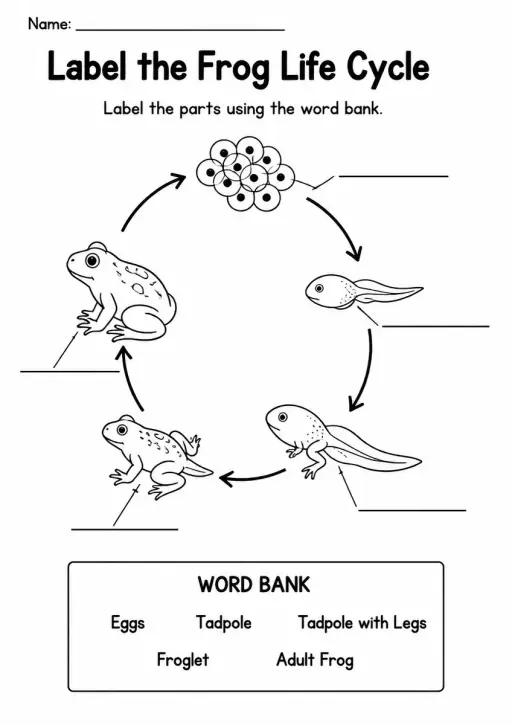
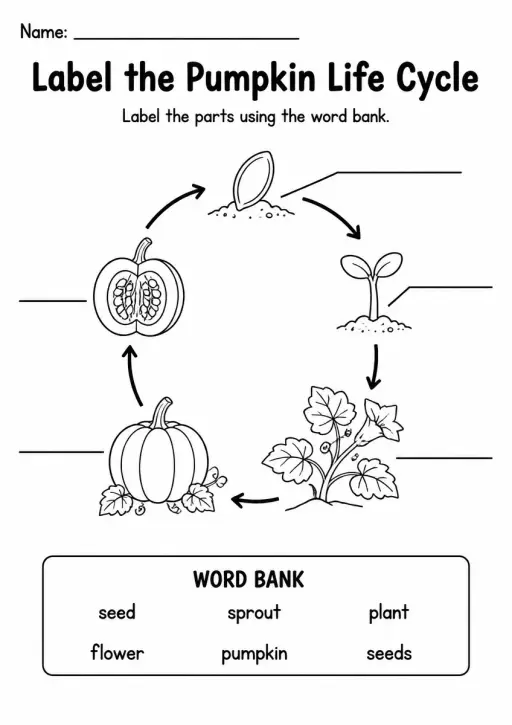
विद्यार्थियों के खोज लेने के बाद उनके अनुमान, प्रेक्षण और व्याख्याएँ दर्ज करने के लिए वर्कशीट का उपयोग करें।

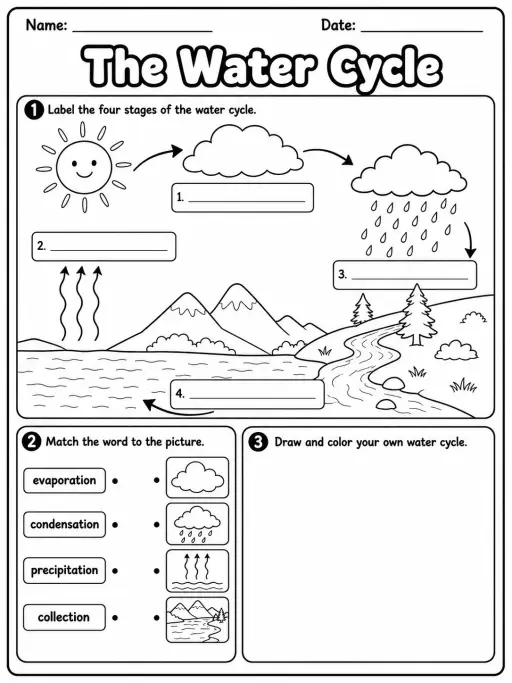
KiwiBee का मुफ़्त शिक्षक कार्यक्षेत्र पाठ योजना, वर्कशीट, कक्षा उपकरण और ग्रेडबुक — सब एक ही जगह लाता है।
मुफ़्त शुरू करें और अपनी पहली कक्षा बनाएँ होम
 सभी समाधान
 कीमतें
 हमारे बारे में
 गैर-लाभकारी संस्थाओं के लिए KiwiBee
 कार्यक्रम और वेबिनार
 बड़े संगठनों के लिए
 स्कूलों के लिए
 लर्निंग सेंटरों के लिए
 टीम लीडरों के लिए
 शिक्षकों के लिए
 AI और संसाधन
 संसाधन
 प्रिंट करने योग्य वर्कशीट
 पाठ पैक
 इंटरैक्टिव सिमुलेशन
 शिक्षक उपकरण
 AI स्टूडियो
 विचार और शोध