
Explore where notable people were born on an interactive world map. Filter culture, science, leadership, and sport, compare regions, and connect biographies with geography. Map by Topi Tjukanov, using research by Morgane Laouenan and colleagues.
—
KiwiBee uses optional Google Analytics, Google Ads, and Meta Pixel cookies to understand adult visitors, measure completed sign-ups, and improve campaigns. Essential cookies always stay on. OpenAI’s ChatGPT Ads Pixel also measures page views and completed enquiries after advertising consent, and may use hashed contact details for matching. Privacy policy
KiwiBee’s classroom edition retains Nicky Case’s CC0 network experiments and interactive essay. A guided experiment selector opens network building, simple or complex contagion, bonding/bridging, small-world networks, or the sandbox. Prediction prompts, keyboard button handling, restart controls and sound initially off support classroom use. Creator and collaborator credits remain in the original Credits section. Allow about 30 minutes for the full lesson. The illustrated agents follow simplified rules, not predictions of actual people.
Nicky Case. Original source license: CC0-1.0. Source: https://github.com/ncase/crowds. KiwiBee improves the classroom controls and experiments, retaining source credits and licenses.
The cartoon network models simplify human behavior. They are tools for discussion rather than evidence that a real group will behave in the same way.
Use the activity controls inside the frame, or open fullscreen for a larger workspace. Ask students to predict a result, test it, and explain what changed. The embedded application starts in English; available upstream language controls are part of the original activity.
آن را در LMS، وبلاگ یا وبسایت کلاس خود قرار دهید — رایگان.
<iframe src="https://kiwibee.io/fa/simulations/wisdom-madness-crowds-simulation/embed" title="Wisdom and Madness of Crowds | KiwiBee" loading="lazy" allowfullscreen style="width:100%;height:min(70vh,620px);min-height:420px;border:0;border-radius:16px"></iframe>کاوش را ادامه دهید
Explore where notable people were born on an interactive world map. Filter culture, science, leadership, and sport, compare regions, and connect biographies with geography. Map by Topi Tjukanov, using research by Morgane Laouenan and colleagues.
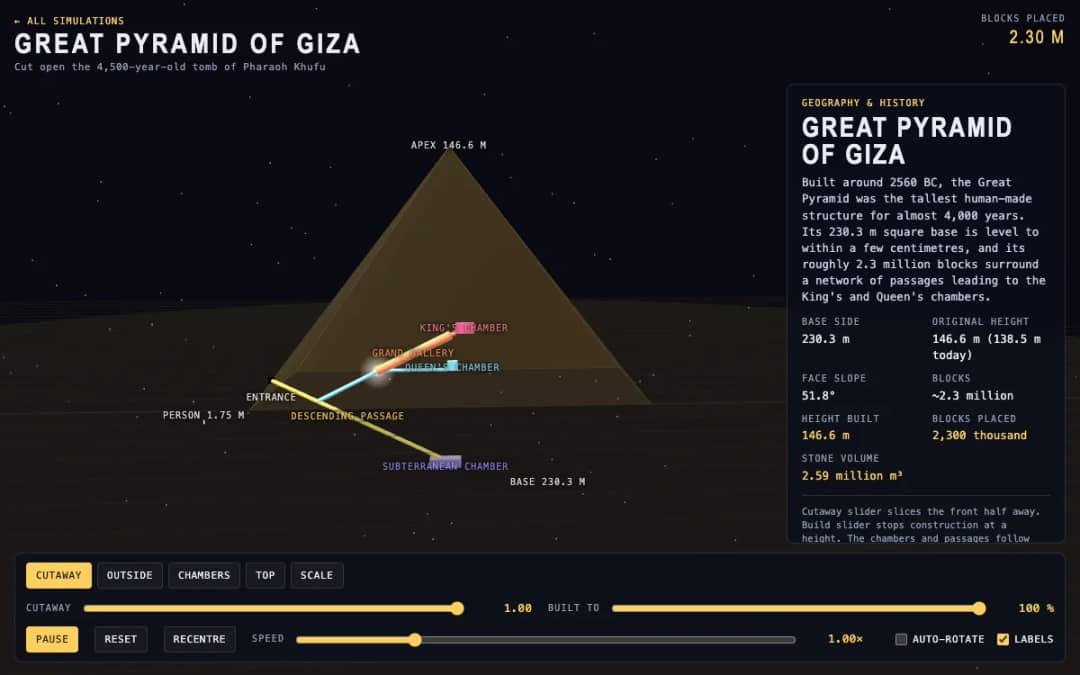
The Great Pyramid of Giza is shown in 3D with a cutaway slider that slices the front away and a build slider that stops construction at any height. Readouts show the height built, blocks placed and stone volume.
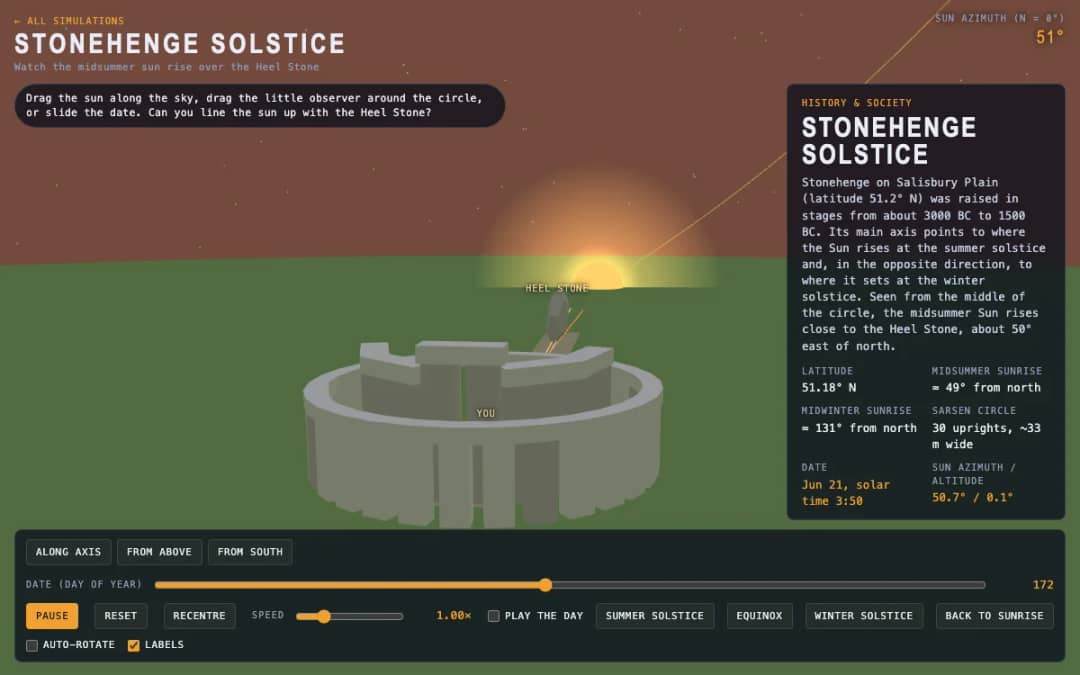
A 3D stone circle under a moving sun. Students drag the sun, move an observer around the circle or slide the date to test whether sunrise lines up with the Heel Stone.
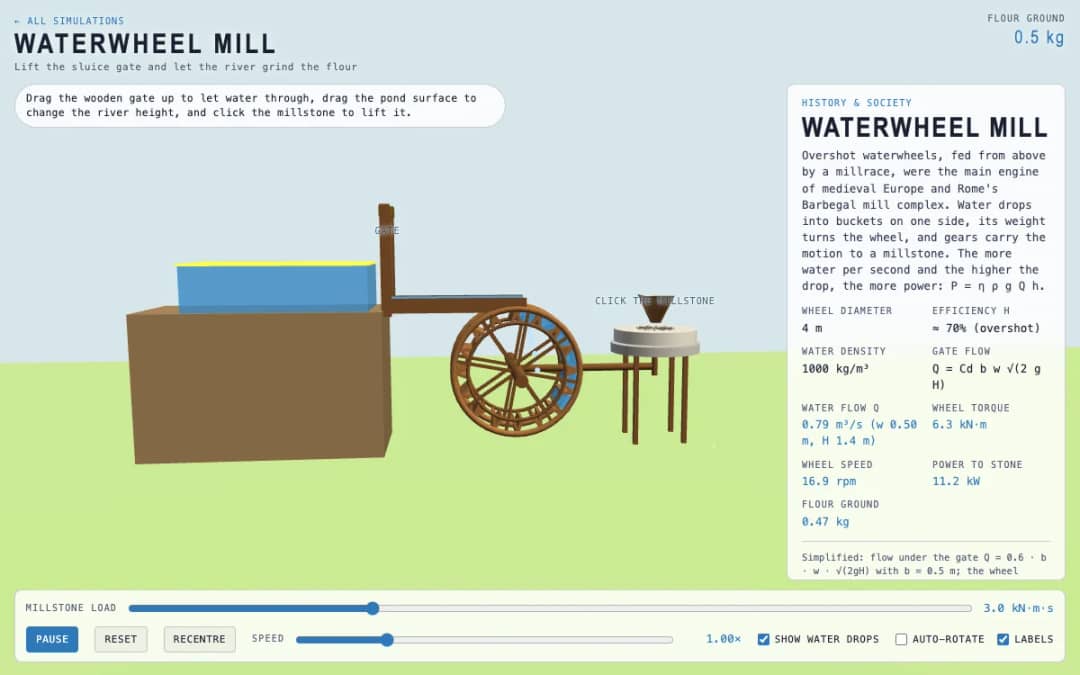
An overshot waterwheel driving a millstone. Students lift the wooden gate, change the pond level and click the millstone, then watch flow, torque, wheel speed and flour output.
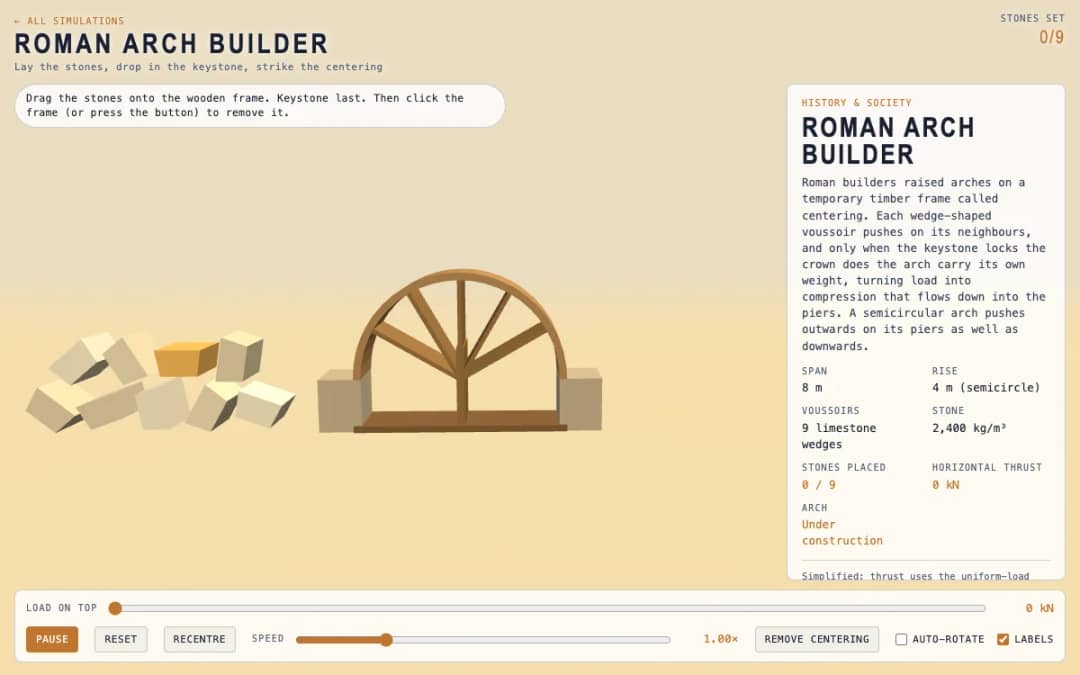
A wooden frame and nine limestone wedges. Students drag the stones into place, add the keystone last, then remove the frame and test the arch with extra weight on top.
فضای کاری رایگان معلمان KiwiBee برنامهریزی درس، کاربرگها، ابزارهای کلاسی و دفتر نمره را یکجا گرد هم میآورد.
رایگان شروع کنید و اولین کلاس خود را بسازید خانه
 همهٔ راهکارها
 قیمتگذاری
 درباره ما
 KiwiBee برای سازمانهای غیرانتفاعی
 رویدادها و وبینارها
 برای سازمانهای بزرگ
 برای مدرسهها
 برای مراکز
 برای سرپرستان تیم
 برای معلمان
 هوش مصنوعی و منابع
 منابع
 کاربرگهای قابل چاپ
 بستههای درس
 شبیهسازیهای تعاملی
 ابزارهای معلم
 استودیوی هوش مصنوعی
 ایدهها و پژوهش