
Explore where notable people were born on an interactive world map. Filter culture, science, leadership, and sport, compare regions, and connect biographies with geography. Map by Topi Tjukanov, using research by Morgane Laouenan and colleagues.
—
KiwiBee usa cookies opcionales de Google Analytics, Google Ads y Meta Pixel para entender a los visitantes adultos, medir los registros completados y mejorar las campañas. Las cookies esenciales siempre permanecen activas. El píxel de anuncios de ChatGPT de OpenAI también mide las visitas y las consultas enviadas tras aceptar la publicidad, y puede usar datos de contacto cifrados mediante hash para la atribución. Política de privacidad
Students drag the sun along the sky, drag a small observer around the circle, or slide the date from day 1 to 365. Buttons jump to the summer solstice, equinox, winter solstice or back to sunrise, and a toggle plays the day. Readouts show the date, sun azimuth and altitude, the direction to the Heel Stone from the observer and the alignment verdict. It shows how the sun's rising point shifts through the year at latitude 51 degrees north, and how prehistoric builders may have marked it.
Yes, it costs nothing and there is no account to create. Stonehenge Solstice works in the browser on laptops, Chromebooks, whiteboards, tablets and phones.
It was raised in stages from about 3000 BC to 1500 BC on Salisbury Plain in England, at a latitude of about 51.2 degrees north.
It is a large stone outside the main circle. Seen from the center, the midsummer sun rises close to it, which is why the site is linked to the summer solstice.
Slide the Date, drag the sun or the observer, and use the solstice and equinox buttons. Press Back to sunrise to reset the view to dawn.
Colócala en tu LMS, blog o sitio de clase, gratis.
<iframe src="https://kiwibee.io/es/simulations/stonehenge-solstice-3d-simulation/embed" title="Stonehenge Solstice | KiwiBee" loading="lazy" allowfullscreen style="width:100%;height:min(70vh,620px);min-height:420px;border:0;border-radius:16px"></iframe>Sigue explorando
Explore where notable people were born on an interactive world map. Filter culture, science, leadership, and sport, compare regions, and connect biographies with geography. Map by Topi Tjukanov, using research by Morgane Laouenan and colleagues.

Explore how ideas spread through social networks in an interactive lesson. Draw connections, compare network structures, and investigate collective behavior.
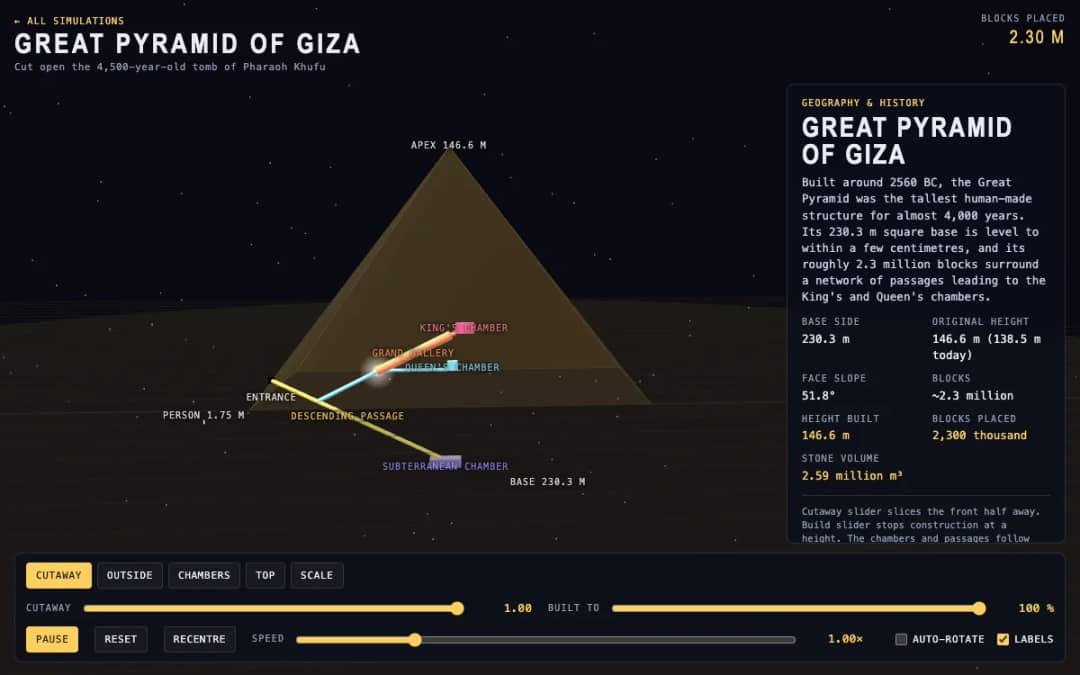
The Great Pyramid of Giza is shown in 3D with a cutaway slider that slices the front away and a build slider that stops construction at any height. Readouts show the height built, blocks placed and stone volume.
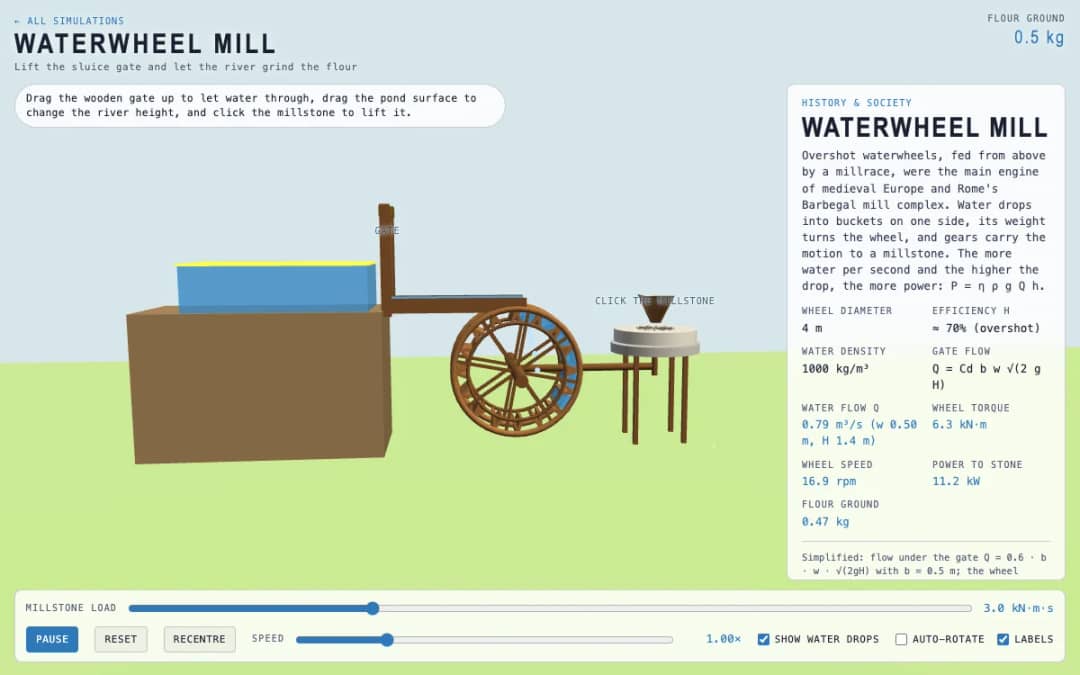
An overshot waterwheel driving a millstone. Students lift the wooden gate, change the pond level and click the millstone, then watch flow, torque, wheel speed and flour output.
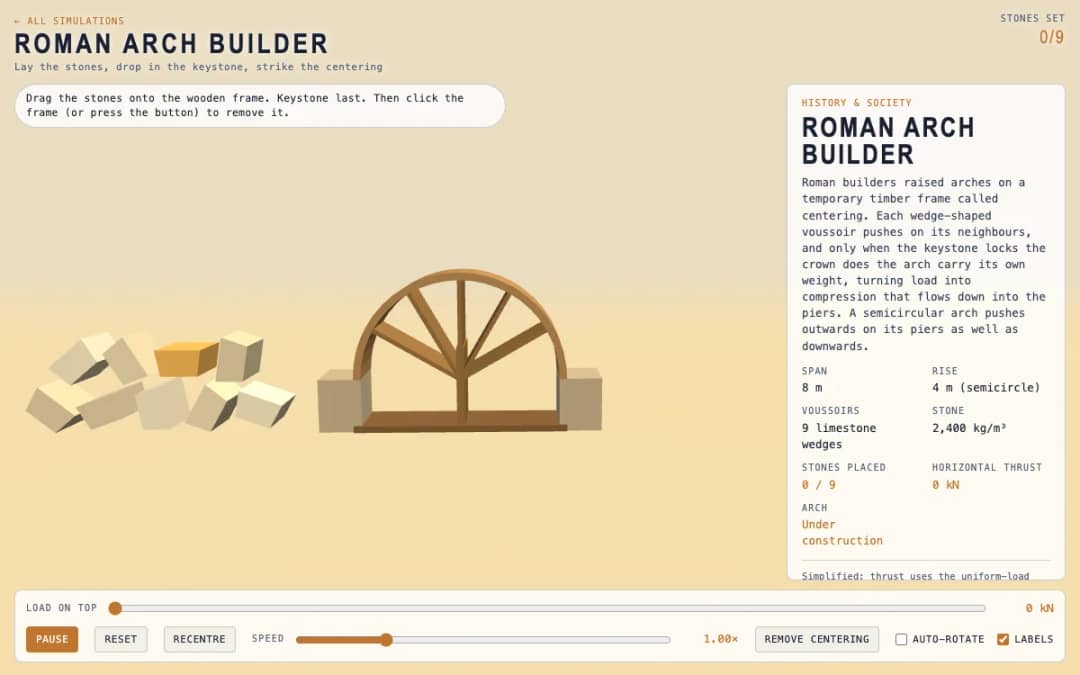
A wooden frame and nine limestone wedges. Students drag the stones into place, add the keystone last, then remove the frame and test the arch with extra weight on top.
El espacio de trabajo gratuito para docentes de KiwiBee reúne en un solo lugar la planificación de clases, las fichas, las herramientas de aula y el libro de calificaciones.
Empieza gratis y crea tu primera clase Inicio
 Todas las soluciones
 Precios
 Quiénes somos
 KiwiBee para organizaciones sin fines de lucro
 Eventos y seminarios web
 Para grandes organizaciones
 Para escuelas
 Para centros de aprendizaje
 Para líderes de equipo
 Para docentes
 IA y recursos
 Recursos
 Hojas de trabajo imprimibles
 Paquetes didácticos
 Simulaciones interactivas
 Herramientas para docentes
 Estudio de IA
 Ideas e investigación