KiwiBee printable
Identify passive and active transport
Free printable Biology science worksheet for "Identify passive and active transport" — practice cells and membranes. No-prep, print or assign online.
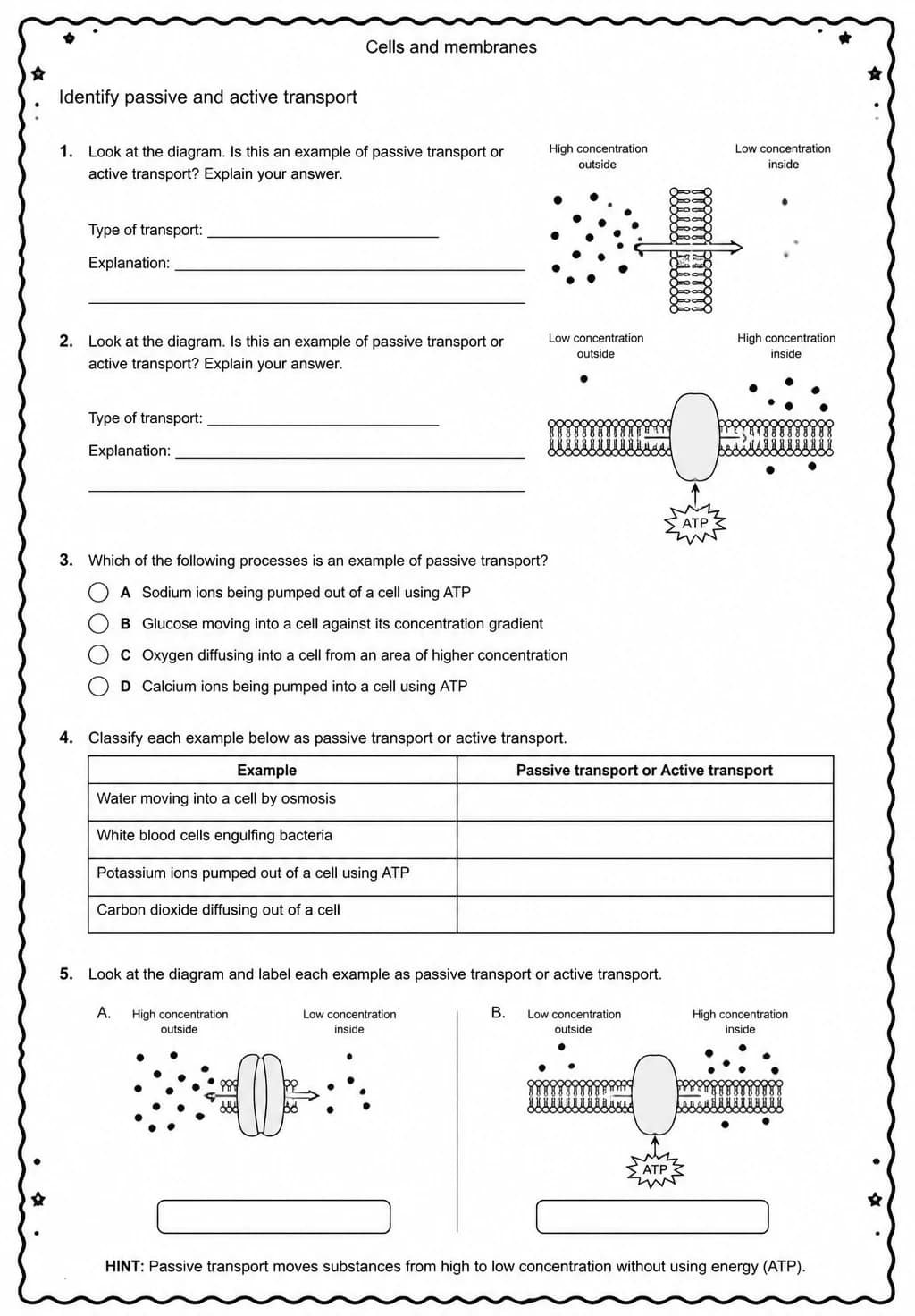
High school students examine passive and active transport in this Cells and Membranes worksheet, identifying how substances move across cell membranes with and without energy input. Teachers can use it during a unit on cells to help students classify transport mechanisms and understand the role of concentration gradients, carrier proteins, and ATP. The worksheet suits post-lesson review, lab prep, or paired work exploring cell membrane dynamics.
Learning objectives
- Identify passive and active transport mechanisms across cell membranes
- Distinguish between passive transport, which requires no energy, and active transport, which requires ATP
- Explain the role of concentration gradients and membrane proteins in each transport type
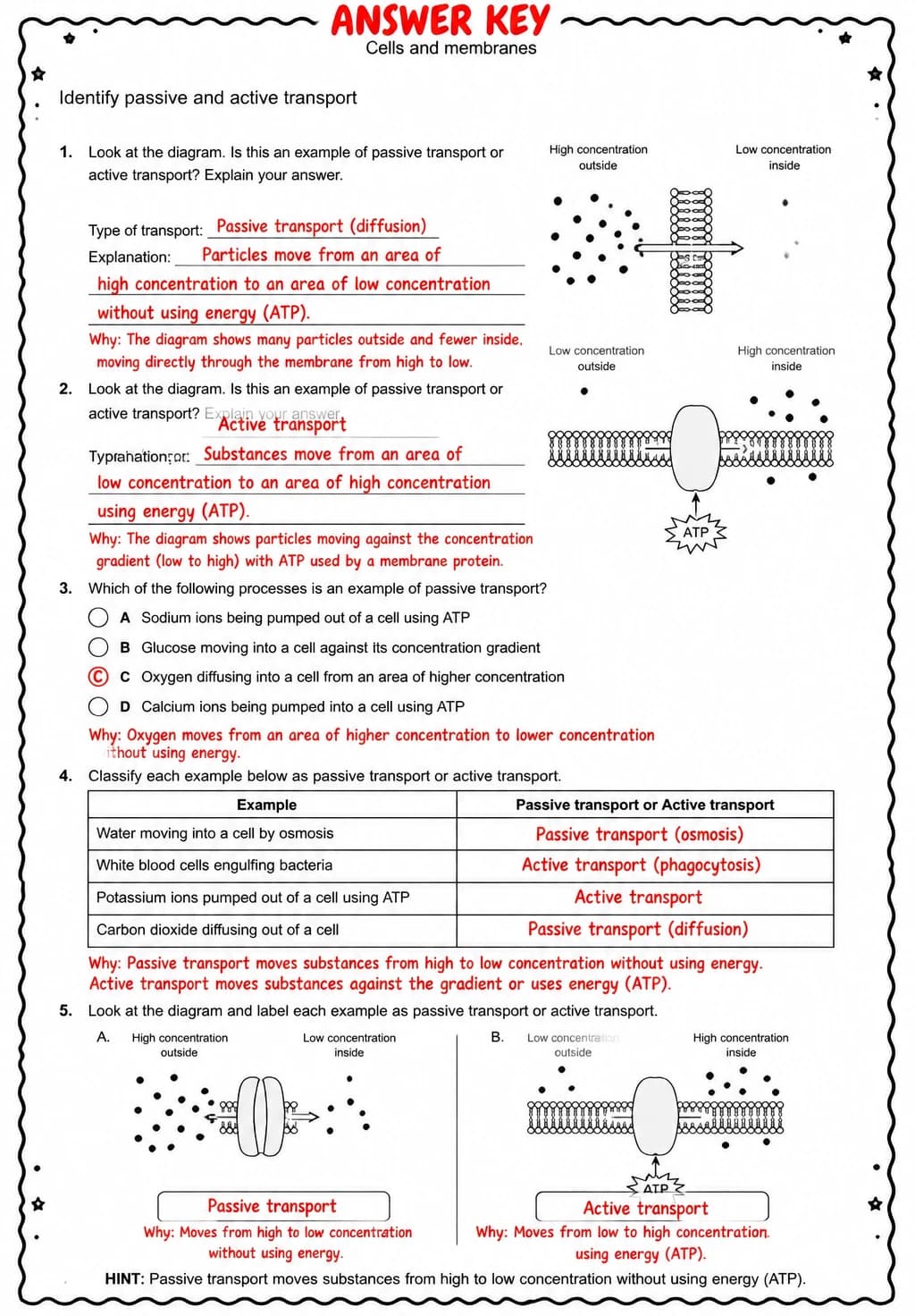
Answer Key
How to use this worksheet
- Click “Download Worksheet” and sign in with Google or email to get the PDF instantly.
- Print at home or in class for High School; it's no-prep, with no extra materials needed.
- Use the included answer key to mark it in seconds.
Frequently asked questions
Is the “Identify passive and active transport” worksheet free?
Yes. “Identify passive and active transport” is a free printable Science worksheet. Sign in with Google or email to download the PDF instantly.
What grade or age is this Science worksheet for?
It's designed for High School (ages 14–18), covering Cells and membranes.
Does it come with an answer key?
Yes — a matching answer key is included so you can grade it in seconds.
Likes & comments
See what other teachers think and share a helpful note.
Create more worksheets in our Worksheet Studio
Generate fresh worksheets for any grade, topic, and language — free.
Open the Worksheet StudioYou might also like
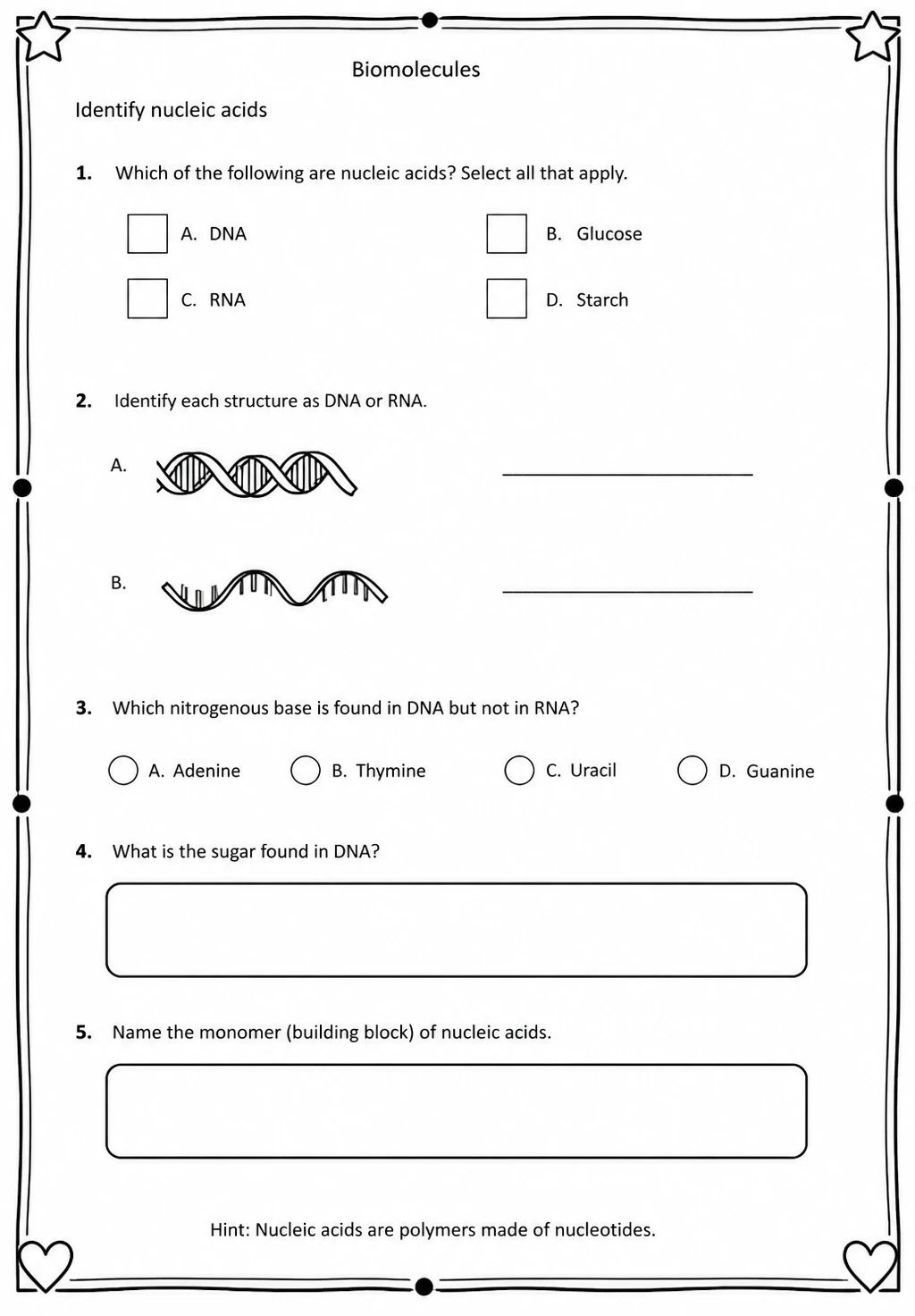
Identify nucleic acids
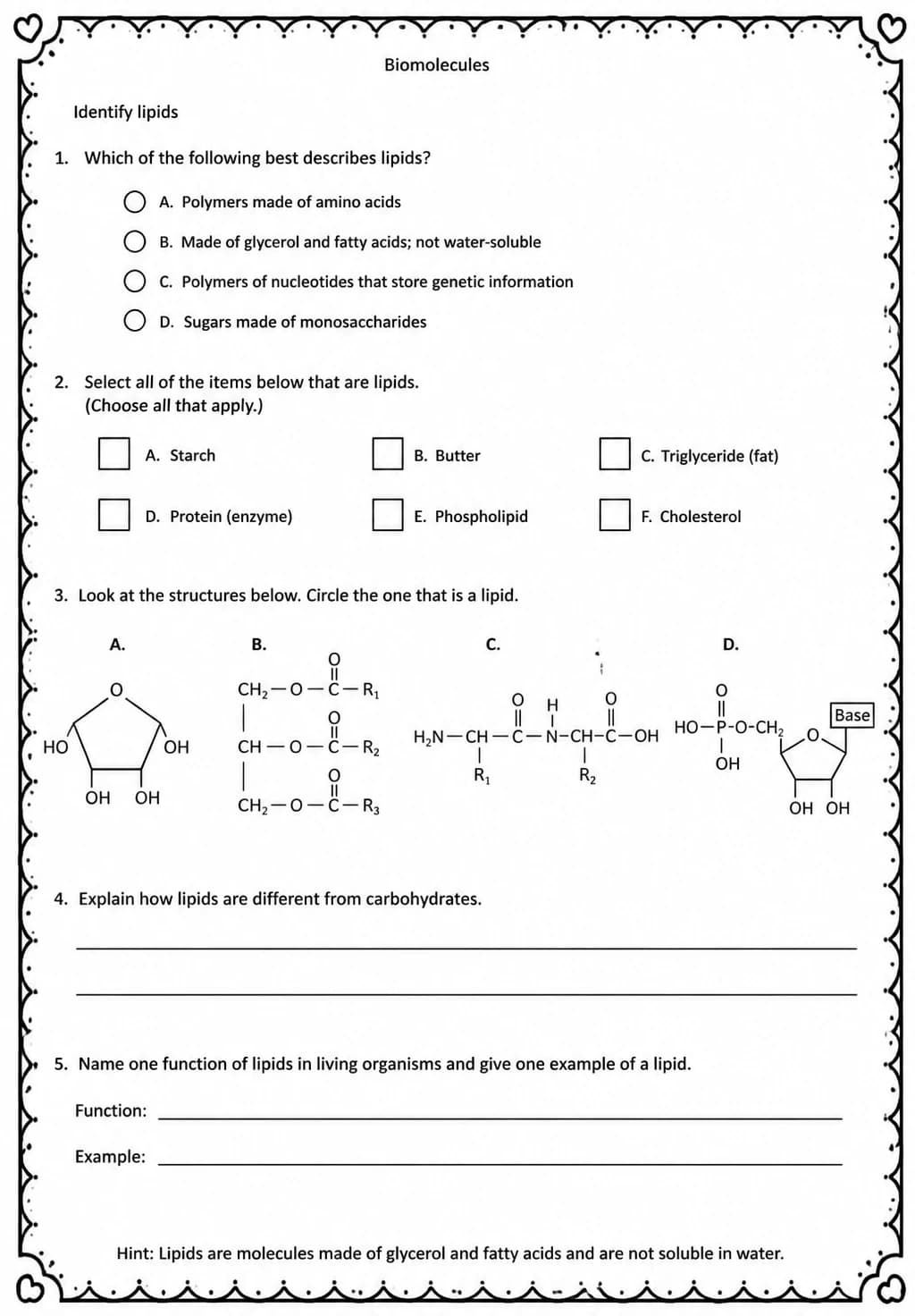
Identify lipids
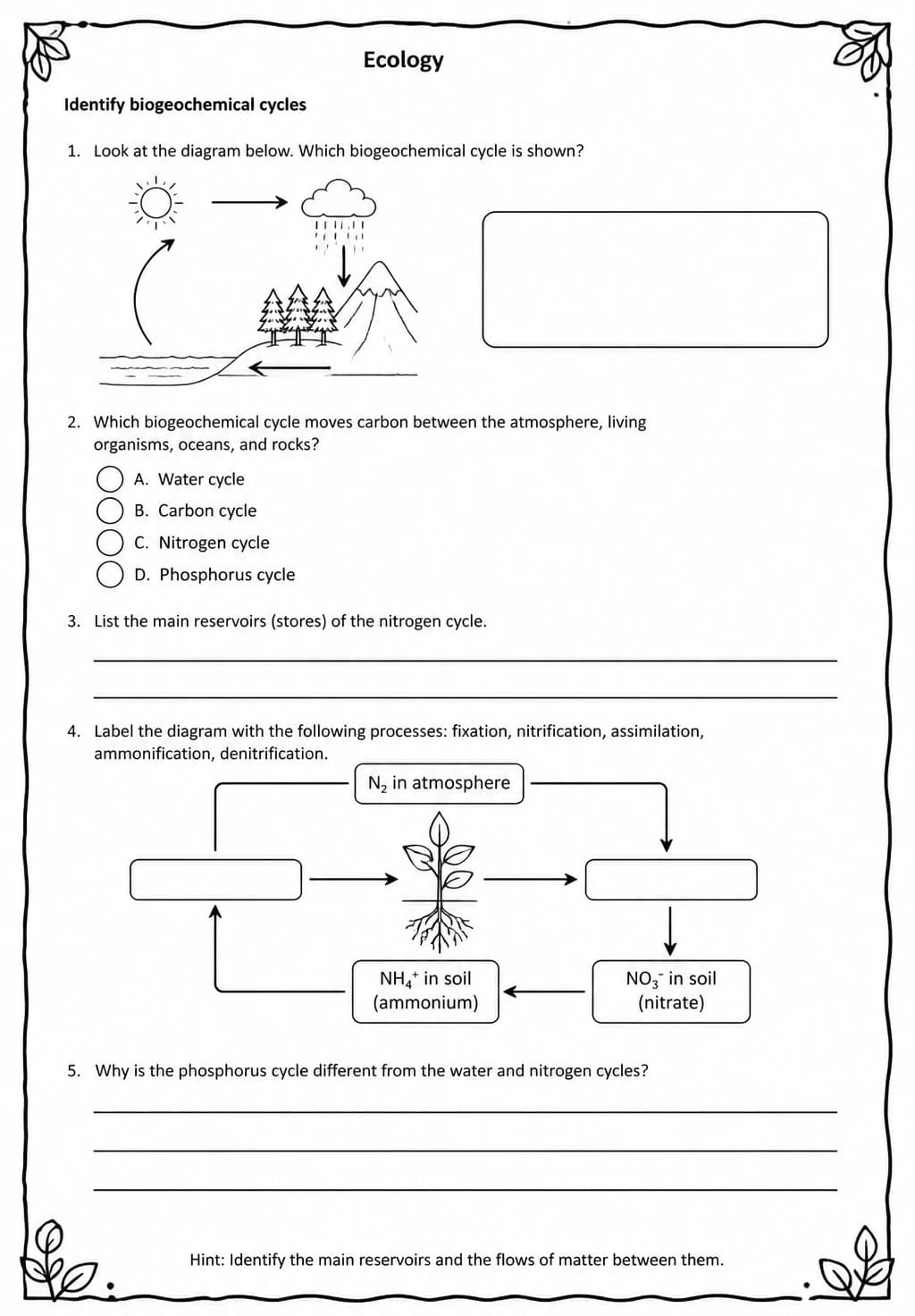
Identify biogeochemical cycles
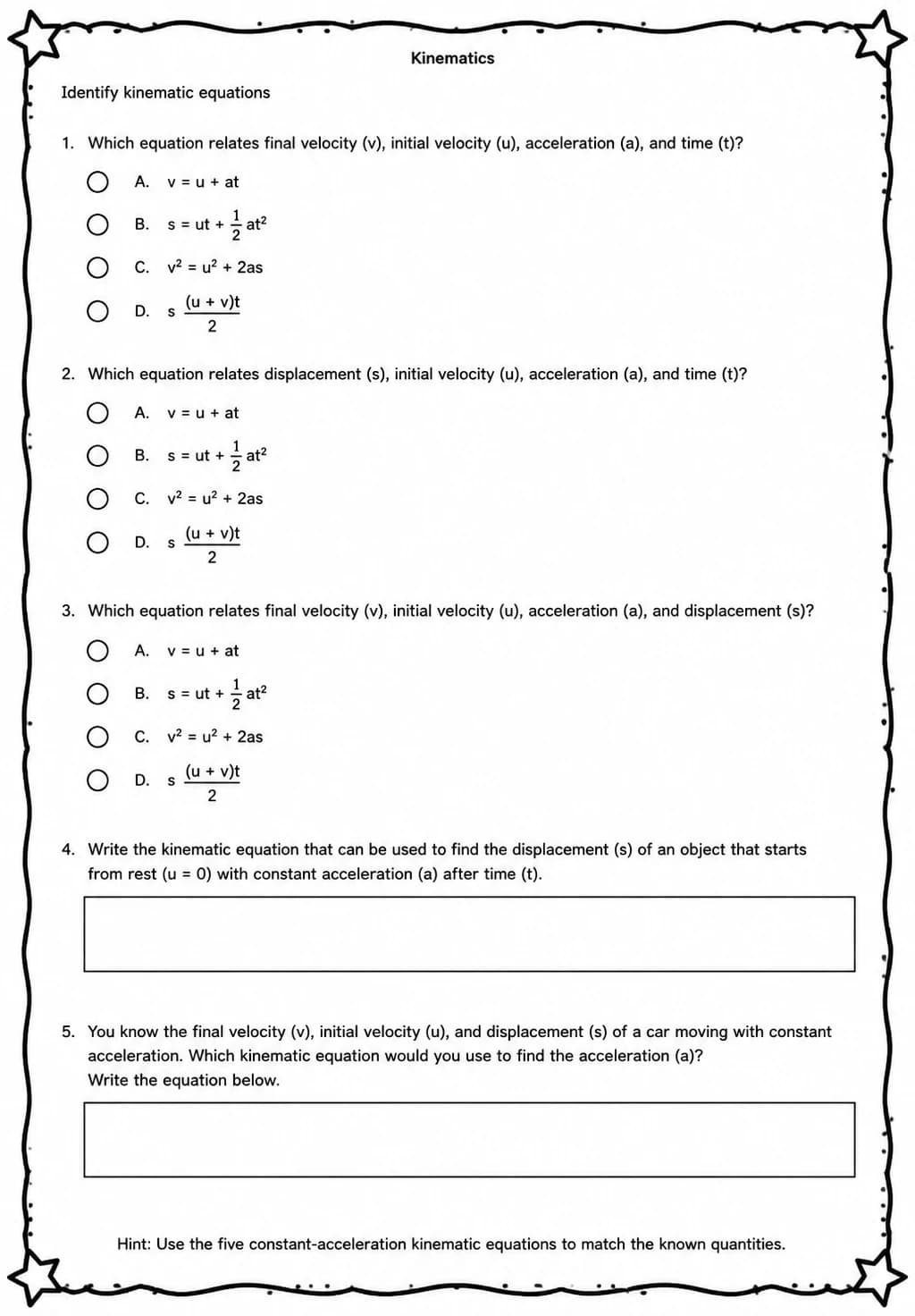
Identify kinematic equations
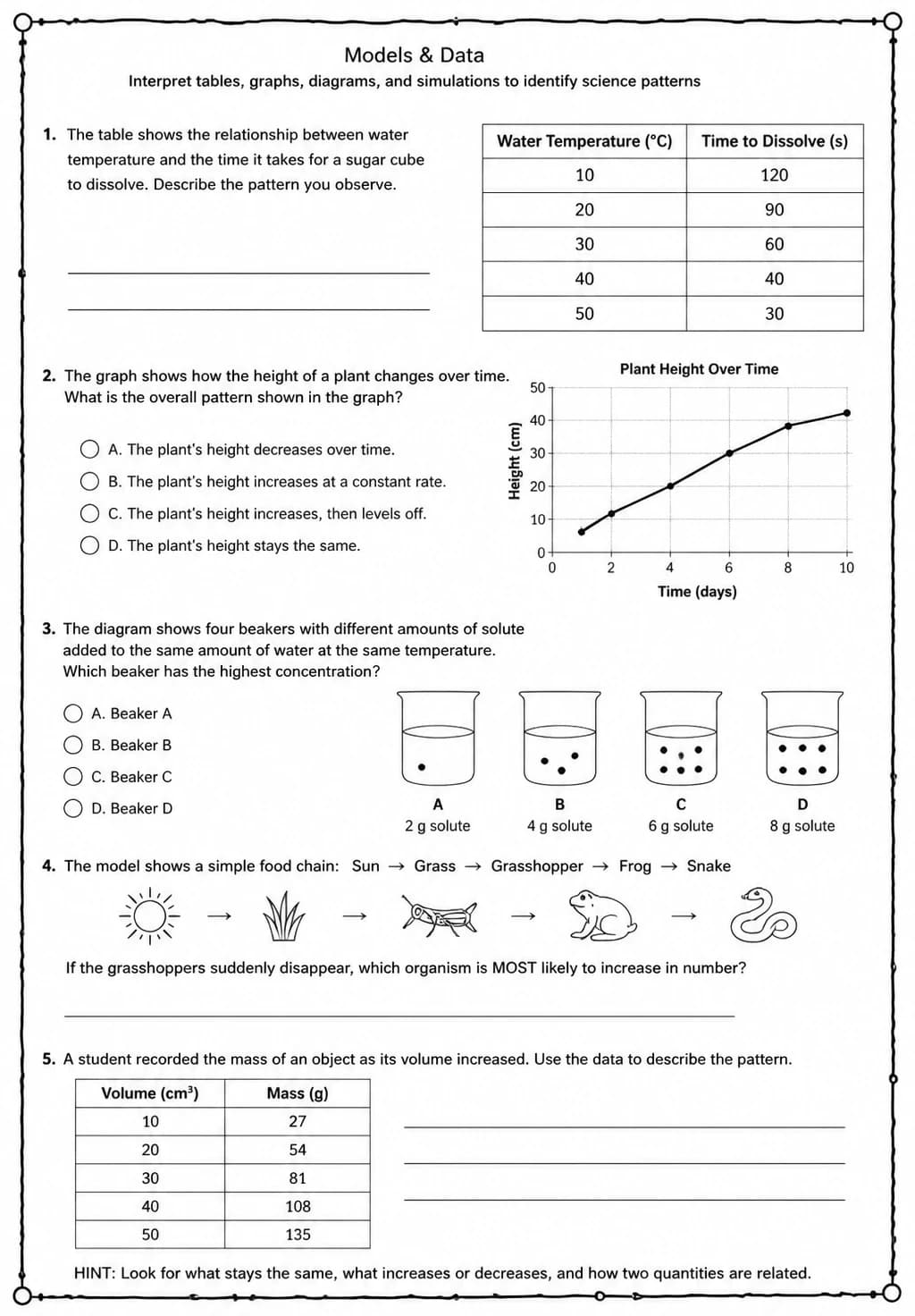
Interpret tables, graphs, diagrams, and simulations to identify science patterns